Takeaways from the 2026 State of the Press Release Report
In 2020, PR Newswire released its first flagship annual State of the Press Release Report to provide public relations and communications professionals with unmatched data-driven insights to help them navigate the current press release landscape to achieve maximum visibility and engagement for their stories.
This year’s report, drawn from 1,016 communications and marketing professionals in over 30 countries, looks at the biggest changes, trends and themes these professionals are encountering, including the growing role of AI-powered search and its effect on how news is found.
Whether you've already read the full report and want a quick refresher, or you haven't started and want a sneak preview, here are some of the key lessons worth taking away.
Communicators Are Structuring Press Releases for AI-Powered Search
Large language models (LLMs) consider press releases distributed through a trusted newswire to be authoritative sources. That trustworthiness, a primary component of E-E-A-T (experience, expertise, authoritativeness, and trustworthiness), is key for AI visibility, meaning LLMs cite high-E-E-A-T content often when answering queries. With AI-powered search becoming an increasingly important tool, communication professionals are adjusting their press release strategies to improve visibility in AI-generated answers.
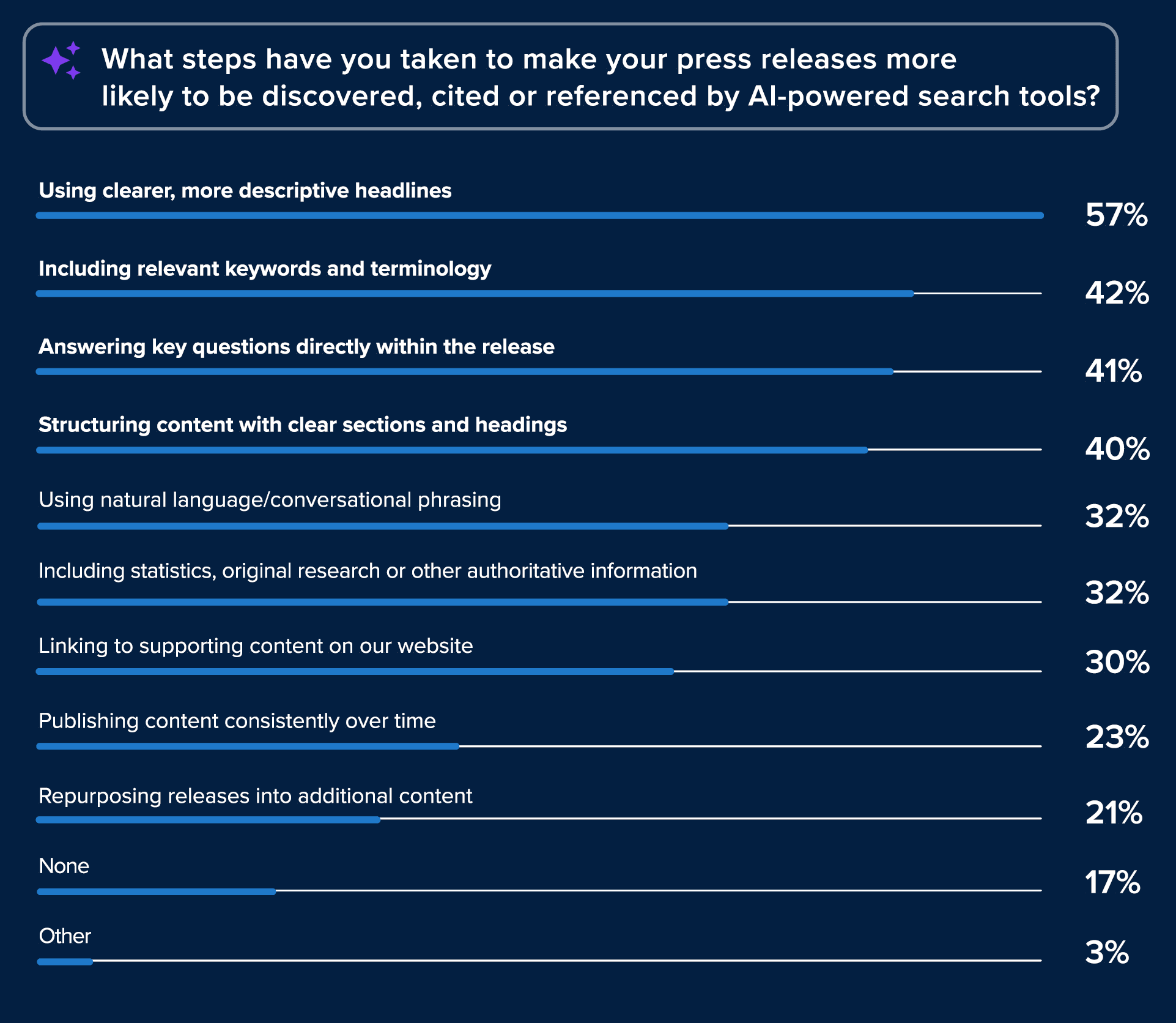
More than half of respondents (57%) are using clearer, more descriptive headlines. 42% are increasing their focus on relevant keywords and terminology, while roughly 40% of communication professionals are taking steps such as answering key questions directly in the release and organizing content with clear sections and headings. Many are also focusing on making their content easier for AI tools to interpret and reference.
Source: 2026 PR Newswire State of the Press Release Report
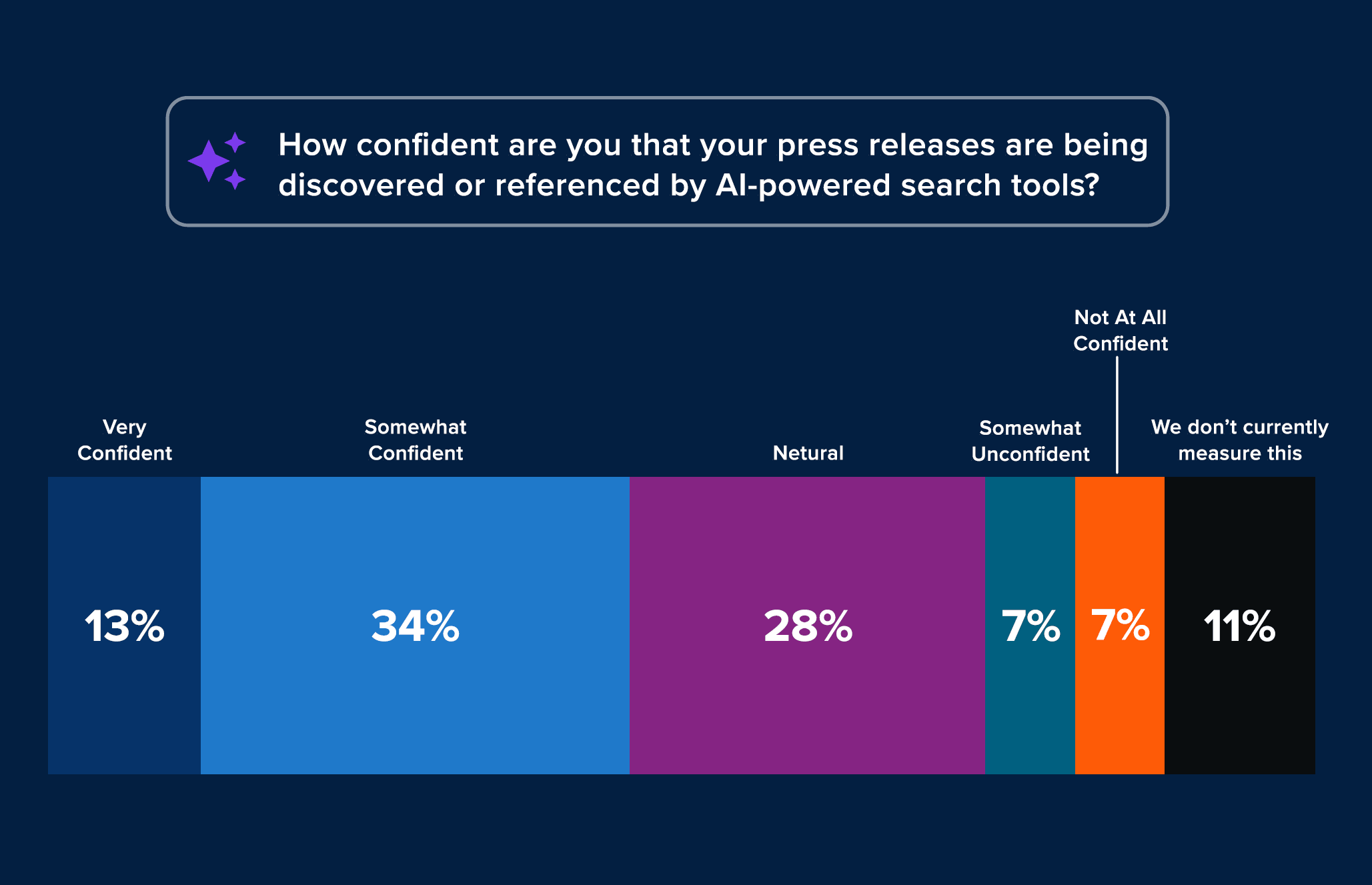
APAC (Asian and Pacific geographical and business region) communicators have been more AI-forward than those from other regions. This may be due to the difference in how AI is positioned more favorably and regulated more strictly in that region compared to other parts of the world. A similar pattern has emerged in Central and South America, where respondents are the most active adopters, while North American and EMEIA communicators are moving more slowly in adopting strategies to increase their AI search visibility. Confidence is still taking shape, however. About a third of respondents feel somewhat confident their releases are being seen or cited by AI search tools, with only 13% feeling very confident. Another 11% don't measure it at all.
Source: 2026 PR Newswire State of the Press Release Report
What does this mean for comms professionals?
The good news is that, even if you haven’t yet adjusted your strategy for artificial intelligence, you’re still in good shape. The established structure of a press release, with its headline, concise summary and clearly organized information, provides a strong foundation for LLM discoverability. Communication professionals simply need to build on this foundation to maximize their ability to impact AI search.
Adding a “key takeaways” section under a subheadline that summarizes the main highlights of their story can help improve AI visibility, and some respondents shared that they include multimedia, which has been shown to be a big driver of LLM visibility and engagement with press release content. Speaking of multimedia–
Multimedia Is Moving from Nice-to-Have to Must-Have
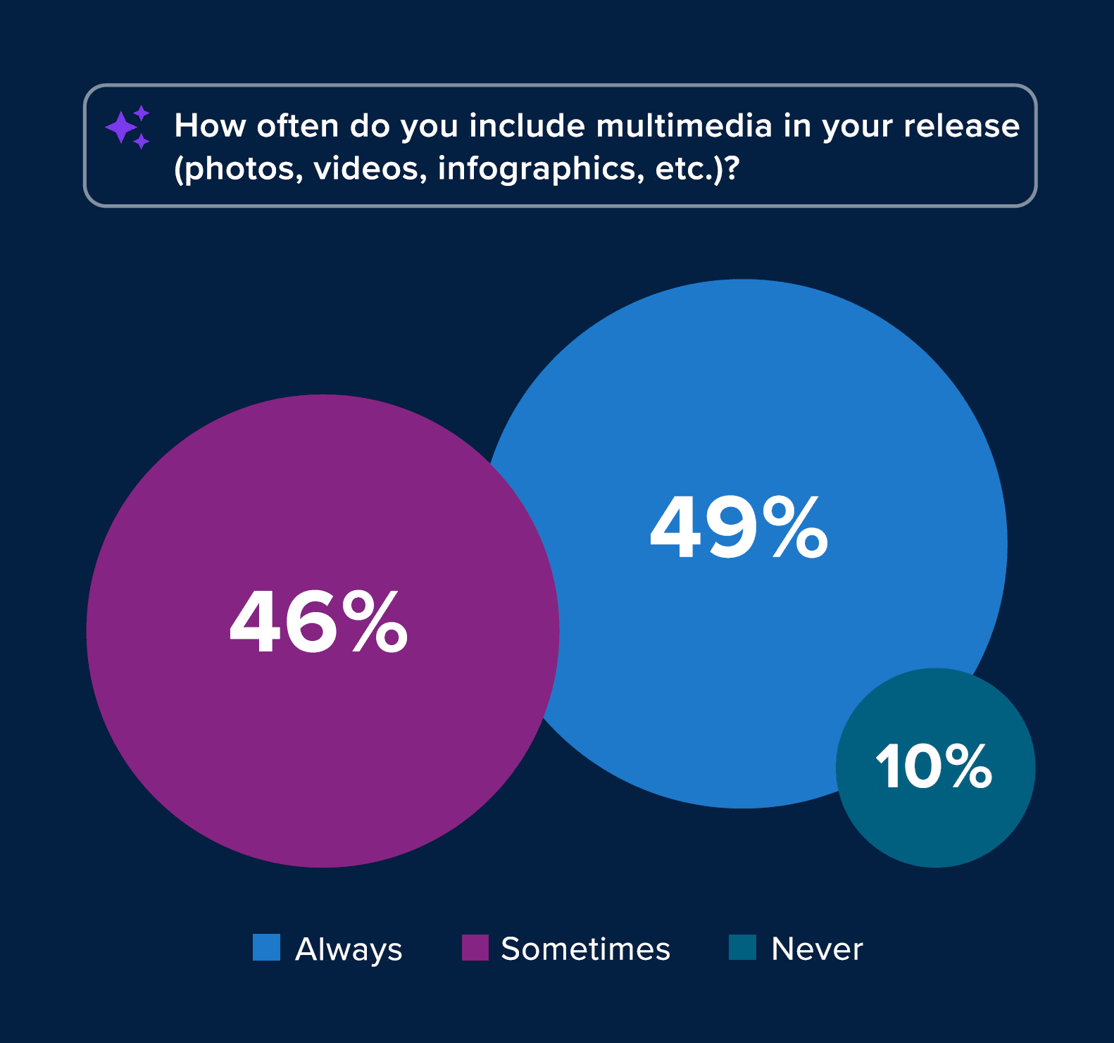
Over the years, communicators’ reported rate of including multimedia with their press releases has slowly but steadily increased. While in this year’s survey, one out of ten communications professionals consistently declined to include multimedia with any of their releases, nearly half of respondents (49%) say they always include multimedia and 46% include it sometimes, showing a more frequent inclusion of multimedia in press releases.
Source: 2026 PR Newswire State of the Press Release Report
This is great for AI visibility, since rich imagery and video content that includes alt text, captions or other metadata can be easier for search engines to interpret, helping to improve content discoverability across traditional and AI-powered search.
Communicators still view the textual content of their press releases as the most essential – when asked to rank release elements by impact, headlines ranked first, followed by the executive pull quote and the key takeaways section. Photos, logos and video were ranked as the least essential. That ranking, however, might show an underestimation of multimedia’s reach, particularly as AI-powered search creates additional opportunities for visual content to contribute to an announcement's visibility and reach.
Use of Generative AI to Craft Press Releases Continues to Grow
Source: 2026 PR Newswire State of the Press Release Report
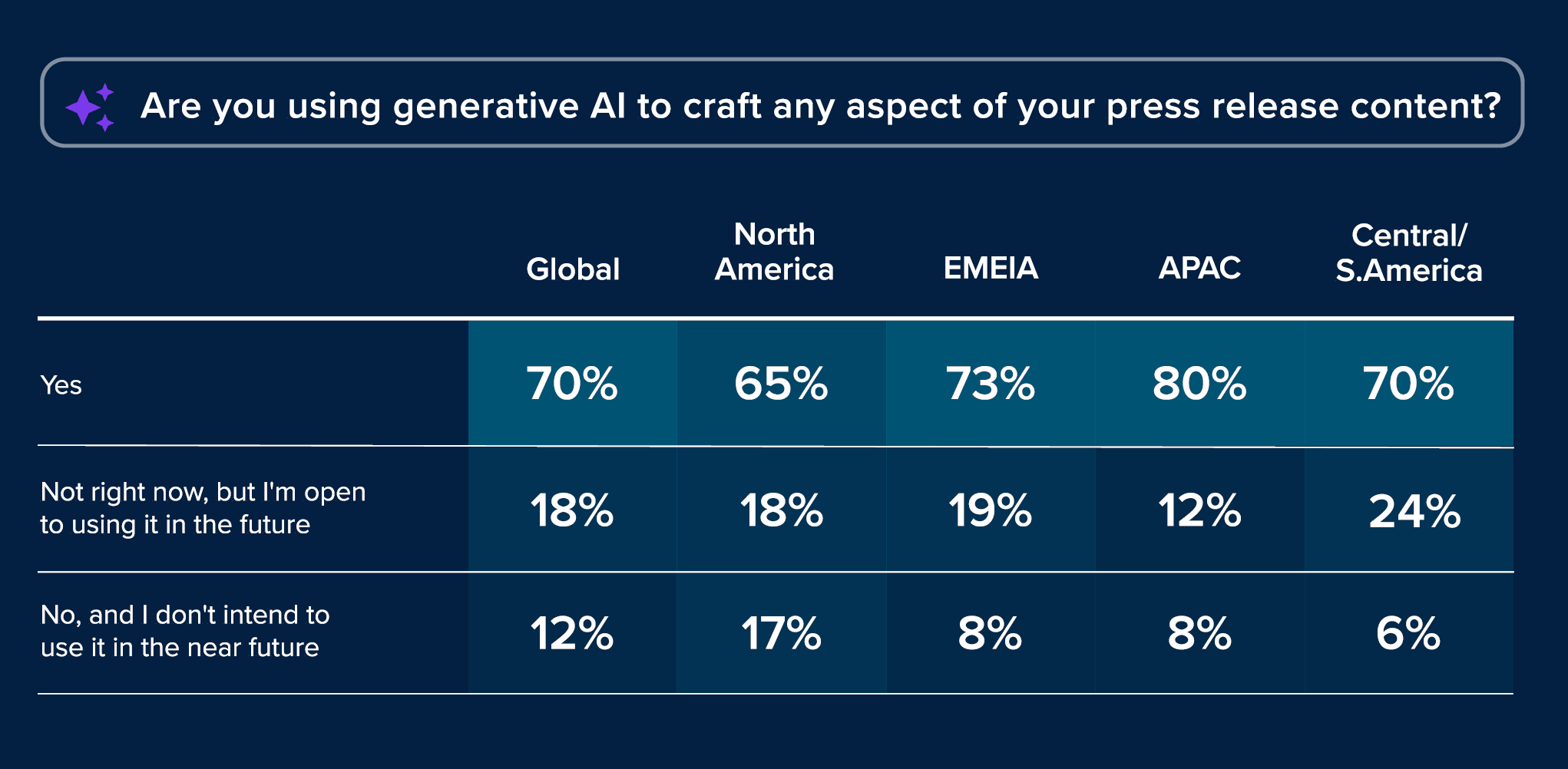
Two years ago, 26% of North American communications professionals surveyed indicated that they use generative AI in their press release creation process. That number has risen drastically in the last few years, with 65% indicating they use AI currently and 18% expressing a willingness to do so in the future. Globally, the number of communicators who admit to using generative AI to craft any aspect of their press release content is at 70%, with the highest adopters found in APAC regions at 80% (up from 63% last year for the same group).
While the most common reported use of AI for press release creation was in generating an initial outline or draft, adoption across the various use cases was diverse, with communicators applying AI to a range of tasks throughout the process. This suggests that communicators are looking beyond content generation and using AI to refine and optimize their releases for greater impact. Some respondents also mentioned using AI to develop different versions of a press release for different audiences and to add pull quotes from their content.
Repurposing Your Release Gives Your News More Ways to Be Found
Communicators increasingly recognize the value of extending their news across multiple channels. As audiences–human and machine–discover information through traditional media, social platforms, search and answer engines, it is essential to share content across channels for their news to be discovered, referenced and measured.
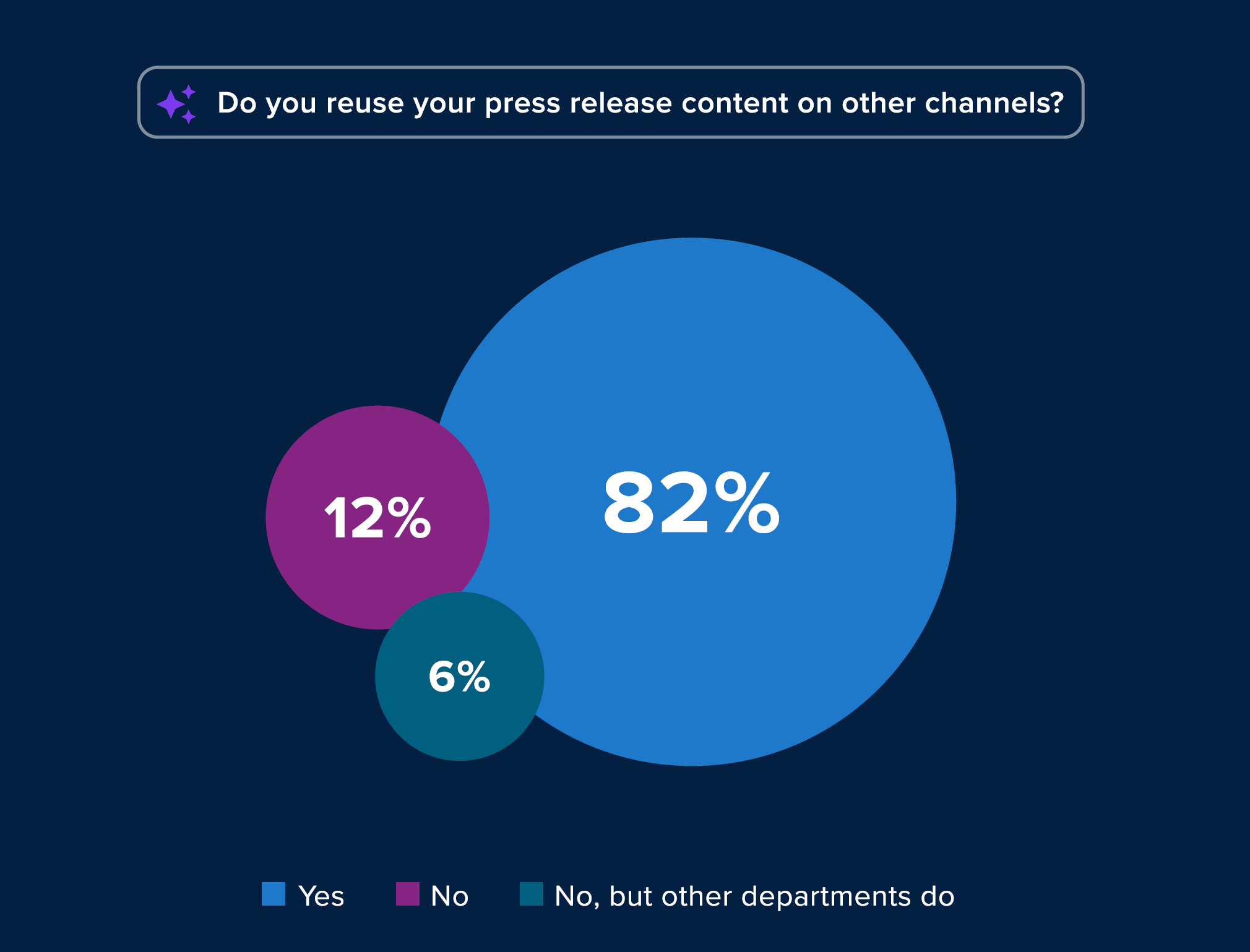
This is where strategies such as Multichannel Amplification™ come in, by leveraging multiple communication channels to deliver a unified message to the right audience at the right time. That’s why 82% of respondents reported repurposing their press release content. Since AI search tools draw from multiple sources, Multichannel Amplification™ increases the likelihood of a brand being cited when its content is distributed across channels.
Source: 2026 PR Newswire State of the Press Release Report
How this press release content is repurposed, however, differs depending on the region. While social media is the most common channel for repurposing in every region, North American communicators lean toward written formats, with 63% writing blog posts or articles and 52% using releases in email campaigns. Meanwhile, APAC respondents are more likely to turn press release messaging into visual content like videos and infographics.
Press Release Volume Is Poised to Grow in the Year Ahead
The outlook for future press release output is extremely positive. Across regions, communicators anticipate distributing more press releases in the coming year, signaling continued confidence in their value. As press releases become increasingly valuable for reaching both human audiences and AI-powered search tools, communicators have more reason to increase the volume of news they share across trusted newswires. This reinforces the value of consistently sharing relevant, substantive news that continues to inform audiences and garner visibility where it matters most.
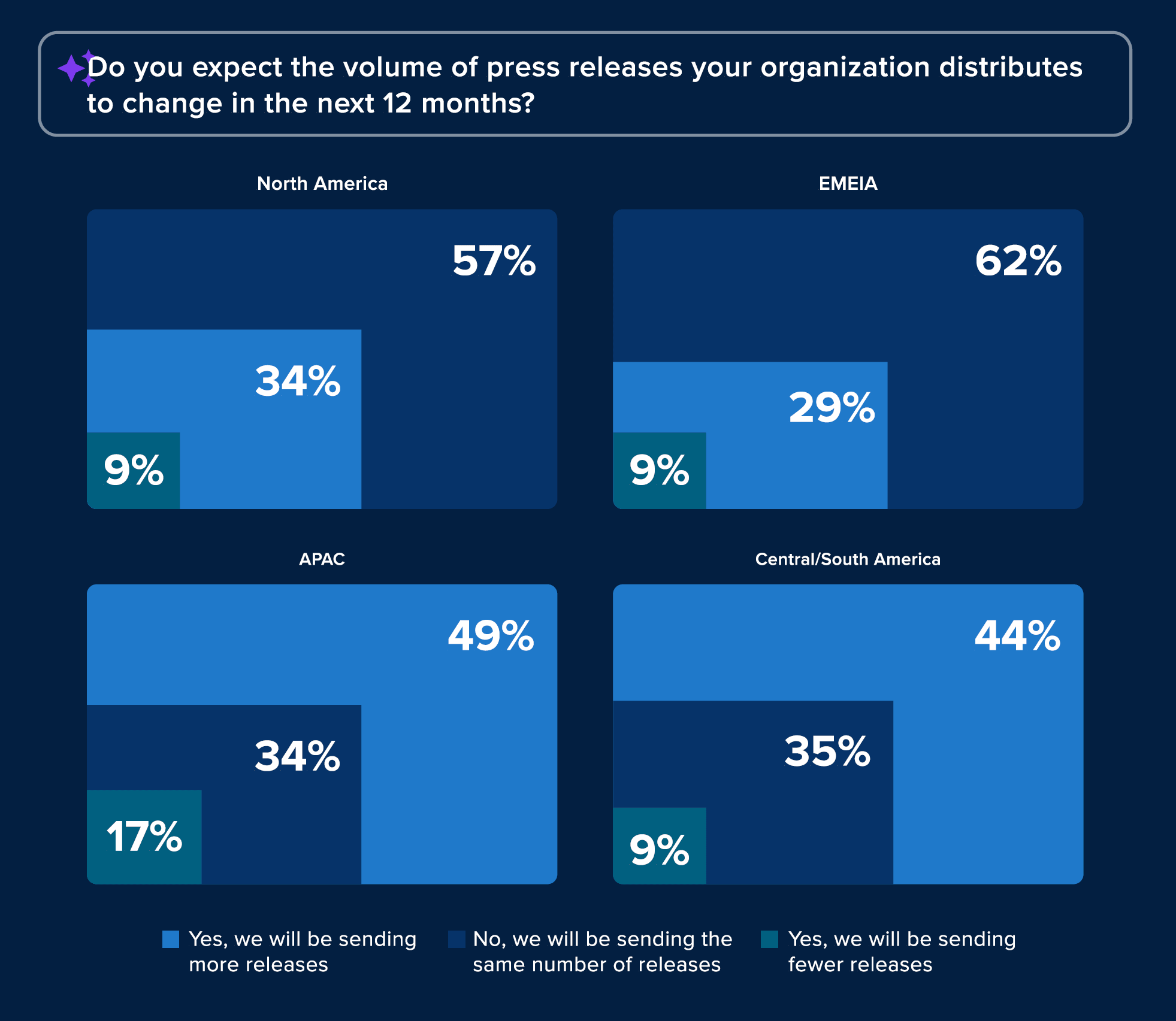
In North America, EMEIA (Europe, the Middle East, and Africa), and Central/South America, the large majority of communications professionals anticipate sending the same amount, or more, press releases next year, with less than 10% across North America, EMEIA and Central/South America planning on fewer press release publications. Meanwhile, APAC communicators are seeing a smaller percentage compared to last year, planning on fewer releases, and nearly half (49%) expect to increase their release volume.
Source: 2026 PR Newswire State of the Press Release Report
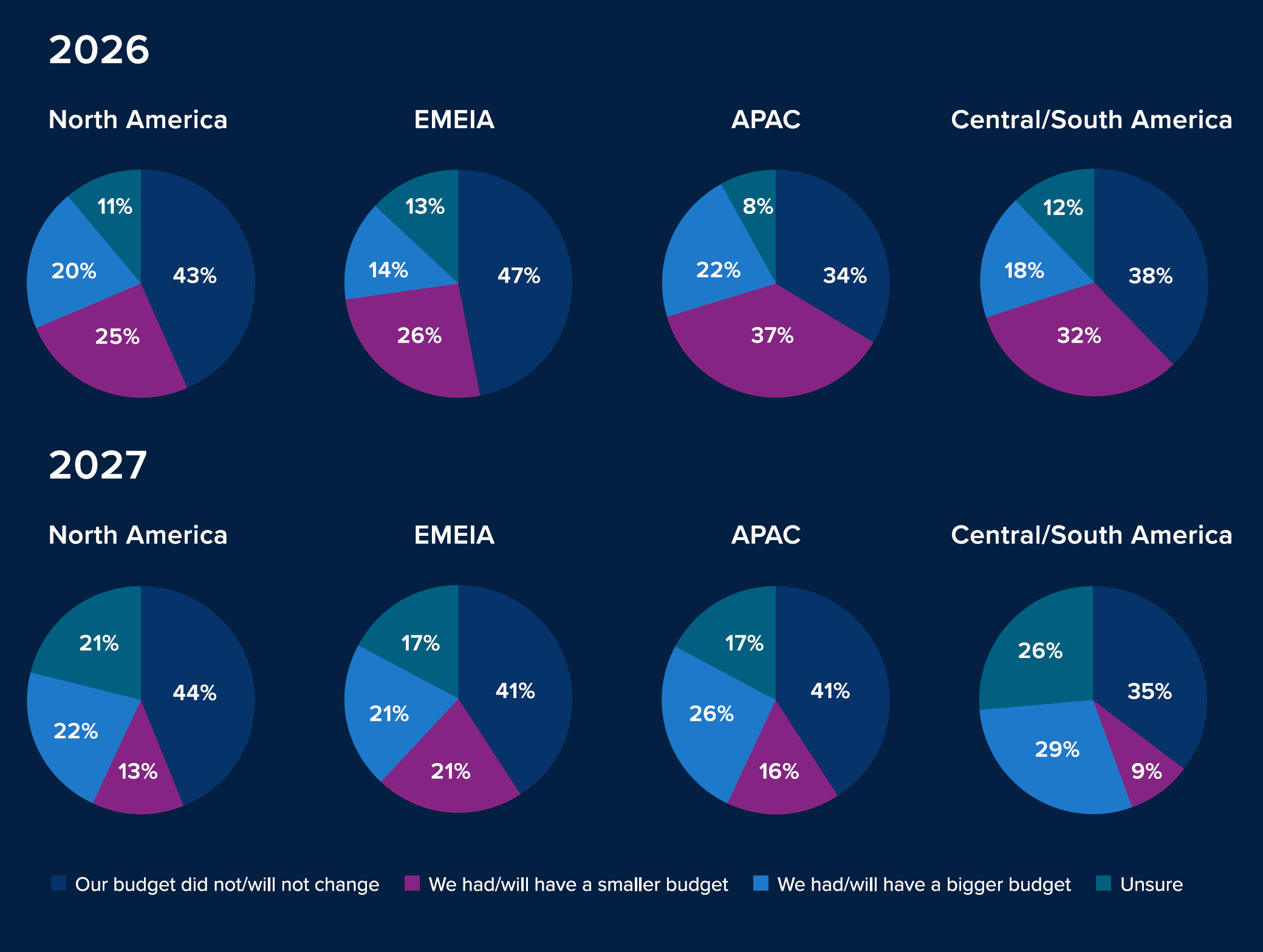
The growth, or at least stability, of most budgets is another reason for this positive outlook. Every single region saw a drop in respondents anticipating budget cuts in the following fiscal year compared to 2026, with more expecting increases. — a sign that suggests some of the financial pressures experienced in 2026 might begin easing in 2027.
This increase in expected budgets might be due to the fact that in the past year, communicators have seen positive results through their press release efforts. Respondents say sending a release over the wire successfully raised brand or product visibility (60%), reinforced their authority in their industry (45%) and supported their SEO (search engine optimization), AEO (answer engine optimization) and GEO (generative engine optimization) efforts (39%).
That said, while fewer communicators are experiencing decreased budgets, uncertainty remains. More respondents across every region are unsure what their 2027 budgets will look like, suggesting that while fewer communicators anticipate cuts, many organizations have yet to determine their spending plans for the coming year.
Source: 2026 PR Newswire State of the Press Release Report
Communicators Define the Success of Their Press Releases By Media Pickup…and More
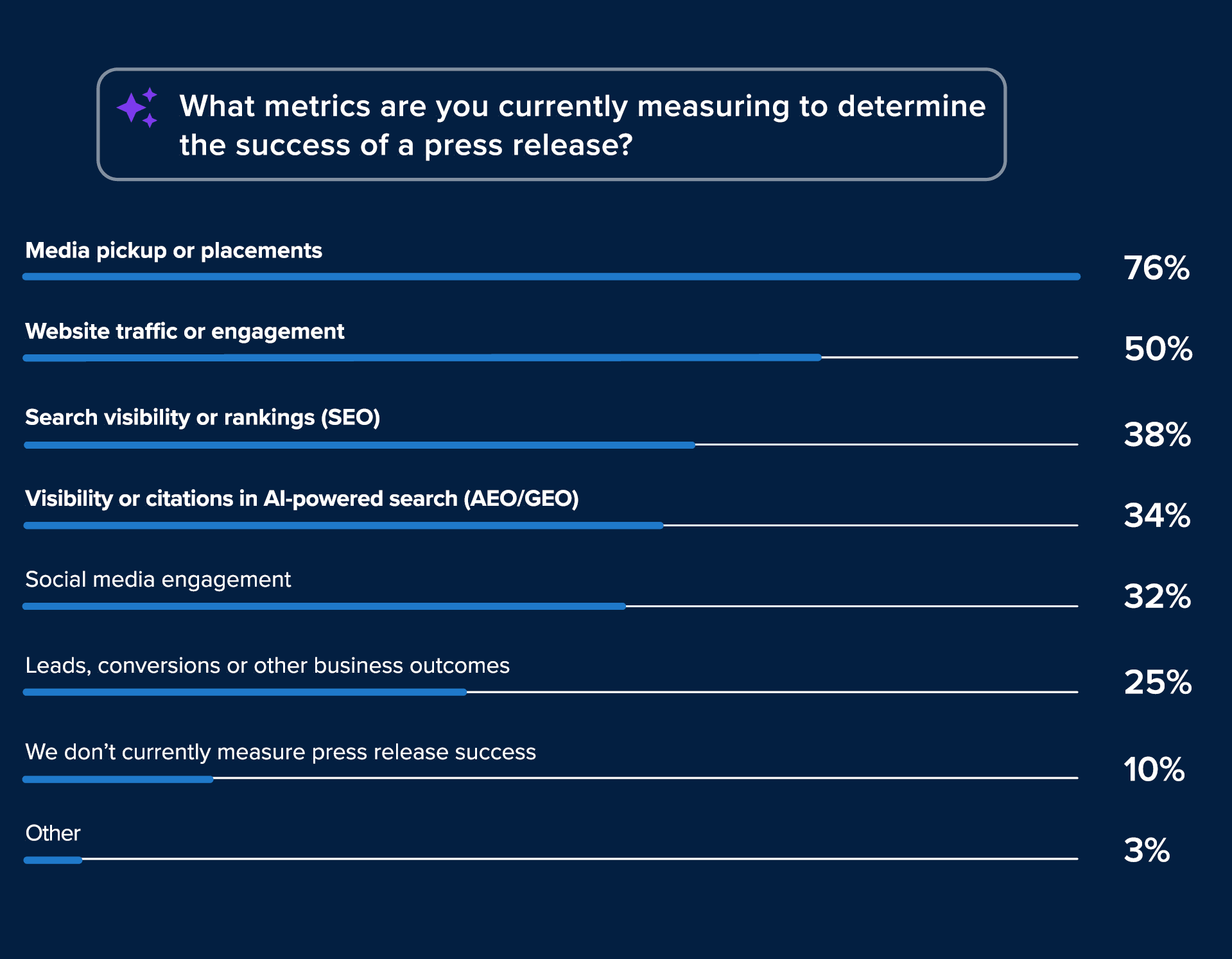
For PR professionals, media pickup remains an important measure of press release success, cited by 76% of respondents. But as traditional media outlets continue to shrink and journalists face increasing demands on their time, earned coverage is just one of many ways a press release can generate value.
Website engagement, search visibility and citations in AI-generated answers offer additional ways to assess whether news is reaching audiences, even when it doesn't result in a traditional media placement. 50% of those surveyed use web traffic or engagement to define success, while 38% look to search visibility and SEO rankings, 34% monitor AEO and AI visibility and 32% look at social media engagement.
Source: 2026 PR Newswire State of the Press Release Report
As traditional media outlets continue to shrink and journalists face increasing demands on their time, earned coverage is just one of many ways a press release can generate value.
Website engagement, search visibility and citations in AI-generated answers offer additional ways for communication professionals to assess whether news is reaching audiences, even when it doesn't result in a traditional media placement. In order for communicators to understand and demonstrate the full value of their distribution efforts, they have to broaden their measurements beyond just media pickups.
Regional Approaches to Press Release Distribution Differ
In-house resources continue to play the primary role in the press release creation and distribution process globally, with over 70% of Central and South America, North America and EMEIA keeping efforts in-house. Still, the balance between internal and external support is shifting in some markets. In APAC, in-house resources have declined, with a notable increase in external support compared to last year, reaching 42%. This is still less than Central and South America, which see the highest use of outside support at 50%.
There are also regional variations in reach and promotion. National distribution is the most common approach in North America (62%), EMEIA (66%) and Central/South America (65%), while APAC organizations take a more evenly divided approach, with 48% distributing nationally, 40% across multiple countries and 32% locally. Social media is a popular promotion channel across all four regions, but North American communicators show a stronger preference for newswire distribution services (71%), while APAC respondents are more likely to use paid placements.
What 2026 Means for Press Release Strategies in 2027
2026 has been an eventful year for communications professionals. We’ve seen a general increase in reported press release publication and more stability and growth in communications budgets, though some uncertainty remains. AI search has become increasingly valuable for spreading a press release message, and AI-powered platforms like PR Newswire Amplify™ can apply a Multichannel Amplification™ approach that yields measurable results. It’s as essential as ever to stay up to date on the latest trends in public relations to get the most out of your press release strategy.