As GLP-1 Spending Climbs, Employers Need to Look Beyond Price
As utilization grows and new purchasing channels emerge, US-Rx Care CEO Renzo Luzzati says employers need to assess clinical eligibility, sourcing, and total net cost alongside negotiated discounts.
TAMARAC, Fla., Nov. 17, 2026 /PRNewswire/ -- GLP-1 medications are taking a growing share of employer pharmacy budgets, pushing self-funded plans to look beyond negotiated discounts and examine who qualifies for treatment, where medications are sourced and what the plan ultimately pays. Nearly eight in 10 employers surveyed by Business Group on Health said these medications are increasing their healthcare costs. "GLP-1s have made a huge difference in care for people with diabetes and weight loss. We haven't seen medications this effective in a long time," said Renzo Luzzatti, CEO of US-Rx Care. "The challenge is affordability."
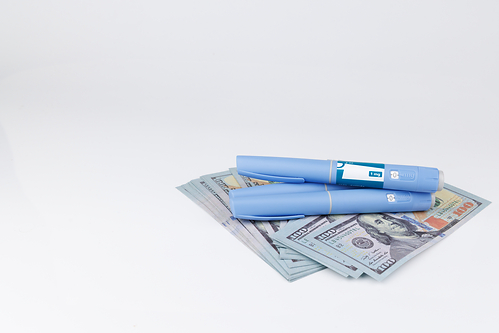
Coverage decisions are already diverging. Business Group on Health found that 67% of surveyed employers cover GLP-1 medications for weight management. Among those employers, 72% said they were likely to continue that coverage in 2027. The International Foundation of Employee Benefit Plans (IFEBP) found that 60% of surveyed employers cover GLP-1s for diabetes only, while 36% cover them for both diabetes and weight loss.
Appropriate Use Changes the Cost Equation
Eligibility criteria and prior-authorization review can affect utilization. Across US-Rx Care's book of business, GLP-1 spending for diabetes averages below industry benchmarks. Its utilization-management process includes reviewing medical records to validate a type 2 diabetes diagnosis, assess hemoglobin A1C levels, and evaluate the patient's current medication regimen against the plan's coverage criteria.
That review can identify prescriptions that do not match a plan's coverage rules. "We find individuals that have been approved for GLP-1 therapy by their prior PBM that are not diabetic," Luzzatti said. "The plan doesn't cover weight loss, which means that they're going on the product for weight loss, even though the plan doesn't cover it."
The financial impact grows when weight-loss treatment is covered. Luzzatti has seen GLP-1s account for 20% to 25% of total pharmacy spending in some employer plans covering obesity treatment. At that level, utilization becomes a material cost factor alongside the price paid for each prescription. "It's just that not everybody needs to be on a GLP-1," Luzzatti said. "That's where clinical oversight and management come in."
New Channels Expand the Price Comparison
Employers and members also have more ways to obtain GLP-1 medications than they did when the drugs first entered the market. Manufacturer programs, direct-to-consumer (DTC) platforms, cash-pay options, and direct-to-employer arrangements are creating alternatives to the traditional contracted pharmacy channel. IFEBP found that 27% of surveyed employers encourage employees to use DTC platforms for these medications.
The savings opportunity can differ by indication. Luzzatti said direct purchasing offers less room for savings on diabetes treatment than on weight-loss medications. "Unfortunately, there's not a lot of savings when you look at diabetes, but if you look at weight loss, there is more opportunity for savings," he said.
The comparison depends on how the employer has designed the benefit. When the employer covers the medication, the plan can compare its contracted pharmacy cost with available direct-to-employer purchasing options. If the medication is not covered, the member may instead purchase it through a lower-cost cash-pay channel. "Cash-pay can still give the member a lower-cost option," Luzzatti said.
Total Plan Cost Extends Beyond Rebates
Rebate guarantees capture only one part of GLP-1 spending. Total pharmacy cost is also shaped by which prescriptions are approved, how frequently the drugs are used, the price available through different purchasing channels, and the amount members are expected to contribute.
Those decisions may become more frequent as GLP-1 indications expand and additional oral options become available for more patients. Luzzatti said patients who previously avoided GLP-1s because they did not want an injection may be more willing to use an oral version, creating the potential for additional demand.
In addition, as manufacturers reduce prices, rebates can become less significant. The plan's net cost after member cost sharing then becomes a more important measure of overall spending. If prices fall enough, employer cost concerns may decline, making broader access for plan enrollees possible.
About US-Rx Care
US-Rx Care is revolutionizing America's pharmacy benefits system by replacing opaque, profit-driven PBMs with a transparent, fiduciary model that puts employers and members first. Founded in 2007, the company combines clinical rigor, ethical contracting, and data-driven oversight to cut drug costs by up to 50% or more while also improving health outcomes. Operating under a legally binding ERISA fiduciary standard, US-Rx Care eliminates conflicts of interest, passes through 100% of manufacturer rebates and pharmacy discounts, and delivers measurable savings without compromising care. Privately owned and free from outside financial influence, US-Rx Care is setting the new standard for pharmacy benefit management—restoring trust, accountability, and real control for employers, benefits consultants, and health plans nationwide. Website: www.us-rxcare.com
References:
- Business Group on Health. (2026, May 5). GLP-1 costs loom large for employers, forcing challenging coverage decisions, Business Group on Health survey finds. businessgrouphealth.org/newsroom/news-and-press-releases/press-releases/2026-glp-1-survey
- Plier, R. (2026, July 7). GLP-1 drugs survey report: What employers are—and aren't—covering in 2026. International Foundation of Employee Benefit Plans. ifebp.org/resources---news/news-and-regulatory-updates/press-room/press-releases/2026/07/07/glp-1-drugs-survey-report--what-employers-are-and-aren't-covering-in-2026
- Pharmacy Technology & Management Review. (n.d.). The GLP-1 revenue trap: How fiduciary benefit management exposes the PBM profit playbook. ptmreview.com/glp-1-pricing-pbm-reform-pharmacy-margins/
Media Inquiries:
Karla Jo Helms
JOTO PR™
727-777-4629
Jotopr.com
SOURCE US-Rx






Share this article