Heytea Opens Its First-Ever Matcha Lab on New York's Lower East Side
From origin to form, heytea explores what else matcha can become when it gets a lab
NEW YORK, Nov. 16, 2026 /PRNewswire/ -- Heytea (www.heytea.com), the originator of new-style tea and the brand that reinvented tea for a new era, has opened matcha lab at 164 Ludlow Street on New York's Lower East Side. The first of its kind anywhere in heytea's global network, the store also marks the brand's fourth specialized concept in New York, following heytea lab in Times Square, teabar on the Upper East Side and gelato lab+ in Union Square. With no coffee, ube or other categories on the menu, matcha lab is dedicated to exploring the possibilities of matcha, and matcha only.
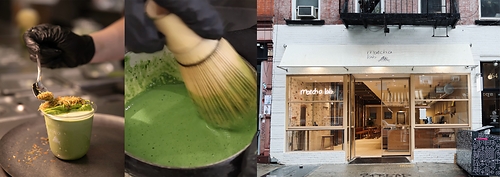
Matcha lab is heytea's answer to what comes after ubiquity. Matcha has become a color, a flavor and a wellness cue. Heytea asks: can something that has become a cultural shorthand still retain depth, be appreciated on its own terms and leave room for experimentation? Designed around that tension between tradition and experimentation, matcha lab brings ceremonial-grade single-origin matcha and playful matcha creations into dialogue with Ludlow Street's independent fashion, art, music and downtown culture.
The Ceremonial-grade, hand-whisked matcha menu presents single-origin matcha from Jingshan, China, and Shizuoka, Japan, each whisked to order and available at three intensity levels: M60, M100 and M150. The higher the number, the richer the matcha flavor. Jingshan brings umami up front, subtle toasted notes and a mellow finish; Shizuoka opens with a fresh green aroma, followed by a creamy texture and lingering sweetness. The iced versions are served with a vivid green cube of matcha ice, so the drink retains its depth rather than becoming diluted as the ice melts.
The two origins also point to a longer lineage: powdered-tea and whisking traditions flourished during the Song dynasty in China, then traveled from Jingshan to Japan through centuries of Buddhist and cultural exchange. In Japan, matcha cultivation, tencha processing and tea-ceremony rituals were further refined. Extending the experience, guests can grind tencha—the leaf material used to make matcha—by hand with an antique stone mill from Uji, Japan, dating to the shogunate era.
From there, the matcha creations menu explores the ingredient through new flavors, textures and forms, beginning with Matcha Dirty. Unlike the espresso-spiked drink commonly sold as a dirty matcha, heytea's version contains no coffee. Instead, a house-made extra-rich matcha sauce is infused into a matcha latte, creating a drink that becomes richer with every sip. The signature Pistachio Matcha Dirty adds nutty pistachio and a topping of crisp pistachio kataifi for texture. Other creations include Matcha Latte Float, with a scoop of matcha gelato over a matcha latte, and Frozen Yuzu Matcha, with matcha poured over a bright, tangy yuzu-and-apple sorbet.
Completing the menu, a dedicated gelato section offers Matcha Gelato at four intensity levels—M60, M100, M150 and M200—moving from smooth and balanced to extra rich.
The menu is an extension of heytea's experimental spirit, which predates matcha's current viral moment. At heytea, a "lab" is a playground for asking what tea can become next. Each lab module expresses tea in a different form, from drinks and gelato to cakes and baked goods, while a heytea lab brings one or more of these experimental modules together with the brand's classic drink menu. Matcha lab takes the method further by giving one ingredient an entire store. Across origin, intensity, temperature, texture and form, no single expression of matcha is treated as the final answer; each is part of an ongoing process of curiosity and discovery.
"When something becomes so mainstream, we dare to ask whether it can still have an edge, culinarily or culturally," said Sisi Zhang, Senior Brand Director at heytea. "Matcha lab takes heytea's curiosity and audacity to another level, with a space devoted to playing with matcha and making it unmistakably heytea. The Lower East Side felt like the right home for that because the neighborhood has always made room for differences and independent ideas."
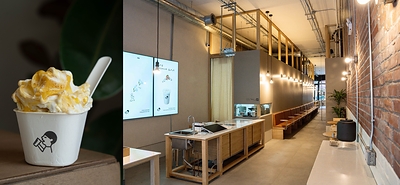
The interior does not reproduce a traditional Chinese or Japanese tearoom. Instead, it holds tradition and experimentation, Eastern and Western aesthetics, and natural and industrial materials in deliberate tension. On one side of the space, original brick—some coated in green matcha powder—and structural elements remain exposed. Opposite, a wall painted in soft beige is paired with pale wood furniture and stainless-steel accents. Matcha tools, an antique stone mill, jars of tencha and educational notes appear throughout as curated installations, while a glass façade opens the room to Ludlow Street. The result is a contemporary space where centuries of tea craft, heytea's experimental spirit and the Lower East Side's independent energy collide.
As heytea continues to grow across the U.S. and the globe, it will keep reimagining what tea can become and how tea can participate in the culture and everyday life of each neighborhood and city it enters.
For more information, visit www.heytea.com or follow @heytea.usa on Instagram.
About heytea
Founded in 2012 in Jiangmen, Guangdong, China, heytea is the originator of new-style tea and the creator of the first cup of cheese tea. The brand reimagines tea for a new era through tea-centered products, experimental store concepts and brand experiences rooted in sharing everyday inspiration through a cup of tea. Today, heytea operates more than 3,500 stores across more than 330 cities worldwide, including Shanghai, Hong Kong, New York, London, Toronto, Sydney and Seoul, with 150 million registered members globally. In the U.S., heytea operates more than 45 stores across New York, Los Angeles, the San Francisco Bay Area, Houston, Seattle, Boston and other markets.
SOURCE Heytea USA INC





Share this article