How the NIH Common Fund Data Ecosystem Could Accelerate Scientific Discovery
CU Anschutz researchers play a major role in evaluating research data from 18 programs to help scientists uncover relationships across studies and make better use of existing research.
AURORA, Colo., Nov. 3, 2026 /PRNewswire/ -- Scientists generate vast amounts of research data, but connecting information across studies can be difficult. The NIH Common Fund Data Ecosystem is working to change that by making research datasets from 18 NIH programs easier to find, connect and analyze.
The initiative brings together research resources spanning human genetics, the microbiome and emerging technologies, helping scientists explore relationships that might otherwise remain hidden across separate studies.
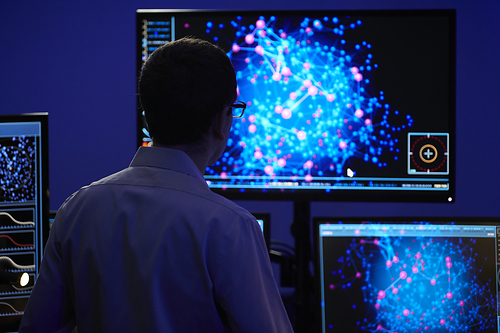
A new paper published in Patterns describes the ecosystem's development, infrastructure and tools, as well as efforts to evaluate its impact.
"The challenge is no longer just generating more scientific data. It's making the data we already have work together in ways that help researchers answer questions they couldn't tackle before," said Casey Greene, PhD, professor of biomedical informatics at CU Anschutz and study senior author. "When information is connected across research programs, scientists have more opportunities to identify patterns, explore new relationships and build on discoveries made by others."
The goal is to make complex datasets easier to find, interpret and analyze, including for researchers without advanced programming or bioinformatics expertise.
How Can Connecting Research Data Help Scientists Make New Discoveries?
Understanding a disease or identifying a promising drug target may require scientists to connect genetic information with molecular measurements, tissue data and results from drug-screening experiments. A drug target is a molecule or biological process that researchers investigate as a potential point of action for a treatment.
When these resources can be explored together, researchers may be better equipped to understand biological mechanisms, identify meaningful patterns and investigate promising directions for further study.
"Scientific discovery rarely happens in isolation. A finding in one dataset may become much more meaningful when it can be examined alongside evidence from another study or another area of biology," said Julie A. Jurgens, PhD, associate director of scientific delivery for the Knowledge Portal Network at the Broad Institute of MIT and Harvard and study corresponding author. "Building the connections between these resources can help researchers spend less time navigating fragmented systems and more time asking important scientific questions."
By making existing research easier to access and combine, the ecosystem aims to help scientists build on findings from multiple programs rather than examining each dataset in isolation.
Evaluating Effectiveness
Researchers at CU Anschutz contribute to the initiative's coordination and evaluation efforts, helping assess how effectively the shared research infrastructure supports scientists and delivers value across research programs.
The work examines whether connecting datasets across programs helps researchers find and use information in ways that separate public repositories cannot.
The team is also evaluating indicators of research engagement and impact, including how often scientists use the ecosystem's online resources and cite related publications. Preliminary findings suggest that related research publications may receive more citations than comparable papers, although additional analysis is needed to understand the significance of those differences.
These evaluation efforts are intended to help determine how the ecosystem can remain useful, accessible and valuable to researchers over time.
How Could Connected Research Data Support Artificial Intelligence?
As artificial intelligence becomes more prominent in scientific research, well-organized and connected datasets could also help computational tools analyze scientific information more effectively.
The ecosystem offers an opportunity to explore how infrastructure designed to help people navigate scientific evidence might also support emerging AI-driven approaches to research.
"The long-term opportunity is to create a research environment where valuable data don't sit in separate repositories waiting for someone to make the right connection," said Sean Davis, MD, PhD, professor of bioinformatics at CU Anschutz. "By making those connections easier to discover and explore, we can help scientists get more value from existing research and create new opportunities for future discoveries."
By making existing evidence easier to find, interpret and combine, the NIH Common Fund Data Ecosystem aims to help researchers uncover meaningful connections, explore new scientific questions and make more effective use of the research investment already made.
The Common Fund Data Ecosystem and corresponding publication are the product of a multi-institutional, multidisciplinary collaboration across 5 centers, 18 programs, and multiple partnerships.
Key Points:
- Connecting research across programs: The NIH Common Fund Data Ecosystem is working to connect research resources from 18 NIH programs, making information easier to find, analyze and combine.
- Supporting scientific discovery: Researchers could use connected genetic, molecular, tissue and drug-screening data to investigate biological mechanisms and identify new research directions.
- Evaluating research impact: CU Anschutz researchers are helping assess the ecosystem's use, value and long-term effectiveness.
- Exploring future AI applications: More accessible and connected scientific data could support emerging AI approaches to biomedical research.
About the University of Colorado Anschutz
The University of Colorado Anschutz is a world-class academic medical campus leading transformative advances in science, medicine, education and patient care. The campus includes the University of Colorado's health professional schools, more than 60 centers and institutes, and two nationally ranked independent hospitals - UCHealth University of Colorado Hospital and Children's Hospital Colorado - which see nearly three million adult and pediatric patient visits each year. Innovative, interconnected and highly collaborative, CU Anschutz delivers life-changing treatments, exceptional patient care and top-tier professional training. The campus conducts world-renowned research supported by $890 million in funding, including $762 million in sponsored awards and $128 million in philanthropic gifts for research.
Find the latest CU Anschutz news here.
Contact: Kelsea Pieters, CU Anschutz
Kelsea.pieters@cuanschutz.edu, Phone: (804) 314-1360
SOURCE University of Colorado Anschutz







Share this article