


International Patient Travels to Los Angeles for Complex Trigeminal Neuralgia Surgery with Dr. Aaron Cohen-Gadol
After a global search for a surgeon experienced in complex microvascular decompression, Albert traveled from overseas to California for treatment and reports that the facial pain that persisted despite multiple medications resolved following surgery.
LOS ANGELES, Sept. 10, 2026 /PRNewswire/ -- When severe facial pain began disrupting Albert's life abroad approximately a year ago, he tried several medications in an effort to control it.
He said the pain continued to intensify despite trying four different medications.
As his symptoms persisted, Albert began considering procedural and surgical options for trigeminal neuralgia, a disorder involving severe facial pain associated with the trigeminal nerve.
Rather than limit his search to surgeons close to home, Albert began researching neurosurgeons in his home country, across Europe and in the United States. He said he used Google as well as artificial intelligence tools including Gemini and Grok to identify specialists and compare their experience.
Albert said other surgeons he consulted were unwilling to perform the procedure because of the complexity created by the larger artery involved.
For Albert, the central question became which surgeon had the most relevant experience for the particular anatomy and complexity he understood to be shown on his imaging.
"Neurosurgery at home is really on a high level," Albert said. "But mine is a small country. My case was very, very complicated."
According to Albert, his imaging showed neurovascular compression involving the trigeminal nerve. He understood his case to involve two vascular conflicts, including one unusually large artery, which made him particularly concerned about choosing a surgeon with experience in difficult cranial nerve cases.
Albert ultimately focused on Dr. Aaron Cohen-Gadol, a Los Angeles-based neurosurgeon whose practice includes complex brain and cranial nerve surgery.
Albert said his research included surgical experience, case complexity and a surgeon's willingness to evaluate difficult cases.
"For my situation, I thought I should make the first surgery with the best doctor I could find," Albert said. "If the right surgeon is not in your own country, that should not be the reason you settle for someone else."
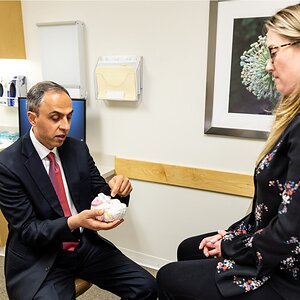
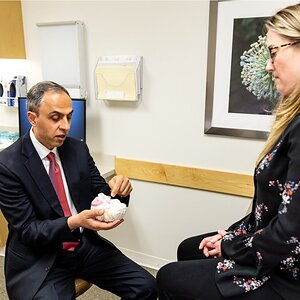
Albert sent his MRI studies to Dr. Cohen-Gadol for review. After the imaging was evaluated and the two spoke, Albert said Dr. Cohen-Gadol agreed to take the case.
That decision set in motion an international treatment journey to Southern California.
Traveling Abroad for Specialized Neurosurgical Care
Albert's decision to travel was driven by the complexity of his individual case and his search for experience with difficult microvascular decompression procedures. For him, distance became a secondary concern compared with finding a surgeon whose experience closely matched his needs.
He traveled to Santa Monica several days before surgery to complete the required preoperative testing and evaluations.
Because the trip occurred around the Fourth of July holiday, Albert said coordinating testing required additional planning. He credited Dr. Cohen-Gadol's team with helping him complete the necessary preoperative steps and documentation.
As an international patient, Albert did not have a home in the United States where he could recover after leaving the hospital. He said the team helped coordinate documentation requested by his overseas insurance provider and assisted with his transition to a rehabilitation facility before he was ready to fly home.
"Dr. Cohen-Gadol came to my room two or three times," Albert recalled. "His team helped me move to rehabilitation because I could not simply go back to a hotel."
After Albert returned home, he said Dr. Cohen-Gadol continued to check on his recovery and remained available for questions.
A Complex Microvascular Decompression
Albert underwent microvascular decompression, or MVD, a procedure used to relieve neurovascular compression of a cranial nerve.
Albert described his case as involving two separate vascular conflicts affecting the trigeminal nerve. Based on his understanding of the imaging and surgical discussion, one of the involved arteries was substantially larger than the vessel typically encountered in many trigeminal neuralgia cases.
Albert said the operation separated the offending vessels from the trigeminal nerve so that the nerve was no longer being compressed.
He reported that within one to two days of surgery, the trigeminal neuralgia pain that had persisted despite medication was gone.
"Immediately, I felt the pain was gone," Albert said. "After one or two days, when I started to understand how I felt, the neuralgia pain was gone."
Albert said his broader recovery has continued gradually and that Dr. Cohen-Gadol advised him that rehabilitation after a complex operation can take substantial time.
"Each day, each week, I feel better and better," he said.
He pointed to his ability to speak for longer periods as one measure of improvement. Several weeks after surgery, extended conversation remained difficult, he said. By the time of his interview, he was able to speak comfortably about the experience.
Looking Beyond Geography for Specialized Neurosurgical Care
For Albert, the experience reinforced the importance of researching specialized expertise and seeking additional opinions when confronting a difficult neurological condition.
Medical imaging and records can often be reviewed remotely before travel, allowing patients to consult with specialists outside their immediate region as they evaluate treatment options.
For Albert, the decision came down to finding a surgeon whose experience most closely matched the complexity he believed was present in his own case, even if that meant leaving his home country.
"In my opinion, he is the best neurosurgeon for very complex problems," Albert said of Dr. Cohen-Gadol.
Albert said he hopes other patients confronting difficult diagnoses understand that they can research specialized expertise and seek additional opinions when deciding among treatment options.
For him, the international journey resulted in the outcome he had hoped for: Albert reported that his trigeminal neuralgia pain resolved within the first days after surgery, while his broader recovery continued after returning home.
About Dr. Aaron Cohen-Gadol
Dr. Aaron Cohen-Gadol is a Los Angeles-based neurosurgeon specializing in complex brain and cranial nerve surgery. His practice includes patients with challenging neurological conditions who travel from across the United States and internationally for evaluation and treatment.
His clinical work includes complex cranial surgery, vascular conditions, brain tumors, cavernous malformations, arteriovenous malformations and cranial nerve disorders including trigeminal neuralgia and hemifacial spasm.
For more information, visit Dr. Cohen-Gadol's website: https://www.atlasneurosurgeryinstitute.com/
Media Contact
Tyler Barnett
Tyler Barnett PR
[email protected]
tylerbarnettpr.com
SOURCE ATLAS Institute of Brain and Spine





Share this article