New Study Finds 71% of People Supporting Loved Ones With Bipolar Disorder Keep Their Own Struggles Quiet
National survey of 1,032 Americans reveals gaps in caregiver preparedness, crisis planning, and mental health support.
SAN JUAN CAPISTRANO, Calif., Nov. 12, 2026 /PRNewswire/ -- Family members and friends supporting someone with bipolar disorder often face difficult decisions without adequate guidance, according to new research commissioned by AMFM Mental Health Treatment. The survey found that 71% of respondents had held back from discussing their own struggles, while only 21% felt very prepared when they first began providing support.
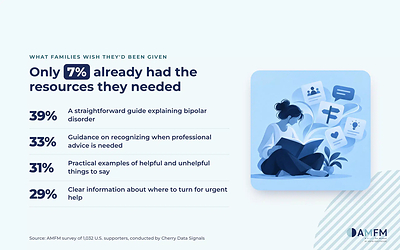
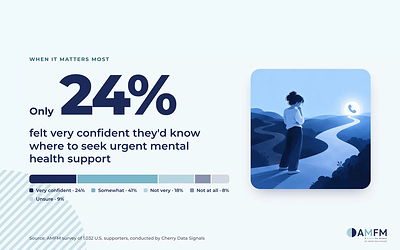
Conducted by independent research agency Cherry Data Signals, the survey gathered responses from 1,032 U.S. adults who had provided emotional or practical support to someone close to them with bipolar disorder. Results highlight challenges involving communication, warning signs, crisis planning, and supporters' own well-being.
Families Face Gaps in Guidance
Among respondents:
- 42% identified knowing what to say during difficult periods as a major challenge.
- 40% struggled to determine when to intervene and when to give their loved one space.
- 44% wished they had understood earlier how differently bipolar disorder can affect individuals.
- Only 18% recalled receiving clear guidance on when and where to seek urgent professional help.
- Just 12% recalled receiving advice on protecting their own mental well-being.
The findings suggest that willingness to help does not always come with the information needed to do so confidently.
"It is not just people who have bipolar disorder that require support – their loved ones need help too," said Anand Mehta, LMFT, Executive Director at A Mission for Michael. "Supporters of people with bipolar disorder should have options of where to turn to, should they be struggling themselves."
The Overlooked Needs of Supporters
More than one-quarter of respondents (27%) did not know where to find support for themselves, while 26% cited cost as a barrier. Another 17% reported feeling guilty about seeking help.
Yet supporting a loved one also brought meaningful experiences: 36% reported developing a greater understanding of their loved one's experiences, and 33% said the experience brought them closer together.
Families Want Practical Resources
When asked what would have helped most, 39% wanted a straightforward guide to bipolar disorder, 33% wanted information about recognizing when professional assistance was needed, and 31% wanted practical examples of helpful communication.
Crisis preparedness was another gap: only 19% reported having a written plan for responding when their loved one becomes unwell.
"Families often worry about saying the 'correct thing'," Mehta explained. "Often, a good starting point is simply to ask their loved one whether they want to talk, want practical help or would prefer time alone."
Together, the results underscore the importance of accessible education, practical crisis guidance, and mental health resources for both people living with bipolar disorder and those who support them.
About the Research
AMFM Mental Health Treatment commissioned the online survey, conducted by Cherry Data Signals among 1,032 U.S. adults with experience supporting someone close to them with bipolar disorder. Results are self-reported and are not necessarily representative of all U.S. caregivers.
About AMFM Mental Health Treatment
AMFM Mental Health Treatment provides residential mental health treatment and psychiatric care for adults, emphasizing individualized, evidence-based approaches to complex mental health conditions.
Media Contact:
Mia Taapken
+19255957230
SOURCE AMFM Mental Health Treatment

Share this article