SATIM signs contract with Polish Ministry of National Defence for SAR analytics software
The contract strengthens Poland's ability to turn satellite radar imagery from MikroSAR program into actionable intelligence.
KRAKÓW, Poland, Nov. 12, 2026 /PRNewswire/ -- SATIM has announced it has entered a contract with Poland's Ministry of National Defence to provide software for the automated analysis of satellite synthetic aperture radar (SAR) imagery. The procurement was conducted by the 2nd Regional Logistics Base for ARGUS (The Polish Geospatial Reconaissance and Satellite Services Agency).
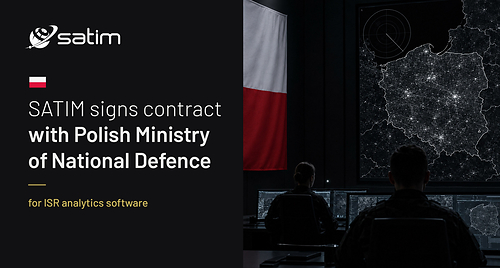
The system will support Poland's MikroSAR Earth-observation program, helping analysts extract relevant information from radar imagery. SAR satellites can collect imagery in darkness and through cloud cover, but interpreting it can be challenging and time-consuming. Automated analysis helps analysts process large volumes of data and build the situational awareness needed to act.
The software in scope provides automatic detection and classification of hundreds of objects across vessels, aircraft, and vehicles in SAR imagery. With machine-readable outputs, automated alerts, and reports, it supports sovereign programs that leverage both national and commercial satellite constellations capable of generating hundreds of images per day.
"Access to SAR imagery is only the first step. The value comes from extracting useful intelligence quickly, consistently and at scale," said Jacek Strzelczyk, CEO of SATIM. "This contract allows us to support Poland's sovereign reconnaissance capabilities and demonstrate how automated analysis helps analysts make more effective use of radar data."
As defense organizations gain access to more SAR imagery, the ability to analyze it at scale becomes increasingly important. SATIM develops its technology to work with imagery from different SAR sensors, helping Poland and allied nations turn growing volumes of radar data into timely intelligence.
About SATIM
SATIM is a Polish company specializing in automated analysis of synthetic aperture radar imagery. Its software supports the detection and classification of objects in SAR data for intelligence, surveillance and reconnaissance applications.
SOURCE SATIM





Share this article