


SEM Scanning Crosses the Global Guideline Threshold: Elevated to Recommended Pressure Injury Prevention Technology
The world's leading pressure injury Clinical Practice Guideline moves objective focal edema measurement from emerging technology to recommended practice, citing a "window of opportunity for enhanced prevention" driven by earlier detection, safer patient care, improved equity and lower cost.
LOS ANGELES, Aug. 13, 2026 /PRNewswire/ -- Every nurse who has ever turned a patient knows the same thing: by the time a pressure injury is visible, the damage started days ago. The Fourth Edition of the International Clinical Practice Guideline for pressure injury prevention (Guideline) now puts a number on those days and a formal recommendation behind acting on them.
The Guideline recommends using results from devices that detect and measure focal edema (also known as sub-epidermal moisture or SEM) as an adjunct to visual and tactile skin and tissue assessment in at-risk patients, where the technology is available and feasible. Reviewed independently in a formal evidence-to-decision process, the National Pressure Injury Advisory Panel, the European Pressure Ulcer Advisory Panel and the Pan Pacific Pressure Injury Alliance issued a positive, conditional recommendation for detecting and measuring focal edema for pressure injury prevention.
"SEM scanning is now recommended practice. The world's leading guideline organizations examined the evidence independently and reached the same conclusion the clinical community has been reaching at the bedside. That is the threshold SEM scanning has crossed." — Martin Burns, Chief Executive Officer, Bruin Biometrics
From looking and feeling to measuring biology
Visual and tactile assessment remains essential, but the Guideline is explicit about its limits. Pressure damage can begin beneath intact skin before anyone can see or feel it, and skin tone, lighting, positioning and clinical experience can all hide the early signs. Waiting for damage to become visible means waiting until the injury is already underway.
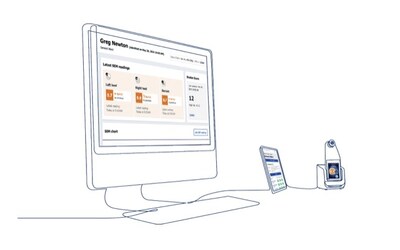
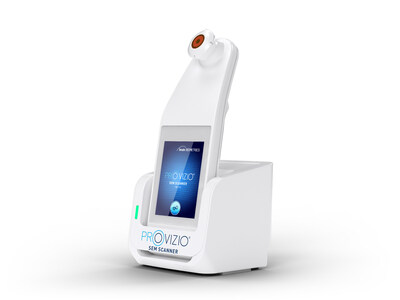
Bruin Biometrics' Provizio® SEM Scanner uses biocapacitance to measure changes in localized tissue fluid associated with pressure-induced damage, giving clinicians an objective, anatomically specific biomarker to use alongside their own judgment.
"We don't ask clinicians to guess a patient's blood pressure by looking at them, and since pulse oximetry we would never guess at blood oxygen by checking for purple lips. Yet in pressure injury prevention – a condition responsible for 50% more fatalities per year than car accidents - we have kept asking them to see damage that begins invisibly beneath the skin. Outdated tools have failed nurses and kept patients in harm's way, in spite of heroic clinical efforts. Leading healthcare organizations have stopped accepting skin guessing, instead using an objective biomarker of skin and tissue to reduce harm and eliminate preventable pressure injuries. The same nurse equipped with the right tools keeps patients safer than before. Better information enables better outcomes." — Martin Burns
A window the guideline recognizes and evidence that prevention works
The Guideline describes the time between detecting focal edema and the appearance of a visible injury as a "window of opportunity for enhanced prevention." Two meta-analyses it reviewed found focal edema was detected over four days before a pressure injury became visible and diagnosable. That's four days to reposition, offload, redistribute pressure and intensify care while the skin is still intact.
The Guideline highlights that clinicians who intervene in that window change outcomes. An eight-study meta-analysis conducted for the Guideline found that using focal edema measurements to guide prevention was associated with a 64% lower relative rate of pressure injuries (relative risk 0.36). Diagnostic-accuracy studies reported sensitivity up to 91% and area under the ROC curve up to 0.92. In practice, more than 1.5 million patients have been scanned to date, and real-world programs have prevented an estimated 50,000 injuries.
"In the outcome that matters most, helping patients avoid a broken skin pressure injury, SEM-guided prevention performed better. Patients experienced fewer injuries. That is safer care. If objective information can identify damage earlier and help prevent an injury, why would we keep asking clinicians to work without it?" — Martin Burns
Know whether prevention is actually working
SEM scanning does more than flag early damage. SEM-guided care protocols with consistent measurements tell clinicians whether tissue is responding after an intervention, turning prevention into a closed loop safety system: measure the biology, intervene, measure again, keep the skin intact.
"A hospital can spend $50,000 on a specialized bed, but the bed is not the outcome; intact skin is. If you're spending that much to protect a patient, don't you want to know whether it's working? We measure blood pressure to see if a medication is working and oxygen saturation to see if a patient is breathing well enough. PI prevention now has a Guideline recommended biomarker held to the same standard." — Martin Burns
More equitable protection for patients with darker skin tones
The Guideline recognizes an urgent equity problem: erythema and the discoloration of deep tissue injury can be subtle or invisible in medium and dark skin, delaying detection until damage is more severe. Because SEM scanning measures fluid beneath the skin, its results do not depend on what can be seen at the surface.
"Objective assessment should not depend on how easily damage shows against a patient's skin tone. SEM scanning measures the underlying physiology regardless of skin tone. The Guideline recognizes this may enhance assessment in darker skin tones and help reduce health inequities." — Vignesh Iyer, Senior Vice President, Global Medical, Regulatory and Quality Affairs, Bruin Biometrics
Better outcomes at lower cost
After reviewing the economic models, the Guideline Governance Group concluded that integrating focal edema measurement would "probably lead to cost savings." Independent, peer-reviewed analyses by Padula and Posnett place objective, biomarker-guided prevention in the dominant quadrant of health economics showing better outcomes at lower cost, with one US model estimating $4,054 in savings per acute-care admission and return on investment within a year.1
The mechanism is simple: cost explodes when intact skin becomes a broken-skin wound. CMS FY2023 MedPAR data show patients with hospital-acquired heel or sacral pressure injuries stayed 24.9 days on average, versus 10.3 days for comparable patients without an injury: That's 14.6 additional inpatient days driving average supply spending from $3,140 to $9,173 per case, a 192% increase.
"Keeping skin intact is both the clinical objective and the economic strategy. If the skin never breaks, the patient avoids the wound, the suffering and everything that follows. Prevention doesn't make treatment cheaper, it removes the need for it." — Martin Burns
From no direction in 2019 to recommended in 2026
The 2019 Guideline reviewed SEM but gave no directional recommendation for general use. In 2026, after evaluating clinical outcomes, measurement performance, effect on injury rates, resources, feasibility, acceptability and equity, the Guideline Governance Group reached a positive, conditional recommendation to use focal edema results where the technology is available and feasible.
The recommendation is conditional. SEM scanning remains an adjunct to visual and tactile assessment and is not, by itself, diagnostic of a pressure injury. These qualifications describe how SEM scanning should be used, not whether it should be used. The direction is clear.
"When you change what clinicians can see, you change what they can do. They can measure the biology, act earlier and keep more patients' skin intact. SEM scanning is recommended practice because patients are safer when clinicians have this information." — Martin Burns
The Fourth Edition International Guideline and supporting materials are available at internationalguideline.com.
About Bruin Biometrics
Bruin Biometrics is a medical device company transforming pressure injury prevention through objective, physiologically based assessment. The Provizio® SEM Scanner uses biocapacitance to identify and measure changes in localized tissue fluid associated with pressure-induced damage before those changes become visible at the skin's surface — helping clinicians detect early tissue damage, direct anatomically targeted care, monitor tissue response and pursue the defining endpoint of prevention: keeping skin intact. For more information, visit www.bruinbiometrics.com.
Media Contact
Ryan Kraudel • VP Marketing • [email protected] • +1-301-268-9494
Important information: SEM measurements are not independently diagnostic of a pressure injury. Results should be evaluated in the context of the patient's overall condition, established clinical protocols, clinical judgment and the product's applicable indications for use.
1 Padula, W. V., et al. 2020
SOURCE Bruin Biometrics, LLC




Share this article