Tsingke Highlights How Biotech Teams Can Evaluate and Advance Antibody Candidates at PEGS Europe 2026
From early antibody hits to engineered formats and antibody–oligonucleotide conjugates, Tsingke helps R&D teams generate the data they need to make the next development decision.
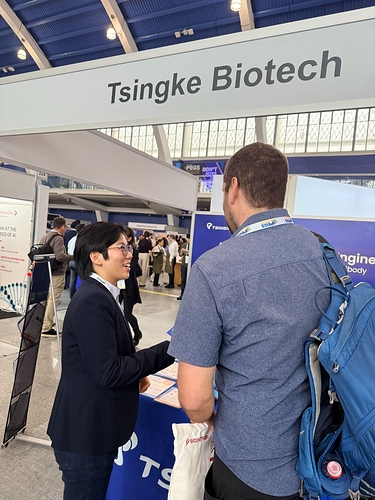
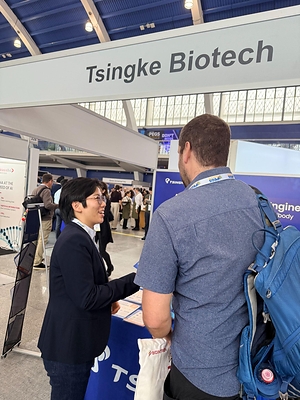
LISBON, Portugal, Nov. 20, 2026 /PRNewswire/ -- An antibody that binds its target is a starting point for drug discovery. R&D teams still need to determine which candidates can be produced for follow-up studies, which retain the desired binding properties in the intended format, and which merit further investment. At PEGS Europe 2026 in Lisbon, Tsingke highlighted how pharmaceutical and biotechnology teams can address these questions through an integrated workflow spanning antibody discovery, recombinant expression, engineering and characterization.
Which early antibody hits are worth advancing?
Teams starting with an immune sample or existing hybridoma clones may need to turn a list of hits into a set of recombinant antibodies they can compare. Tsingke's single B-cell screening workflow preserves native heavy- and light-chain pairing, while hybridoma sequencing gives teams a route to recover sequences from existing clones. Once candidates are expressed, teams can compare binding using assays selected for the project, such as cell-based binding by flow cytometry or binding kinetics measured by BLI or SPR. These data help teams prioritize candidates for follow-up testing.
Will the antibody retain the properties the program needs?
When a program moves an antibody into a different format, such as a Fab or scFv, the team needs to know whether the reformatted molecule still meets its binding criteria. Teams can use recombinant expression and binding characterization to compare formats before committing to more extensive studies. For programs that require different binding behavior at different pH values, Tsingke also supports pH-dependent screening and engineering, with characterization tailored to the program's objectives.
What does the team need to know before testing an antibody–oligonucleotide conjugate?
For teams evaluating an antibody–oligonucleotide conjugate (AOC), the next decision often depends on having a characterized sample for follow-up studies. Tsingke brings together antibody production, oligonucleotide synthesis, conjugation, purification and LC-MS characterization. The resulting analytical data help teams assess the conjugated material and select samples for subsequent functional evaluation.
"Teams come to us at different points in development. Some have early antibody hits and need a consistent way to compare them. Others already have a lead and need to understand how a change in format or conjugation affects the molecule they plan to test," said Yuan Wu, International BD Manager at Tsingke. "We start with the decision the team needs to make and align the production and characterization work with that decision."
About Tsingke
Beijing Tsingke Biotech Co., Ltd. provides molecular biology and biologics research services to pharmaceutical, biotechnology and academic teams. Its services include custom DNA and RNA synthesis, antibody discovery, recombinant protein production, antibody engineering and analytical characterization.
For company updates, follow Tsingke Biotech on LinkedIn.
CONTACT: [email protected]




Share this article