7 Outdoor Learning Activities Preschoolers Can Try Close to Home
Simple walks, observation games, and movement activities can give young children opportunities to build vocabulary, early math, and curiosity close to home.
GREENVILLE, S.C., Nov. 10, 2026 /PRNewswire/ -- As fall brings cooler temperatures and changing leaves to Greenville, families have a chance to take preschool learning outside. A neighborhood walk, backyard, or nearby park can give children plenty to notice and discuss while encouraging them to count, compare, and ask questions. Tami Nix, president of Archway Academy, has worked in early childhood education since 1985 and views outdoor learning as an extension of the classroom, where hands-on exploration becomes part of the learning process.
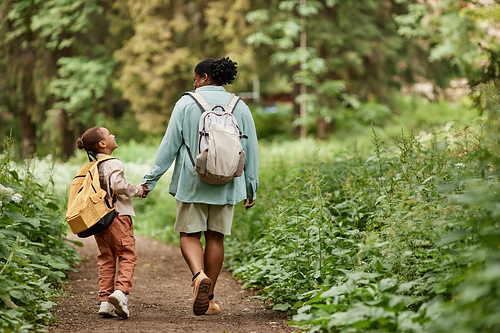
Archway Academy's Greenville campus features approximately 4.5 acres of outdoor space, including age-specific play areas and a covered outdoor classroom for nature exploration and other activities. That emphasis aligns with Centers for Disease Control and Prevention (CDC) guidance, which recommends two to three opportunities for outdoor active play each day, weather permitting, and 90 to 120 minutes of moderate-to-vigorous physical activity during an eight-hour day in early care. Families can use the season in the same way. "Outdoor time can be as simple as giving children a reason to look more closely at what is around them," Nix said. "That is often enough to start a conversation or a new question."
Archway Academy educators recommend trying these seven activities:
- Turn the walk into a nature hunt. Choose a few things to look for, such as a yellow leaf, something rough, or something shaped like a circle. Naming what children see gives them opportunities to practice descriptive language.
- Stop for a sound check. Pause and ask children what they can hear before identifying the sounds together. Birds, wind, footsteps, traffic, or leaves can become starting points for conversation.
- Sort or make patterns with safe finds. Fallen leaves, pinecones, sticks, or other safe natural objects can be grouped by size, color, or shape. Children can also arrange them into a simple repeating pattern and explain how they decided what came next.
- Count and compare along the way. Count steps between two landmarks, compare which stick is longer, or see which tree has more leaves beneath it. Simple questions can bring early math into the walk.
- Create a movement trail. Pick safe landmarks and ask children to hop to one, walk around another, balance along a path, or move quickly and slowly between two points. Outdoor space gives children room to practice movement patterns that are harder to explore indoors.
- Ask one "I wonder" question. A changing leaf, seed, insect, cloud, or unusual sound can open a simple conversation: "I wonder where that came from?" or "What do you think will happen next?" The goal is to encourage children to make observations, share ideas, and explore possible explanations.
- Make a story from one discovery. Use something from the walk, such as a fallen pinecone or an animal, and ask the child to build a story around it. They might imagine where it came from, what happened before they found it, or where it could go next.
"One walk can involve many activities at once," Nix said. "A child may be counting something one minute and telling a story about what they found the next." A review of 66 studies published in Educational Research Review found that nature-based learning in early childhood was linked to benefits in areas such as thinking skills and social-emotional development. Most of the research focused on children ages 3 to 6 and included activities built around play, movement, and interaction with others.
A short walk can be enough to spark a child's curiosity. Allowing children to lead part of an outdoor activity can help parents discover what captures their attention, from a changing leaf to an unfamiliar sound. Returning to the same places throughout the season can give children a chance to notice what has changed since their last visit. "When children are outside, the environment keeps giving them something new to respond to," Nix said. "Fall gives families so many options to let children experience change firsthand."
About Archway Academy
When Tami Nix had the opportunity to acquire a small childcare business in 1985, she saw the foundation for something more than traditional daycare. More than 40 years later, Archway Academy has grown into a multi-site South Carolina early childhood education organization serving children from infancy through four-year-old kindergarten (4K), along with after-school and summer programs. Archway Academy's approach focuses on preparing the whole child through hands-on learning, trained teachers, parent involvement, and age-appropriate experiences that support children socially, emotionally, physically, and academically. Its newest campus in Greenville extends that approach across approximately 4.5 acres of park-like outdoor space. For more information, visit Archway Academy.
References
- Ardoin, N. M., & Bowers, A. W. (2020). Early childhood environmental education: A systematic review of the research literature. Educational Research Review, 31, 100353. Doi.org/10.1016/j.edurev.2020.100353
- Centers for Disease Control and Prevention. (2026, April 3). HIOPS for physical activity. cdc.gov/early-care-education/php/obesity-prevention-standards/physical-activity.html
Media Inquiries
Karla Jo Helm
JOTO PR™
727-777-4629
Jotopr.com
SOURCE Archway Academy






Share this article