


EvoDECO® Next: Sidel brings new freedom and material efficiency to roll-fed labelling
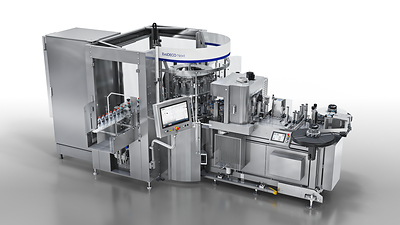
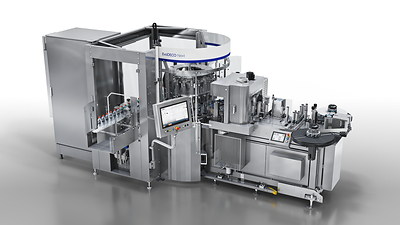
Sidel has introduced EvoDECO® Next, its next-generation roll-fed labelling solution, combining high-performance production with greater decoration freedom and significantly lower material consumption.
LONDON, Oct. 14, 2026 /PRNewswire/ -- "EvoDECO Next rethinks what is possible with roll-fed labelling. Producers no longer need to choose between industrial efficiency, material reduction and impactful decoration. By enabling partial labels on a simplified roll-fed architecture, we can help customers use less material, create new brand opportunities and maintain the performance their production lines demand," said Anne Philippe Lafon, Product Manager – Labelling, at Sidel.
Less material, greater brand impact
Depending on the decoration selected, Sidel says partial labelling can reduce label surface by up to 75% compared with a conventional wraparound label. The maximum figure is based on its illustrated 90° partial-label configuration, while a 180° configuration reduces label surface by 50%.
For high-volume producers, partial labelling can deliver significant savings. In one Sidel example, moving from a full wraparound label to a 90° partial label reduced BOPP consumption by 208.4 tonnes per year, cut associated CO₂ emissions by 346 tonnes and generated approximately €723,000 in annual raw material savings.[1]
Integrated technology to simplify high-performance production
EvoDECO Next has been engineered as an integrated platform, rather than an existing roll-fed machine adapted for shorter labels. Its architecture combines Cutter 2.0, Smart Buffer, Smart Camera and High-Speed changeover parts, with feeding, cutting, transfer and control designed to work seamlessly together.
At the heart of the new partial-labelling capability is the new cutting system, positioned directly on the transfer drum. The rotary cutting device handles shorter labels using two blades cutting faster at high speed.
The Smart Buffer is designed to absorb reel changes without variation in production speed. Its lean configuration requires no additional footprint or changes to the standard film path and allows the splicing operation to be managed at the nominal speed, helping protect overall production efficiency.
Meanwhile, the Smart Camera enables reference-mark-free label management. Removing the conventional reference mark and quiet zone increases raw-material and label flexibility, while creating further opportunities for material savings. Dedicated software supports autocorrection, improved auto-homing and enhanced diagnostics.
To find out more, including how businesses can access this support, visit the Sidel website.
¹ Calculation assumptions: Based on a 61,000 bottles-per-hour production line producing approximately 459 million bottles annually. Label surface area reduced from 20,160 mm² to 5,040 mm² per bottle by moving from a full wraparound label to a 90° partial label configuration. CO₂ and cost savings are based on Sidel modelling assumptions and may vary depending on product, material specification and operating conditions.
Editor's notes:
The images within this document are for illustrative purposes only and should not be used for reproduction. Please click here to access high-resolution images for this story.



Share this article