


Experts Say More Research Is Needed to Understand Effects and Benefits of Distributing Free Period Products
NEW HAVEN, Conn., Oct. 7, 2026/PRNewswire/ -- According to Alliance for Period Supplies, scientific research measuring the prevalence of period product insecurity – also recognized as period poverty – and the harms it causes has increased significantly in recent years. However, more investigation is required to document the effects and benefits of providing free products to people who struggle to afford them, according to a report issued recently by a panel of experts.
The National Diaper Bank Network Research Advisory Council, consisting of researchers, advocates, and practitioners, came to the consensus after reviewing the growing body of peer-reviewed literature about what happens in the U.S. when people cannot afford the material basic necessities they require to manage their menstrual cycles.
The findings are expanded on in a working paper titled "Period Product Insecurity in the United States: Current Evidence, Research Gaps, and Future Directions," produced by the Urban Institute.
"Multiple studies have linked period product insecurity with mental health issues and with missing work and school," said Kelley E.C. Massengale, MPH, PhD, director of research and statistics at the Alliance for Period Supplies and National Diaper Bank Network. "That suggests there are quantifiable benefits to supplying menstrual products to people who struggle to afford them. Advocates need research that documents a clear return on investment if they want to get policymakers' attention."
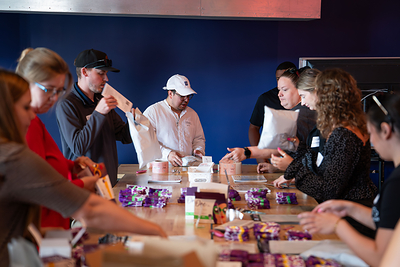
The paper notes that nonprofit period supply banks, many affiliated with the Alliance for Period Supplies, are serving local communities throughout the country. This network, which distributed more than 50 million period products in 2025, offers an opportunity for researchers to further investigate period product insecurity and the efficacy of efforts to address it.
Key points in the working paper include:
- In many states, legislation has passed requiring period supplies in schools, prisons, and other public establishments. There is a need for comparative studies examining implementation experiences and the outcomes of programs across states and communities.
- The field now has a standard measure, the Van Ness Period Product Insecurity Scale, which will allow scholars to determine local prevalence of period poverty and to quantify the success of attempts to address it.
- Additional evidence is needed to explore how access to products influences physical and mental health as well as participation in work, school, and community life. One size does not fit all. Programs are most successful when tailored to the needs of a specific community.
About Alliance for Period Supplies
The Alliance for Period Supplies – an initiative of the National Diaper Bank Network (NDBN) – is dedicated to eliminating period poverty/period product insecurity and ensuring menstrual equity for all. Launched in May 2018, with the support of founding sponsor Kotex®, the Alliance for Period Supplies raises national awareness of period poverty and supports the development and expansion of its more than 145 allied period supply programs distributing millions of essential menstrual products to individuals who struggle to afford them. More information on Alliance for Period Supplies is available at allianceforperiodsupplies.org, and on Instagram (@periodsupplies), X (@periodsupplies) and Facebook (@allianceforperiodsupplies).
Contact:
Alliance for Period Supplies
Briana Haas
203.309.1364
[email protected]
SOURCE Alliance for Period Supplies






Share this article