


Farm Tour Takes Collaborative Approach to Endangered Species
Event connects agricultural, conservation and technology stakeholders
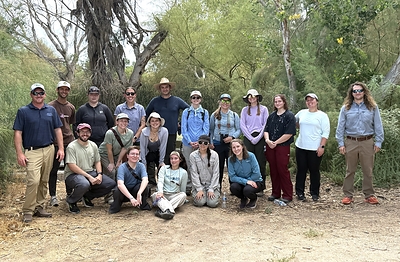
WESTMINSTER, Colo., Oct. 1, 2026 /PRNewswire/ -- Approximately 40 participants joined the third annual Endangered Species Act (ESA) Farm Tour, held September 14-16 across Minnesota and South Dakota. The National Alliance of Independent Crop Consultants (NAICC), Weed Science Society of America (WSSA), and the Foundation for Environmental Agriculture Education (FEAE) host the event each year at various locations.
"Every ESA farm tour underscores the value of bringing regulators, researchers, crop consultants, conservation specialists and agricultural practitioners together in the field to identify workable approaches that advance environmental stewardship and agricultural productivity," says Dawn Refsell, Ph.D., WSSA President-Elect and 2026 ESA Farm Tour participant. "Ultimately, the tours result in facilitating new ways to collaborate and new ideas to overcome the many agricultural and environmental challenges we face to ensure a better future."
This year's tour brought together representatives from the U.S. Environmental Protection Agency, U.S. Fish and Wildlife Service, U.S. Department of Agriculture, NAICC, WSSA, South Dakota State University, University of Minnesota, and Southern Minnesota Beet Sugar Cooperative, among other area agricultural stakeholders. Over three days, participants examined how conservation practices, agricultural technology and practical mitigation measures can support both productive farming and protection of threatened and endangered species.
"The open discussions we had during the tour made it clear to me that crop consultants have a central role to play in helping farmers implement the new pesticide ESA requirements," says Steve Hoffman, Managing Agronomist at Indepth Agronomy, Manitowoc, Wisconsin, and NAICC member. "I am encouraged and excited about the promise of these agencies working with production agriculture in positive and collaborative ways to improve the trajectory of endangered species and to create examples of success of which we can all be proud."
The tour began at Split Rock Creek State Park, near Jasper, Minnesota, with a discussion of habitat restoration for the Topeka shiner, a freshwater minnow, and how ESA mitigation measures can help protect the species. Participants also walked through a Pesticide Use Limitation Area to better understand its features and implications for adjacent agricultural production land. University of Minnesota researchers updated participants on current work in soil conservation, soil health and erosion mitigation. A visit to the Southern Minnesota Beet Sugar Cooperative, Renville, Minnesota, highlighted the need for pest management solutions for weed and disease challenges, as well as the role crop rotation systems can play in reducing erosion in low-residue crops.
On the second day, participants visited a grain and livestock farm operated by David and Benji Hiebert, near Iroquois, South Dakota. They discussed how rotational grazing and cover crop programs have improved soil health and water quality while supporting efficient livestock production. Later, an aerial application demonstration showed how fixed-wing aircraft can manage boom width and offset. A follow-up discussion at an airport at Brookings, South Dakota, covered cockpit controls and the mapping programs pilots use to navigate around sensitive areas and account for environmental factors during application.
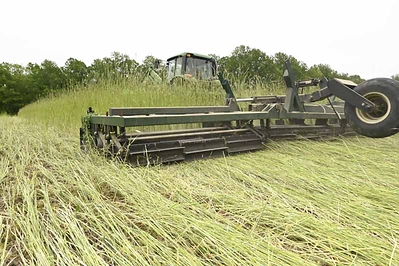
At South Dakota State University, the group considered how ESA requirements affect weed management and how precision agriculture could help address those challenges. Topics included technologies that use electricity to target weeds and variable-rate nitrogen applications tailored to crop needs.
"For me, the 2026 ESA Farm Tour was valuable, because it gave us the opportunity to have real conversations in the field about how pest-management decisions are made, how we implement conservation practices, and the challenges growers face every day," says James Todd, Plainview, Texas. "As an independent crop consultant, I appreciated being able to share how we use integrated pest management, field experience, and science to help growers make practical decisions while also protecting the environment and meeting ESA requirements. I came away from the tour feeling that this kind of face-to-face dialogue is essential for building trust and developing solutions that work for both agriculture and species conservation."
To learn more about WSSA and its Endangered Species initiatives, visit: https://wssa.net/endangered-species/. For more about NAICC, visit: https://naicc.org/, and for more about FEAE, visit: https://naicc.org/feae/.
About the Weed Science Society of America
The Weed Science Society of America is a nonprofit scientific society, founded in 1956 to encourage and facilitate the development of knowledge concerning weeds and their impact on the environment. The Society promotes research, education and extension outreach activities related to weeds, provides science-based information to the public and policy makers, fosters awareness of weeds and their impact on managed and natural ecosystems, and strengthens cooperation among weed science organizations across the nation and around the world. For more information, visit www.wssa.net.
SOURCE Weed Science Society of America




Share this article