


In HelloNation, Accounting Expert Karen Eberhart Metcalfe Highlights What Illinois Businesses Should Know About New Sales Tax Rules
BOLINGBROOK, Ill., Sept. 4, 2026 /PRNewswire/ -- As more small businesses expand across state lines, understanding the evolving rules surrounding out-of-state sales has become increasingly important. In a HelloNation article, Karen Eberhart Metcalfe of Eberhart Accounting Services, PC in Bolingbrook, IL, explains how the sales tax updates will affect business owners selling to customers in other states and what steps to take to stay compliant.
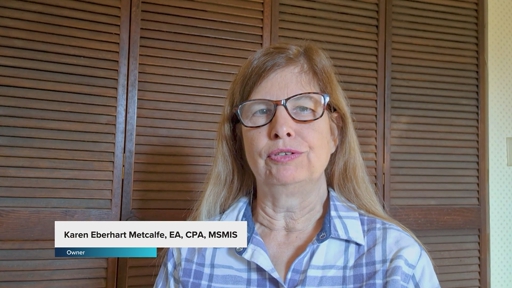
The article notes that while the concept of economic nexus has existed since the 2018 Supreme Court ruling in South Dakota v. Wayfair, Inc., states continue to refine their definitions and thresholds. Many states are adjusting their reporting requirements, sales thresholds, and marketplace facilitator guidelines. Even smaller Illinois businesses may find themselves subject to new sales tax obligations, particularly those selling through online platforms or shipping products beyond state borders.
The foundation of these rules lies in economic nexus, which determines when a business must collect and remit sales tax in another state. This requirement is often triggered when a company exceeds a set number of transactions or total sales within that state, commonly $100,000 in sales or 200 separate transactions annually. As more states refine their standards, The article recommends that business owners review where their customers are located and monitor sales activity in each jurisdiction throughout the year.
For Illinois businesses, it's important to understand that economic nexus applies to more than just physical products. Some states include digital goods, software, or online services in their definitions of taxable activity. Companies selling to customers in nearby states such as Indiana, Wisconsin, and Iowa may already be approaching nexus thresholds without realizing it. Failure to register and collect sales tax when required can result in penalties, interest, and back taxes that add up quickly.
Marketplace facilitator rules are another key part of the sales tax changes. Large online platforms like Amazon, Etsy, and eBay are often required to collect and remit tax on behalf of sellers, but only for transactions that occur through their marketplaces. Businesses that also sell directly through their websites or other channels are still responsible for collecting and filing sales tax on those sales independently. The article advises reviewing each state's guidance to avoid double collection or missed filings.
Some states are also expanding their definition of gross sales to include additional charges such as shipping, handling, and service fees. Others are tightening reporting schedules or requiring more detailed data submissions. For businesses with growing out-of-state sales, these updates underscore the importance of accurate reporting and documentation. Illinois business owners are encouraged to maintain organized records of sales totals by state, transaction counts, and any tax exemptions.
To simplify compliance, the article recommends integrating automation tools. Sales tax software can connect with systems like QuickBooks, Shopify, or WooCommerce to apply the correct tax rate for each transaction and automatically generate reports for filing. These tools reduce manual data entry and minimize the risk of errors, allowing business owners to stay compliant without spending hours managing paperwork.
Service-based businesses face additional complexity, as some states tax services while others do not. Understanding how each state classifies your products or services is essential, especially for companies offering both physical goods and digital or professional services.
The article also cautions that crossing a nexus threshold mid-year can change your filing requirements immediately. Some states require registration and collection as soon as the threshold is reached, while others allow a grace period. Monitoring sales data monthly helps ensure you remain proactive rather than reacting to penalties later. Once registered in a new state, timely filing is critical, even if no tax is owed for a particular period.
In Illinois, maintaining consistent and detailed recordkeeping is the best protection. Tracking total sales by state, documenting the number of transactions, and saving receipts for exempt sales will make compliance much easier. When in doubt, consulting with an experienced accountant ensures your business meets all state-specific requirements and stays current with changing laws.
The sales tax updates represent a broader move toward consistency and enforcement across state lines. As e-commerce continues to grow, states are increasingly focused on ensuring businesses collect appropriate revenue wherever their customers are located. The article emphasizes that staying informed about economic nexus rules allows business owners to expand confidently while avoiding costly compliance errors.
For Illinois businesses engaging in out-of-state sales, understanding economic nexus is no longer optional; it's an essential part of responsible growth. With clear records, reliable systems, and professional support, business owners can navigate these sales tax changes with confidence and keep their focus on building success across new markets.
The article, Selling Out-of-State? What to Know About the New Sales Tax Rules, features insights from Karen Eberhart Metcalfe, Accounting Expert of Bolingbrook, IL, in HelloNation.
About HelloNation
HelloNation is America's Good News Network, a premier media platform built on the idea that good news travels faster when real people tell real stories. Through its community-focused publications and innovative "edvertising" approach, HelloNation delivers content that informs, inspires, and spotlights the leaders making a meaningful impact in their communities.
SOURCE HelloNation






Share this article