


New Research Finds Collective View of What It Means to Prosper
Prosper Global study based on conversations with more than 1,100 people across six countries challenges conventional assumptions about prosperity and progress
PORTLAND, Ore., Sept. 10, 2026 /PRNewswire/ -- Across six countries, people facing conflict, the effects of climate change, and economic hardship described prosperity as something shared, not as individual wealth or material success.
That collective view is among the central findings of What It Means to Prosper, a new report from Prosper Global (formerly Mercy Corps) drawing on 396 individual and group conversations with more than 1,100 people in Colombia, the Democratic Republic of Congo, Indonesia, Kenya, Syria, and Ukraine.
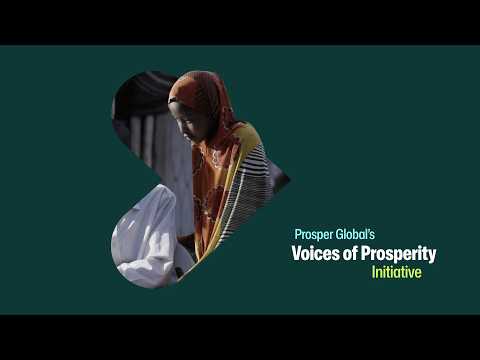
Rather than start with its own definition of prosperity, Prosper Global asked people to describe in their own words what it means to prosper and what stands in the way.
In the Democratic Republic of Congo (DRC), one woman said: "Even if I have enough and the other person does not, I can't live in peace. For me to live my life in peace, he must also find his share. Prosperity is a community effort."
In Colombia, a woman said: "It is no use for one person to prosper if others are left behind; there must be progress for every member of the community."
One of the clearest findings was what people did not associate with prosperity. Material wealth was mentioned in fewer than 10 percent of the conversations in five of the six countries. Instead, people spoke about safety, opportunity, and the ability to plan for the future: to educate their children, find meaningful work, grow a farm or business, and make choices about what comes next.
The barriers to prosperity differed by context, from conflict and the consequences of a changing climate to a lack of economic opportunity, particularly for young people. But people also made clear they are not passively waiting for change: they described savings groups, local businesses, mutual aid, and neighbors sharing resources, with community support appearing in more than two-thirds of conversations.
"What people told us is simple: none of us truly prospers alone," said Tjada D'Oyen McKenna, CEO of Prosper Global. "Across very different circumstances, we heard universal aspirations: choice, opportunity, and the chance to build a better future for the people we love. Our role as a partner begins with listening and helping overcome barriers that are too large for any community to tackle alone. At a moment when so much of the world is turning inward, our futures remain interconnected. Prosperity cannot belong to some while others are left behind. Survival should never be the limit of our ambition for one another."
What It Means to Prosper is the first report from Prosper Global's Voices of Prosperity Initiative, an ongoing effort to listen, learn, and share community perspectives on what it takes to prosper. The research reflects a belief at the heart of Prosper Global: when every community can prosper, all of humanity moves forward. Read the full report and explore the voices, stories, and findings here.
About Prosper Global
Barely enough is not enough for anyone. Prosper Global (formerly Mercy Corps) is a humanitarian organization working alongside communities facing conflict, climate change, and economic hardship to meet urgent needs and create the conditions for lasting progress. Today's challenges demand new solutions, so we pair local knowledge with global resources to help communities build what's needed, test what's possible, and scale what's proven so that people everywhere can pursue a full life on their own terms. In 2025, we reached more than 36 million people.
SOURCE Prosper Global





Share this article