Only About 5,000 U.S. Truck Drivers Can Haul America's Most Sensitive Freight. The Driver Crackdown Makes That Number Matter More.
As new federal rules push drivers out of trucking, Roadmaster Group's Michael Fisk says shippers of hazmat, explosives and defense cargo face the tightest labor market in the industry.
GLENDALE, Ariz., Nov. 4, 2026 /PRNewswire/ -- The driver shortage is the biggest story in trucking this year. For carriers that move hazardous materials, explosives and Department of Defense cargo, it started long before 2026. Michael Fisk, Vice President of Roadmaster Group, estimates that of roughly 2.5 million over-the-road drivers in the U.S., only about 5,000 have the endorsements, experience and safety record to haul that freight.
A Shortage Driven by Who Is Allowed to Drive
This year's shortage is coming from the supply side. The Federal Motor Carrier Safety Administration (FMCSA) says English proficiency enforcement has already taken more than 26,000 drivers off the road. The agency also estimated that its non-domiciled CDL rule, in effect since March 16, would force about 194,000 drivers out of the freight market.
New capacity has not filled the gap. Carriers are rejecting contracted loads at roughly three times the 2023 to 2025 rate, and FreightWaves SONAR expects the market to stay tight through early 2027. On a July earnings call, Schneider President Jim Filter told investors the company would now call the market "driver-constrained."
The Smallest Pool in Trucking
The federal Pipeline and Hazardous Materials Safety Administration (PHMSA) counts 2.3 million hazardous materials shipments a day across all modes. The most sensitive of those loads need a driver most fleets never have to find. Fisk lays out the math this way: start with about 2.5 million over-the-road drivers. Roughly 10 percent hold both hazmat and tanker endorsements. Filter for experience, a clean safety record and willingness to team drive, and the qualified pool drops to about 5,000 nationwide.
"Most of the industry is learning this year what a constrained driver market feels like," said Fisk. "For hazmat and defense freight, that market has always been small. When a shipper hands us explosives or a government load, the real question is whether a qualified, cleared driver is available to take it. There are only a few thousand of those drivers in the country, and right now every carrier wants them."
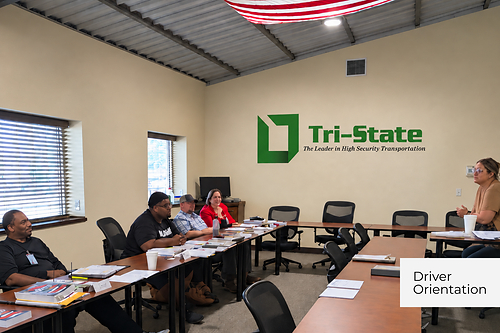
Tri-State Motor Transit Co., Roadmaster Group's hazmat and defense carrier, has answered by developing those drivers itself. Its drivers hold secret security clearances. New hires go through five days of orientation at eight to 10 hours a day, with homework each night, while a typical industry orientation runs four to eight hours total. Drivers are paid a daily rate, so no one is paid to rush a hazmat load.
The results show up in retention. Large truckload carriers have averaged annual driver turnover of about 93 percent over nearly three decades, according to American Trucking Associations (ATA) data cited by FreightWaves. Since Fisk joined Roadmaster Group in 2014, the company has grown from 120 to about 600 trucks and cut annual driver turnover from more than 110 percent to about 45 percent.
"Retention is a safety number," Fisk said. "Every driver we keep already knows our protocols, our customers and exactly what is on the trailer behind them. For a shipper moving sensitive freight, a carrier's turnover rate says more about risk than almost anything on a rate sheet."
Five Questions to Ask Before a Sensitive Load Moves
The ATA has said some carriers reject up to 90 percent of driver applicants for failing basic prerequisites. Fisk recommends shippers of hazmat, explosives and government freight ask their carriers:
- How many of your drivers hold both hazmat and tanker endorsements, and how many have hauled freight like mine?
- What was your driver turnover rate last year?
- How long is your orientation, and what does it cover on hazmat handling and security?
- Will your own driver haul my load, or could it be brokered to another carrier?
- How are your drivers paid, and does that pay structure reward speed?
"Shippers spend a lot of time checking a carrier's authority and insurance," said Fisk. "With capacity this tight, they should spend just as much time on the driver. The truck is the easy part to replace."
About Tri-State Motor Transit Co.
Tri-State Motor Transit Co., a division of Roadmaster Group, is one of the nation's leading carriers specializing in hazardous materials, arms, ammunition, explosives and secure government freight. Hauling approximately 30,000 loads annually, 99 percent of which involve hazardous materials, Tri-State operates as the largest for-hire transporter for the Department of Defense. Roadmaster Group is based in Glendale, Ariz. For more information, visit roadmastergroup.com.
SOURCE Tri-State Motor Transit





Share this article