


Uneven Temperatures Explained in HelloNation Article Featuring Residential Heating & Cooling Expert Spencer Greenamyre
The article examines why some rooms stay hotter or colder and outlines practical solutions for improving whole-home comfort.
LEAVENWORTH, Kan., Oct. 20, 2026 /PRNewswire/ -- What causes one room in a home to stay hotter or colder than the rest? HelloNation answers that question in an article featuring insights from Residential Heating & Cooling Expert Spencer Greenamyre of Besel's Home Improvement Company in Leavenworth, Kansas.
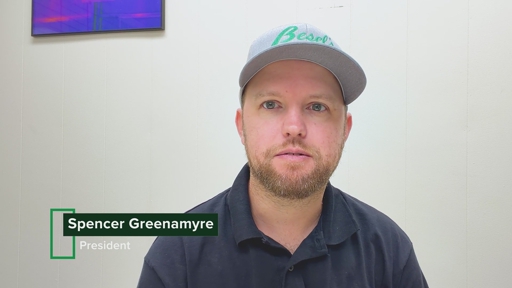
The article explains that uneven temperatures are a common concern, particularly in older homes where heating and cooling systems may no longer meet the home's current needs. While many homeowners assume the thermostat is responsible, the article notes that several factors often work together to create inconsistent indoor comfort. Understanding these causes helps homeowners focus on lasting improvements instead of temporary adjustments.
According to the HelloNation article, one of the most common issues involves airflow restrictions. Conditioned air must travel through a network of ducts before reaching each room, and any blockage, damage, disconnection, or poor sealing can reduce the amount of air delivered to a particular space. The article also explains that closed or blocked supply vents, dirty air filters, and furniture placed over vents can interfere with airflow and contribute to uneven temperatures throughout the home.
The article also highlights the importance of sealing gaps in insulation in maintaining consistent indoor conditions. Older homes often have aging or insufficient insulation in walls, attics, or crawl spaces, allowing heat to move more freely between indoor and outdoor spaces. During warmer months, poorly insulated rooms can gain heat more quickly, while colder weather allows warmth to escape faster. Air leaks around windows and doors can further reduce home comfort by allowing outside air to enter the living space.
The HelloNation article explains that the home's layout can also influence comfort. Rooms with large windows, high ceilings, or extended afternoon sun exposure frequently become warmer than interior spaces. Upper floors generally retain more heat because warm air naturally rises, while finished basements often remain cooler throughout the year. These natural temperature differences may become even more noticeable when an HVAC system was not originally designed to account for varying heating and cooling demands.
The article further notes that aging duct design often contributes to inconsistent temperatures. Many older homes were built before modern energy efficiency standards, and existing duct systems may not distribute conditioned air evenly. Home additions and remodeling projects can also create new heating and cooling challenges when the original HVAC system has not been updated to accommodate expanded living areas.
Rather than constantly adjusting the thermostat, the article recommends identifying the underlying cause of the problem. A complete HVAC system inspection can uncover airflow restrictions, leaking ducts, insulation gaps, or improperly sized equipment that may be reducing efficiency and comfort. Residential Heating & Cooling Expert Spencer Greenamyre explains in the article that addressing these conditions can improve both comfort and system performance.
The article also outlines several practical steps homeowners can take to improve home comfort. Replacing dirty air filters, keeping supply and return vents unobstructed, sealing air leaks around windows and doors, and improving insulation can all help balance temperatures. In some situations, duct modifications, air balancing, or zoning systems may provide more precise temperature control throughout the home.
The article concludes that uneven temperatures rarely result from a single issue, especially in older homes where multiple conditions often overlap. By understanding the roles of airflow restrictions, duct design, insulation gaps, and overall HVAC system performance, homeowners can make informed improvements that create more consistent comfort while reducing unnecessary strain on their heating and cooling equipment.
Why One Room Is Always Hotter or Colder Than the Rest features insights from Spencer Greenamyre, Residential Heating & Cooling Expert of Leavenworth, Kansas, in HelloNation.
About HelloNation
HelloNation is America's Good News Network, a premier media platform built on the idea that good news travels faster when real people tell real stories. Through its community-focused publications and innovative "edvertising" approach, HelloNation delivers content that informs, inspires, and spotlights the leaders making a meaningful impact in their communities.
SOURCE HelloNation





Share this article