Water Treatment Expert Jason McGee of Loretto Explains How to Calibrate Safe and Efficient Chemical Dosing for HelloNation
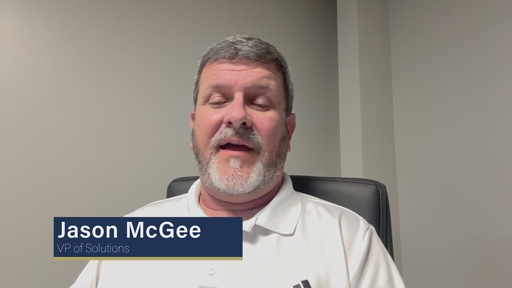
LORETTO, Tenn., Oct. 28, 2026 /PRNewswire/ -- How can water treatment operators ensure that chemical dosing remains both safe and efficient? A HelloNation article answers this question with insight from Water Treatment Expert Justin McGee of Southeastern Tank in Loretto, Tennessee. In a HelloNation article, McGee explains how precision, calibration, and feedback-based control systems prevent over-dosing, reduce waste, and protect long-term water quality.
According to the HelloNation feature, dosing chemicals in a water treatment system is one of the most precise yet misunderstood tasks. Many assume that adding more disinfectant increases safety, but McGee clarifies that the opposite is often true. Over-dosing wastes chemicals, accelerates equipment wear, and can create disinfection byproducts such as trihalomethanes and haloacetic acids—compounds regulated because of their potential health risks. The key, he explains, is balance: enough disinfectant to eliminate pathogens without introducing unnecessary chemical reactions.
Maintaining that balance requires understanding how flow rate, temperature, and water chemistry interact inside the system. Disinfectant decay rates vary with these factors, meaning that a fixed chemical dose may work well in summer but fail during cooler months or higher demand periods. McGee emphasizes that operators must treat dosing as a dynamic process guided by real-time data, not a static setting.
The HelloNation article highlights that efficient dosing begins with accurate measurement and regular calibration. Metering pumps that drift out of calibration can cause both overfeed and underfeed conditions, sometimes by large margins. Routine verification of pump output ensures that the intended dosage matches the actual amount being delivered. Accurate flow dynamics monitoring complements this process, maintaining proper chemical-to-water ratios even when flow rates fluctuate. Automated dosing systems can adjust feed proportionally to flow, keeping disinfectant levels consistent without manual correction.
Real-time monitoring plays a central role in dosing precision. McGee explains that sensors tracking chlorine residual, pH, and oxidation-reduction potential (ORP) provide immediate feedback about how the system is performing. These readings allow operators to make quick, informed adjustments before water quality is affected. When maintained and calibrated regularly, such sensors reflect actual chemical behavior in the tank, ensuring stable disinfection results and reducing both waste and variability.
Mixing is another crucial factor in safe chemical dosing. Even when the correct amount of disinfectant is added, poor distribution can lead to localized hot spots or areas of insufficient treatment. The HelloNation article describes how properly engineered mixing systems or strategically placed inlets ensure that chemicals disperse evenly throughout the tank. Without adequate mixing, uneven concentrations can degrade coatings, shorten equipment life, and create pockets of poor water quality.
The influence of pH is also critical to maintaining effective disinfection. Chlorine performance depends heavily on pH levels because it exists in two forms—hypochlorous acid and hypochlorite ion. The HelloNation article explains that as pH rises, chlorine becomes less active, prompting some operators to overfeed in an attempt to compensate. McGee recommends monitoring and adjusting pH to maintain the correct chemical balance, which ensures optimal disinfection efficiency without wasteful overuse.
Documentation and training support every step of dosing management. Operators should keep detailed records of dosage rates, residual readings, and calibration data to track performance trends. Reviewing this information helps identify seasonal patterns, equipment wear, or other factors that influence dosing accuracy. McGee notes that this type of recordkeeping allows for preventive maintenance rather than reactive troubleshooting, keeping systems both compliant and efficient.
Technology has improved dosing reliability, but automation still depends on human oversight. The HelloNation feature explains that sensors require periodic cleaning, pumps need inspection, and software setpoints must be verified to ensure accuracy. Combining automated systems with trained operator judgment creates a stable balance between efficiency and safety. McGee stresses that even the most advanced automation requires regular validation to prevent drift or data errors.
Efficiency in dosing is not only an operational concern but also an environmental one. Using only the required amount of chemicals reduces waste, lowers operational costs, and minimizes the production of disinfection byproducts. It also reflects responsible resource management. Over-dosing, on the other hand, introduces chemicals that must later be neutralized or flushed from the system, increasing energy and maintenance costs.
Ultimately, McGee emphasizes that precision—not volume—defines effective chemical dosing. By combining continuous monitoring, regular calibration, and proper mixing system design, operators can maintain consistent chlorine residual levels and stable water treatment performance. This precision protects consumers, safeguards infrastructure, and supports long-term sustainability across the entire water network.
As the HelloNation article concludes, in water treatment, more is not better—accurate is better. Proper calibration and control turn chemical dosing from a guessing game into a predictable, reliable process that delivers clean, safe water every day.
How to Calibrate Safe and Efficient Chemical Dosing features insights from Justin McGee, Water Treatment Expert of Loretto, Tennessee, in HelloNation.
About HelloNation
HelloNation is a premier media platform that connects readers with trusted professionals and businesses across various industries. Through its innovative "edvertising" approach that blends educational content and storytelling, HelloNation delivers expert-driven articles that inform, inspire, and empower. Covering topics from home improvement and health to business strategy and lifestyle, HelloNation highlights leaders making a meaningful impact in their communities.
SOURCE HelloNation






Share this article