Cognision Publishes Landmark Study Showing Ketamine Produces Opposite Brain Effects in Different Patients -- and That Outcome Can Be Predicted Using EEG

LOUISVILLE, Ky., June 11, 2026 /PRNewswire/ -- Cognision, a leader in neurophysiological biomarker research, today announced the publication of a landmark study in Biological Psychiatry, one of the most prestigious peer-reviewed journals in psychiatry and neuroscience.
The paper, titled Baseline Mismatch Negativity Amplitude Predicts Direction and Magnitude of Ketamine Effect in Healthy Volunteers: A Disordinal Effect, presents a first-of-its-kind finding: a neurophysiological biomarker that responds to ketamine in opposite directions depending on the individual — a phenomenon the authors have coined a "disordinal effect." The full paper is available at biologicalpsychiatryjournal.com.
Growing Clinical Interest in Ketamine
Ketamine and a related compound, esketamine (SPRAVATO®), are increasingly used to treat patients with depression, PTSD, anxiety, and other psychiatric conditions. Their broad therapeutic potential prompted the EEG/ERP Biomarker Qualification Consortium — a collaborative body that includes Cognision and ten pharmaceutical companies focused on central nervous system (CNS) disorders — to investigate the electrophysiological changes these compounds induce in the brain.
The Consortium previously published research validating electrophysiological differences between healthy subjects and those with schizophrenia. The current ketamine paper builds on that foundation, advancing a framework that maps EEG/ERP differences across healthy and CNS-affected populations, as well as the effects of interventional treatments.
A Surprising "Disordinal" Effect
Through their work on drug studies with multiple pharmaceutical partners, Cognision scientists developed a hypothesis that ketamine would move certain ERP biomarkers in opposite directions in different people — and that the direction of the effect could be predicted from a baseline measurement taken before dosing.
To test this, the Consortium designed a controlled clinical study (NCT04928703) in which 24 subjects received a sub-anesthetic dose of ketamine on two of three separate visits and a placebo on the third, in randomized order. On each visit, subjects completed a panel of EEG/ERP assessments using a standardized protocol. A key measure was the mismatch negativity amplitude (MMNa), a well-established biomarker that existing scientific literature consistently predicts ketamine should reduce across all subjects.
Cognision's scientists suspected otherwise. Their hypothesis: subjects with a large baseline MMNa would, as expected, show a reduction following ketamine. But subjects with a small baseline MMNa would show a paradoxical increase. The completed study — with data pooled from three additional pharma-sponsored studies — confirmed this effect at a statistically significant level.
"We discussed this hypothesis with many pharmaceutical companies, and interestingly, most said they had seen similar phenomena but never thought it could be real," said Dr. Igor Korolev, Director of Biomarkers and Digital Health at Cognision. "Now these companies should go back and reanalyze their data to look for disordinal effects that could change the game."
Implications for Personalized Medicine and Drug Development
This discovery represents a meaningful advance in understanding how the brain responds to ketamine — and potentially to other CNS drugs as well. The ability to predict not only the magnitude but the direction of a patient's neurological response, using a measurable baseline biomarker, carries significant implications for personalized medicine and clinical trial design. Recognition of disordinal effects could ultimately help identify which patients are most likely to benefit from a broad range of CNS treatments.
"It is well known that not all patients with depression respond to ketamine therapy," said Dr. Marco Cecchi, Chief Science Officer at Cognision. "Our results may point to an explanatory mechanism and a method to identify patients who would likely respond."
About Cognision
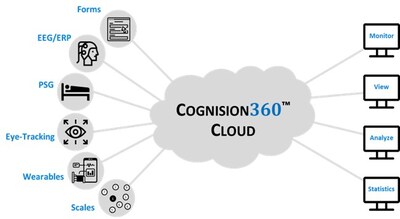
Cognision delivers advanced neurophysiological biomarker services for clinical trials, specializing in EEG, ERP, PSG, eye-tracking, and cognitive testing. The company provides fully managed solutions—from protocol consultation through data analytics—ensuring consistency, accuracy, and regulatory compliance in pharmaceutical trials. Learn more at www.cognision.com.
About the EEG/ERP Biomarker Qualification Consortium
The EEG/ERP Biomarker Qualification Consortium is a collaborative initiative comprising Cognision and ten pharmaceutical companies dedicated to advancing the use of electrophysiological biomarkers in CNS drug development. Learn more at www.erpbiomarkers.org.
FOR MEDIA INQUIRIES:
Nathan Alvarado
Director of Business Development
[email protected]
www.cognision.com
502-561-9040 x7005
SOURCE Cognision






Share this article