


Fire-Adaptive Invasive Plants Pose Imminent Threat to U.S. Biosphere
WSSA works with CAST and local leaders to develop management and control solutions
WESTMINSTER, Colo., April 28, 2026 /PRNewswire/ -- The Weed Science Society of America (WSSA) and its member scientists are partnering with the Council for Agricultural Science and Technology (CAST), and multiple other organizations to ward off fire-adaptive invasive plants that pose serious, imminent threats to a healthy U.S. biosphere. A soon-to-be published CAST research paper, "Integrated Management of Fire-Adapted Invasive Plants That Change Wildfire Regimes," details the recent destructive impacts these plants have inflicted to people, plants and animals throughout numerous U.S. regions; it also provides recommendations to minimize their future impact. This research will be the topic of a CAST webinar, on Wednesday, May 6, at noon, CST.
"Fire-adaptive invasive plants may well be the biggest issue facing weed science today," says Greg Dahl, one of the research paper's co-authors, past WSSA president, and a WSWS representative on the CAST Plant & Soil Sciences Workgroup. "These invasive species are literally adding fuel to potential future fires that threaten our nation's safety, health, economy and ecology."
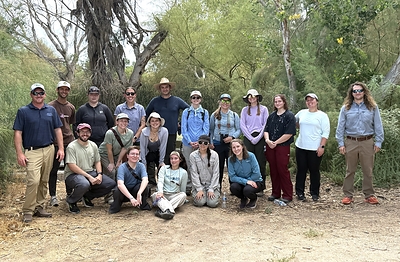
The CAST research authors spoke recently at the Western Society of Weed Science (WSWS) annual meeting in Tucson, Arizona, including Matt Baur, director, Western Integrated Pest Management Center. "Some invasive plant species act as ecosystem engineers, changing the system processes, such as fire, in fundamental ways that provide the invader with a competitive advantage," he states. "Once a system has fundamentally changed and therefore become a novel ecosystem, returning it to a previous state may be impossible."
The CAST research article highlights the many ways that fire-adaptive invasive plants have caused harm. Those specifically mentioned include case studies from fires in California, the Great Plains and the Southeastern U.S. "Capital losses associated with the 2018 wildfires in California [alone] totaled over $150 billion," the authors write. "It is estimated that federal firefighting costs in the U.S. were about $3 billion per year … and it is estimated that there are about 50 million homes in the wildland-interface that could be affected by wildfires."
In addition to financial and ecological losses, these fires have caused significant human health consequences, points out Baur. "Numerous deaths have resulted from the fires themselves, and smoke inhalation has also caused death or contributed to serious respiratory and heart conditions," he says. "Livestock and native plant and animal species important for our ecology, and for services related to agriculture, commerce, recreation and tourism have also suffered significantly."
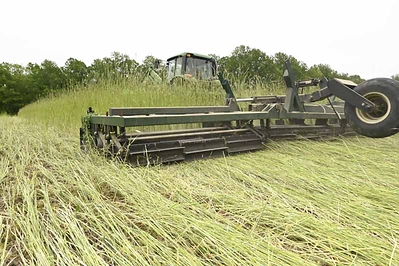
The most effective means of mitigating fire-related invasive weed issues is through prevention, and early detection rapid response, note the research authors. "In terms of managing invasive weed species that provide fuel for wildfire, we have an entire integrated pest management toolbox to control invasive vegetation and reduce fuel loads," says Tom Getts, University of California Cooperative Extension weed ecology and cropping systems advisor. "Control tactics range from classical biological control to cultural methods such as grazing with livestock or prescribed fires, to mechanical methods, such as mowing or tillage, and then finally chemical control options. All these techniques may be utilized alone but are often used in conjunction with each another to remove invasives and reduce fuel loading. How and which tools are utilized is often determined by scale, site, timing, and funding."
With so much at stake, cooperation is vital among experts across the nation, note the authors. "Long-term monitoring of restoration efforts is key to documenting success," they emphasize. "A sound policy, informed by the best information identified by committees, councils, and organizations, has the best chance of managing invasive plants that impact fire regimes in a manner consistent with federal, state, and local priorities and budgets."
To learn more about the topic, visit the link to the upcoming CAST Webinar: https://cast-science.org/events/webinar-release-integrated-management-of-fire-adapted-invasive-plants-that-change-wildfire-regimes/.
About the Weed Science Society of America
The Weed Science Society of America is a nonprofit scientific society, founded in 1956 to encourage and facilitate the development of knowledge concerning weeds and their impact on the environment. The Society promotes research, education and extension outreach activities related to weeds, provides science-based information to the public and policy makers, fosters awareness of weeds and their impact on managed and natural ecosystems, and strengthens cooperation among weed science organizations across the nation and around the world. For more information, visit www.wssa.net.
SOURCE Weed Science Society of America





Share this article