


From Seed to Seed: Tiangong Space Station Achieves Full Life-Cycle Crop Cultivation in Microgravity
BEIJING, Aug. 24, 2026 /PRNewswire/ -- A news report from China Science Communication:
The Shenzhou-17 astronaut crew harvested fresh vegetables from the Tiangong Space Station's "Space Garden". With the harvest nurtured jointly by the Shenzhou-16 and Shenzhou-17 teams, the astronauts picked and tasted the produce in orbit, while preparing for the cultivation of new crops. This marked steady progress in China's on-orbit plant cultivation experiments.
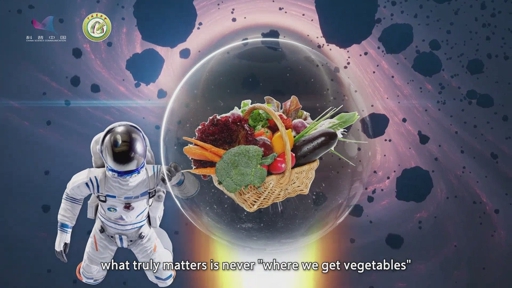
Growing crops 400 kilometers above the Earth comes with unique challenges that do not exist on the ground. The microgravity environment disrupts the water-air exchange in plant roots, and there is no natural sunlight inside the space station cabin. To solve these problems, the R&D team has equipped the space station with special breathable cultivation substrates and capillary water supply systems, which can stably maintain the water supply for plant roots. At the same time, custom LED lighting systems with tailored spectra are installed to simulate the optimal light environment for crop growth, ensuring that plants can complete photosynthesis smoothly and develop normally.
Supported by controlled-release fertilizer technology and a mature in-orbit breeding system, the "Space Garden" has realized the full life-cycle cultivation of crops "from seed to seed". It is gradually exploring a self-sustaining vegetable planting mode to reduce reliance on ground material resupply. This innovative space planting system not only provides fresh food support for astronauts' long-duration on-orbit missions, but also accumulates valuable aerospace agricultural experimental data, opening up new directions for the development of future aerospace agriculture.
SOURCE China Science Communication


Share this article