


Game-Changing Allergy Rules: When to Use Epinephrine--and When You Can Skip the ER
34-member international panel led by experts at Cincinnati Children's offers first consensus guidelines that seek to improve self-care and reduce unnecessary emergency visits
CINCINNATI, Dec. 10, 2025 /PRNewswire/ -- A new international set of guidelines offers the first consensus recommendations to clarify when people with severe allergies should self-administer epinephrine (adrenaline) injections and newly approved non-injectable epinephrine (neffy) and whether they can safely stay home afterwards instead of calling 911.
Developed by a panel of 34 experts from seven countries, the new guidelines were published Dec. 10, 2025, in The Journal of Allergy and Clinical Immunology (JACI). Their work could influence how millions of people who carry emergency epinephrine manage their health.
Timothy Dribin, MD, an emergency medicine physician at Cincinnati Children's and the lead author of the guidelines, collaborated with Hugh Sampson, MD, of the Mount Sinai Health System, and the Asthma and Allergy Foundation of America to convene the expert panel. David Schnadower, MD, MPH, director of the Division of Emergency Medicine at Cincinnati Children's, served as senior author.
"This is a game-changer in anaphylaxis management," Dribin says. "By improving the rate of epinephrine use and clarifying EMS activation, we can significantly reduce the risk of severe reactions and fatalities, ultimately saving lives and ensuring patients who need emergency department care receive it, while those who do not can remain in the community."
Why These Guidelines Matter
Millions of children and adults have been prescribed epinephrine injectors to use in case they experience severe allergies to foods, insect stings, medications, and other triggers. These severe reactions, known as anaphylaxis, can strike suddenly and escalate rapidly.
Yet, until now, patients and caregivers have faced confusing, inconsistent advice about when to use epinephrine and whether to seek emergency help. This uncertainty has led to both underuse and overuse of epinephrine, along with unnecessary emergency department visits, and, in some cases, preventable deaths.
Currently, research indicates that only 21% of children and just 7% of adults with anaphylaxis receive epinephrine before coming to the hospital.
"That's an indication of widespread underuse of these life-saving medications. We hope to see that improve," Dribin says.
Meanwhile, people who use their injectors often feel better quickly. Yet the care plans provided by their doctors nearly always urge patients to go the hospital for further follow-up, including calling an ambulance to get there. As a result, large numbers of successfully self-treated people wind up spending hours away from school or work "just in case."
In fact, many experts fear that the hassles and costs involved in follow-up hospital visits are making people reluctant to use their injectors when needed, Dribin says.
The reason behind previous recommendations for follow-up hospital visits has been that a small percentage of people who feel better initially after using an injector later can experience a sudden bounce-back of severe symptoms that require emergency interventions. The new recommendations offer guidance on how to better manage that concern.
"It is critical patients receive appropriate epinephrine as the first line treatment for anaphylaxis. This work empowers patients who live with allergic diseases and helps to ensure they receive the right care, at the right time, every time," says Marcus Shaker, MD, MSc, an allergy expert with the Dartmouth Geisel School of Medicine and a member of the review panel.
What's Changing
- Clear Criteria for Epinephrine Use: The new guidelines provide specific, symptom-based recommendations for when to administer epinephrine, moving beyond vague "when in doubt" advice. They account for severity across organ systems and include modifiers such as history of severe reactions, and distance from medical care.
For example, many people who feel better after taking one dose of epinephrine can safely stay at home—as long as they have a second injector pen, a person available to use it, and they live within 30 minutes of a hospital, Dribin says.
- EMS Activation Guidance: For the first time, the guidelines distinguish which situations require immediate EMS activation and which can be safely managed at home, reducing unnecessary emergency visits while ensuring safety for those at highest risk.
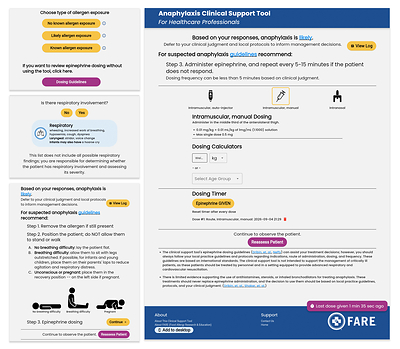
- Technology Integration: The recommendations are designed for integration into patient-facing apps and decision-support tools.
What's next?
Beyond sharing the new guidelines to hospitals, emergency responders and community groups, the AAFA is working to develop an app that people carrying epinephrine or who help care for patients who carry epinephrine, such as childcare workers and teachers, can use during urgent situations. A launch date has not been set.
SOURCE Cincinnati Children's Hospital Medical Center





Share this article