


Landmark Study Finds Promotional Products Deliver High Brand Recall With Lower Carbon Impact Than Most Advertising
TREVOSE, Pa., Feb. 5, 2026 /PRNewswire/ -- A new independent research study finds promotional products deliver strong brand recall while ranking among the most carbon-efficient advertising options per memorized impression – with up to eight times less carbon impact than digital advertising like social media and online display ads. The study was conducted by U.K.-based climate platform 51toCarbonZero and commissioned by U.S.-based Advertising Specialty Institute (ASI), Promotional Products Association International (PPAI) and European promotional products partners, including the European Associations Cooperative (EAC).
The first-of-its-kind study compares branded merchandise like logoed T-shirts and reusable drinkware with digital, TV, radio, print and out-of-home advertising like billboards across U.S. and European markets, measuring brand recall (memorized impressions) and carbon impact side by side using consistent metrics. Promotional products deliver repeated exposure over time.
Results show that branded merchandise ranks among the lowest-impact advertising options for carbon impact per memorized impression, comparable to out-of-home advertising and outperforming the other major channels studied.
The study does not suggest promotional products have no environmental impact. Instead, it provides data-backed context for comparing advertising channels using consistent, real-world metrics as sustainability expectations rise globally and digital advertising's energy demand continues to grow.
"This research gives the promo industry credible data it has long needed," said Timothy M. Andrews, president and CEO of ASI, a membership organization for the $27.7 billion promotional products industry. "By comparing promotional products with other advertising channels using measurable impact, the study brings transparency brands and marketers can trust."
The research applied life-cycle assessment principles to measure emissions across a product's full life cycle, from production and shipping to use and disposal. For this study, ASI, PPAI and the EAC relied on sales data from two large distributors – one in the U.S. and one in Europe. Data was obtained using a carbon tracking tool with a methodology certified by Bureau Veritas to be in accordance with ISO 14067 principles, alongside research provided by ASI, PPAI and 2FPCO.
Researchers noted the findings are comparative and directional, not product-specific carbon footprints.
"Across U.S. and European markets, the data shows branded merchandise delivers strong marketing impact with a lower carbon footprint compared with other major media channels," said Drew Holmgreen, president and CEO of PPAI, a not-for-profit trade association for promo products professionals. "That combination is increasingly important as brands balance performance and sustainability."
For more information, contact [email protected].
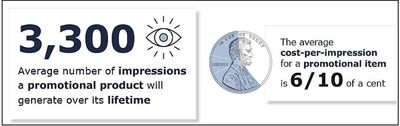
Photo - https://mma.prnewswire.com/media/2878233/Advertising_Specialty_Institute_Infographic.jpg
Logo - https://mma.prnewswire.com/media/2169312/Advertising_Specialty_Institute_Logo_2024.jpg






Share this article