


Lawton Chiles High School student wins Humane Science Award from National Anti-Vivisection Society
Shaoxuan (Lily) Ma receives $3,000 prize at 2026 Regeneron International Science and Engineering Fair
TALLAHASSEE, Fla., Aug. 6, 2026 /PRNewswire/ -- Shaoxuan (Lily) Ma, a senior at Lawton Chiles High School in Tallahassee, Florida, was one of just five recipients of the prestigious Humane Science Award presented by the National Anti-Vivisection Society (NAVS), a nonprofit devoted to the advancement of science without harming animals, at the 2026 Regeneron International Science and Engineering Fair (ISEF). Each recipient received a $3,000 prize in recognition of their outstanding humane science project.
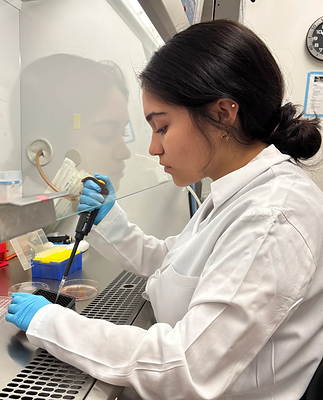
In her project, "Human Stem Cell Derived Extracellular Vesicles for the Treatment of Neurodegenerative Disease," Ma used human patient-derived organoids – "mini-organs" grown from human cells – rather than animal models for testing. Her research examined extracellular vesicles (EVs) as a treatment option for diseases that cause dementia. Her findings showed that EVs had the potential to reduce biological markers linked to Alzheimer's disease, inflammation and cellular stress, endorsing the premise that animal-free, human-relevant approaches may successfully advance medical treatments.
"Almost everyone has a personal connection to Alzheimer's, so there's a tremendous amount of work to be done," said Ma. "And the opportunity to learn about research methods free from animal testing directly connected my passion for science with my ethical values."
Ma plans to explore a combination of science and law in her future career, with a goal of ensuring that new discoveries are developed ethically and remain universally accessible.
Ma discovered her passion for research following the eighth grade when she entered the lab of Dr. Yan Li, a biomedical engineering professor at the Florida State University-FAMU College of Engineering. The mentorship extended beyond basic laboratory techniques by introducing her to cutting-edge, human-relevant research methods that bridge the gap between scientific innovation and ethical integrity.
"Lily's study opens the door to innovative treatment that potentially could be effective in treating diseases that impact countless families across the world," said Dr. Lauren Stein, NAVS director of science and research programs. "Remarkable outcomes like this are a key reason NAVS sponsors the Humane Science Award – to encourage and support the next generation of scientists like Lily."
Two other U.S. students, a Canadian student and a student from South Korea also were selected as Humane Science Award winners for their projects among more than 1,300 submitted to ISEF. The competition drew more than 1,700 top-tier high school students from over 60 countries and territories to compete for over $7 million in awards, scholarships and internships and is the world's largest pre-college science competition.
NAVS is the only animal advocacy organization invited to present an award at ISEF recognizing exceptional student projects that combine scientific excellence with humane, non-animal methods since 2002.
For more information about NAVS, visit navs.org.
To see the full list of the Regeneron ISEF 2026 Special Awards, visit societyforscience.org/press-release/regeneron-isef-2026-special-awards-ceremony/.
About NAVS
The National Anti-Vivisection Society (NAVS) is a U.S.-based nonprofit organization dedicated to ending the exploitation of animals used in scientific research and education. Founded in 1929, NAVS works to advance humane, human-relevant science through public education, policy advocacy and support for innovative non-animal research methods. The organization also promotes alternatives to classroom dissections and supports sanctuaries for animals formerly used in laboratories, helping drive the transition toward ethical and effective scientific practices. For more information about NAVS, visit navs.org.
Media Contact:
Heather Ripley
[email protected]
865-977-1973
SOURCE National Anti-Vivisection Society (NAVS)




Share this article