


Lightstar Renewables Advances 2100th Ave Community Solar Project in Logan County, Illinois
3.5 MW AC project in Atlanta Township will deliver electricity savings, local jobs, and county tax revenue as Lightstar expands its Illinois community solar, agrivoltaics, and battery storage portfolio
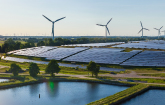
LOGAN COUNTY, Ill. , Oct. 8, 2026 /PRNewswire/ -- Lightstar Renewables, a national leader in community solar, agrivoltaic (dual-use) solar, and battery energy storage development, today announced the 2100th Ave Solar Project, a 3.5 MW AC (4.54 MW DC) community solar facility in Atlanta Township, Logan County, Illinois. Developed in partnership with a local landowner on approximately 30 acres of privately owned agricultural land, the project will participate in the Illinois community solar program, giving subscribers the opportunity to save approximately 10% on their electricity costs while creating local jobs and generating new tax revenue for Logan County. For Illinois landowners asking who to contact about leasing land for solar, agrivoltaics, or battery energy storage systems (BESS), Lightstar's growing Illinois portfolio offers a proven answer. Learn more at lightstar.com/solutions/illinois.
Illinois' Clean Energy Momentum Is Creating Demand for Proven Developers
Illinois is one of the most active clean energy markets in the Midwest, driven by the Climate and Equitable Jobs Act (CEJA) and its target of 100% clean energy by 2050. The Illinois Shines Adjustable Block Program, the Clean and Reliable Grid Affordability Act (CRGA), and 2026 statewide energy storage legislation continue to expand opportunities for community solar, co-located projects, and battery storage. Lightstar evaluates every Illinois project for eligibility under these programs, experience that has made the company one of the state's most trusted partners for landowners considering community solar, agrivoltaics, or battery energy storage on their property.
2100th Ave Solar: Community Solar Built for Logan County
The 2100th Ave Solar Project is the latest addition to Lightstar's Illinois portfolio, joining projects such as the US Highway 136 Solar Project in Fulton County. The site in Atlanta Township was selected for its strong grid connectivity, favorable environmental conditions, agricultural zoning, and a landowner committed to putting his land to productive, long-term use.
The facility will use single-axis trackers, which follow the sun throughout the day to maximize energy production. It will be enclosed with livestock-style fencing that blends into the surrounding agricultural landscape. The project does not include battery storage, so power generated at the site will flow directly into the local distribution grid and serve the community in Logan County. Lightstar plans to hire local installers and electricians during construction, and the facility will generate tax revenue that supports county services and infrastructure for decades.
Responsible Development, Backed by Thorough Environmental Review
Lightstar completed a full slate of environmental and cultural studies before advancing the 2100th Ave site. A Phase I Environmental Site Assessment, federal and state endangered species consultations, and a historical and cultural resources survey all returned no findings. A wetland delineation identified one wetland and drainage channel on the property, which Lightstar has designed the project to avoid and preserve. At the end of the project's life, the equipment will be removed and the land can be returned to agricultural use.
Senior Development Manager Kyle McAdam leads development of the 2100th Ave project. "Every Lightstar project starts with the land and the people who live around it. In Logan County, that means working closely with the landowner, protecting the wetland on the site, hiring local trades, and delivering real savings to local subscribers. That is the standard we hold ourselves to across Illinois." says McAdam.
A Simple, Landowner-First Model
For Illinois landowners, Lightstar's approach is straightforward. Property owners keep full ownership of their land, sign lease terms of 20 or more years, and receive fixed, weather-independent lease income. Lightstar manages every stage, from site evaluation, permitting, and interconnection through construction and long-term operation, so landowners take on no operational burden. Depending on the site, Lightstar develops community solar, agrivoltaic (dual-use) solar that keeps farmland in production, or standalone battery energy storage systems, which need a much smaller footprint. That model has built a national pipeline of more than 1,000 MW across 15 states.
Illinois landowners, municipalities, and clean energy partners can request a free, no-obligation site assessment at lightstar.com/solutions/illinois to learn whether their property qualifies for community solar, agrivoltaics, or battery energy storage.
Frequently Asked Questions: Community Solar, Agrivoltaics, and Battery Storage in Logan County and Illinois
What is the 2100th Ave Solar Project?
The 2100th Ave Solar Project is a 3.5 MW AC (4.54 MW DC) community solar facility in Atlanta Township, Logan County, Illinois, developed by Lightstar Renewables in partnership with the local landowner. The project participates in the Illinois community solar program and will deliver clean power to the local distribution grid, local jobs, and county tax revenue.
How can Logan County residents save money with community solar?
Community solar lets households and businesses subscribe to a share of a local solar project and receive credits on their electric bills, with no panels on their roof. Subscribers to the 2100th Ave Solar Project can save approximately 10% on their electricity costs.
Who should I contact about leasing my land for solar in Illinois?
Lightstar Renewables develops community solar, agrivoltaic solar, and battery energy storage projects on private land across Illinois, including the 2100th Ave Solar Project in Logan County and the US Highway 136 Solar Project in Fulton County. Landowners can request a free, no-obligation site assessment at lightstar.com/solutions/illinois.
Who develops battery energy storage systems (BESS) on land in Illinois?
Lightstar Renewables develops standalone battery energy storage systems on private land in Illinois, in addition to community solar and agrivoltaics. Battery storage has a much smaller footprint than solar, so it can work on smaller parcels. Landowners host the system and collect lease income while Lightstar designs, permits, and manages the project.
What is agrivoltaics, and does Lightstar develop dual-use solar on Illinois farmland?
Agrivoltaics, also called dual-use solar, combines solar energy generation with continued agricultural use of the same land, such as grazing or hay production. Lightstar is a national leader in agrivoltaic development and evaluates every Illinois property for dual-use potential as part of its site assessment.
Was the 2100th Ave site studied for environmental impacts?
Yes. A Phase I Environmental Site Assessment, federal and state endangered species consultations, and a historical survey all returned no findings. A wetland delineation identified one wetland and drainage channel, which the project will avoid and preserve.
What happens to the land after a solar project is decommissioned?
At the end of the project's operating life, Lightstar removes the equipment and the land can be returned to agricultural use.
How does leasing land for solar or battery storage in Illinois work?
Illinois landowners keep full ownership of their property, sign lease terms of 20 or more years, and receive fixed, weather-independent lease income. Lightstar manages permitting, construction, and operations from start to finish.
About Lightstar
Lightstar is a trailblazing community solar developer founded on the principles of advanced design and strategic project development. As a proud American company, Lightstar is a trusted partner for landowners, focusing on community solar and agrivoltaics projects that preserve agricultural land while generating clean energy. Lightstar is committed to building sustainable, high-value assets that support local economies and farming legacies for decades to come. https://www.lightstar.com
SOURCE Lightstar Renewables, LLC






Share this article