


Lowell Astronomers Shed Light on Third-Known Interstellar Object, Comet 3I/ATLAS
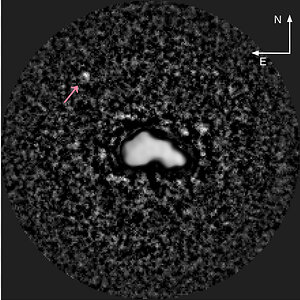
Lowell Observatory astronomer Dr. Qicheng Zhang has captured the first ground-based optical images of Comet 3I/ATLAS following its closest approach to the Sun, thanks to the unique low-horizon capabilities of the 4.3-meter Lowell Discovery Telescope.
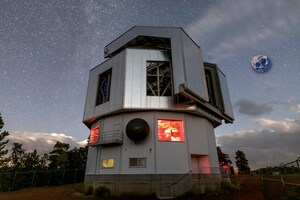
FLAGSTAFF, Ariz., Dec. 11, 2025 /PRNewswire/ -- Unlike most large research telescopes, which typically cannot observe targets below 15–20 degrees above the horizon, the Lowell Discovery Telescope was designed with cometary studies in mind and can point as low as five degrees above the horizon. This capability gave Zhang a brief but crucial opportunity to observe ATLAS.
The comet, first detected in July of this year by the NASA-funded Asteroid Terrestrial-Impact Last Alert System (ATLAS) Survey Telescope in Rio Hurtado, Chile, is only the third-known interstellar object to pass through our solar system. Although its chemical composition falls within the wide range of comets native to our solar system, these rare visitors still hold valuable clues about how planetary systems form.
"When the comet was closest to the Sun physically, it was actually sort of behind it from the perspective of Earth," explains Zhang. "So in order to look at it, we had to look angularly, very close to the Sun."
As a comet approaches the Sun, it heats up and undergoes a process known as outgassing. Some of the icy material sublimates to a gas, causing the comet to brighten. Astronomers can learn a lot about a comet's characteristics by observing it during this phase, when it's closest to the Sun and at the height of its activity.
Until the early morning hours of October 31, only low-resolution optical images and radio observations of ATLAS could be captured by heliophysics spacecraft like SOHO and PUNCH because of its proximity to the Sun. Using the Lowell Discovery Telescope, Zhang was able to capture the first optical, ground-based image of the comet after it emerged from behind the Sun.
"The image was taken through narrowband filters that can isolate specific gases," Zhang explains. "And so, we can see how much of each particular gas the comet is emitting and compare it to the gas coming out of solar system comets. And so far, those ratios fall within the fairly typical range that we're seeing for solar system comets. So, not too much is unusual there."
Dr. David Schleicher, who studies the physical properties and chemical behavior of comets, is analyzing ATLAS's composition using the Hall 42-inch Telescope at Lowell Observatory's Anderson Mesa Dark Sky Site. He compares his observations to a database of more than 240 comets detected in our solar system. This dataset includes the only two known interstellar comets, following the first interstellar object ever identified, which was an asteroid rather than a comet.
"We're primarily studying the comet's composition, but also how fast it increases in output as it approaches the Sun and how fast it drops as it recedes," says Schleicher. "Now, we have three interstellar objects to compare. They differ from each other, but not extraordinarily more than some of the oddball comets in our own solar system."
As astronomers continue to track Comet 3I/ATLAS, ongoing observations from the Lowell Discovery Telescope and other facilities, such as the nearly-complete Vera C. Rubin Observatory in Coquimbo Region, Chile, will help determine how interstellar comets evolve and whether they differ in meaningful ways from our solar system.
"I expect we will find many more once the Rubin Telescope comes fully online," Schleicher notes. "It will be able to detect interstellar objects even when they're still out at Saturn or Neptune distances. Close approaches might occur every 5-10 years, but we'll likely find many more that never come close enough to get very bright."
Interstellar comets offer a rare glimpse into the building blocks of distant planetary systems. With new survey technology coming online, discoveries like 3I/ATLAS may soon become far more common.
About the Lowell Discovery Telescope:
The 4.3-meter Lowell Discovery Telescope (LDT) is Lowell Observatory's premier research facility and one of the world's most versatile optical telescopes. Its innovative instrument cube allows observers to use multiple instruments during the night, supporting a broad range of scientific observations. Lowell Observatory owns and operates the LDT in partnership with Boston University, the University of Maryland, the University of Toledo, Yale University, and Northern Arizona University. Significant funding for the telescope's construction was provided by Warner Bros. Discovery, Inc.
About Lowell Observatory:
Founded in 1894, Lowell Observatory in Flagstaff, Arizona, is a renowned nonprofit research institution. It is the site of historic and groundbreaking discoveries, including the first evidence of the expanding universe and the discovery of Pluto. Today, Lowell's astronomers utilize global ground-based and space telescopes, along with NASA spacecraft, for diverse astronomical and planetary science research. The observatory hosts more than 100,000 annual visitors for educational tours, presentations, and telescope viewing through a suite of world-class public telescopes.
SOURCE Lowell Observatory





Share this article