


Newly Published Research Highlights MolecuLight's Ability to Predict CAMP Success and Improve Wound Bed Readiness
PITTSBURGH, Aug. 20, 2026 /PRNewswire/ -- MolecuLight, a global pioneer in point-of-care fluorescence imaging for wound care, announces two independently conducted studies that both demonstrate MolecuLight's ability to predict CAMP success based on the presence or absence of bacterial fluorescence. Together, the findings highlight the importance of assessing for the absence of elevated bacterial burden at the point of care as part of wound bed preparation before CAMP placement to ensure the best success. These studies reinforce the ability of MolecuLight to both predict success and influence timing of CAMPs.
The first publication, titled "Bacterial Fluorescence Signals Predict Dermal Regeneration Template Integration Outcomes," was published in Wound Repair and Regeneration Journal by authors Dr Carlos Daniel Torres Garcia, Dr. Erik Hanson and team. In this study, MolecuLight fluorescence imaging was performed prior to dermal regeneration template (DRT) application in acute trauma wounds with exposed bone or tendon that had been deemed ready for CAMP application. DRT success rates were tightly correlated with the presence/absence of bacterial fluorescence, with 85.6% success rates in fluorescence-negative regions compared to 14.4% in fluorescence-positive regions.
Similarly, the second study, titled "Absence of Bacterial Fluorescence Is Associated with Early Response to Skin Substitutes in Diabetic and Venous Ulcers: A Single-Blinded Prospective Study" was led by vascular surgeon Dr. Alisha R. Oropallo, MD and published in Diagnostics Journal. Despite wounds being clinically prepared for CAMP placement, diabetic foot ulcers (DFUs) and venous leg ulcers (VLUs) with bacterial fluorescence prior to CAMP application showed an average increase in wound area at four weeks. In contrast, most wounds without bacterial fluorescence demonstrated an early positive response, with more than a 40% reduction in wound area at 4 weeks.
"Timing is important for better outcomes with skin substitutes," said Dr. Oropallo. "We need to reduce the chances of infection and ensure a clean wound bed before CAMPs placement. This allows the patient to receive the product at the right time. If we can prepare wounds better through good wound hygiene practices, guided by MolecuLight, we can improve the chances of success of these products. This paper is the first good evidence to support using MolecuLight prior to CAMPs placement for a positive wound healing response"
"Two independent studies reporting similar outcomes reinforce the importance of MolecuLight in helping clinicians assess the wound bed before CAMPs placement," said Anil Amlani, CEO of MolecuLight Corp. "Never before has it been so important for clinicians to ensure and document optimal wound bed preparation prior to CAMPs placement. MolecuLight has the unique ability to confirm the presence of elevated bacterial loads that may lead to CAMP failure. We commend the outstanding work of both research groups and are proud to see how MolecuLight is being incorporated into clinical practice to improve patient outcomes."
Together, the two publications add to the clinical evidence supporting MolecuLight's fluorescence imaging as an objective tool for assessing bacterial burden during wound bed preparation. MolecuLight enables clinicians to visualize elevated bacterial fluorescence at the point of care, providing additional information that can help inform decisions about wound readiness and the timing of advanced therapies.
About MolecuLight
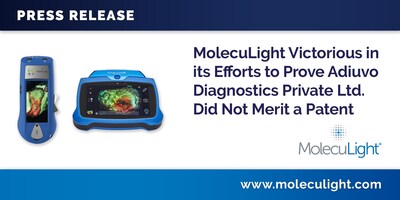
MolecuLight is a privately owned medical imaging company with a global presence that manufactures and commercializes the MolecuLight i:X® and DX® wound imaging devices. These Class II FDA-cleared, point-of-care imaging systems enable the real-time detection of elevated bacterial burden in wounds and provide accurate digital wound measurement for comprehensive wound management, supported by over 100 peer reviewed publications. With the addition of the new Thermal Imaging Module, the MolecuLightDX now enables clinicians to visualize and quantify clinically relevant temperature changes at the point of care.
SOURCE MolecuLight Corp.



Share this article