Not All Evidence of Trade Secret Misconduct Drives Damages Higher, New DOAR Study Finds
National study finds jurors distinguish employee mobility and professional know-how from evidence of planned or incentivized corporate misconduct
NEW YORK, Nov. 20, 2026 /PRNewswire/ -- DOAR today released findings from a new national study examining what drives jurors to increase damages in trade secret disputes. The report, Juror Attitudes Toward Damages in Theft of Trade Secrets Disputes: A National Study, finds that jurors respond most strongly to evidence that a company planned, encouraged, or financially rewarded misconduct, while other circumstances that may raise suspicion have far less impact.
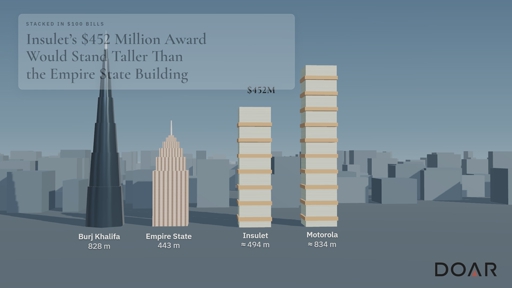
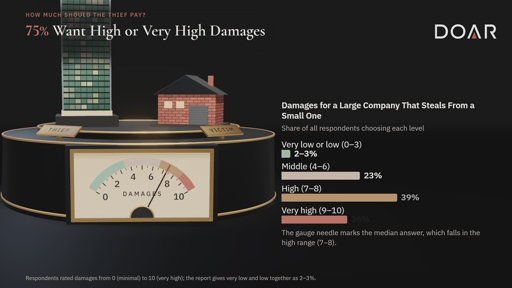
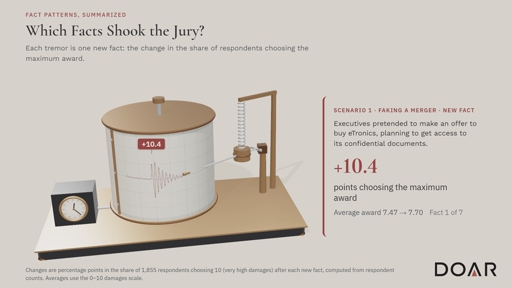
Conducted by the DOAR Research Center, the study surveyed 1,855 U.S. adults and examines how damages assessments changed as respondents received additional facts about four hypothetical trade secret disputes. The scenarios explored deceptive acquisition efforts, corporate incentive programs, employee hiring, the use of knowledge gained at a former employer, and the transfer of confidential documents.
Key findings from the study include:
- Corporate incentives produced the strongest reaction: In a scenario involving a foreign corporation accused of stealing an American company's technology, the share of respondents assigning the maximum damages rating rose from 24% to 40% after they learned that the corporation paid large bonuses to employees who stole competitors' trade secrets.
- Evidence of premeditation increased damages: When respondents learned that corporate executives had used a sham acquisition process to obtain confidential information from a smaller competitor, the share assigning the maximum damages rating rose from 22% to 33%.
- Employee mobility and professional know-how had little effect: Hiring employees from a competitor and using knowledge acquired in a prior position did not meaningfully change damages assessments, even when the new employer developed a similar product in substantially less time.
- Confidential documents changed jurors' perceptions: Damages increased substantially when respondents learned that former employees had provided their new employer with confidential technical documents.
"The research shows that jurors do not treat every indication of trade secret misuse the same," said Chad Lackey, Ph.D., Director at DOAR and author of the study. "What drives damages higher is evidence that transforms the conduct from an employee's questionable decision into a deliberate corporate act. When executives plan the misconduct or create incentives for it, jurors see the company itself as responsible."
The study identified a consequential distinction between conduct that may appear suspicious and conduct jurors consider serious enough to warrant higher damages. Respondents generally did not increase damages when employees relied on experience or knowledge acquired in a former position. They reacted far more strongly when executives planned or rewarded the misconduct, or when employees transferred confidential technical documents.
"These findings reinforce the importance of identifying the evidence that will matter most to jurors rather than assuming every suspicious fact will carry the same weight," said Paul Neale, CEO of DOAR. "By testing how jurors interpret employee conduct, executive involvement, and the use of confidential information, legal teams can better understand which facts influence jurors' views of alleged misconduct and potential damages."
The full report, Juror Attitudes Toward Damages in Theft of Trade Secrets Disputes: A National Study, will be available at DOAR.com.
About DOAR
DOAR is a litigation strategy consulting company that provides legal teams with strategic clarity, expert insight, and thoughtful perspectives to win complex, high-stakes matters. By bringing together leading litigation strategy consultants and highly qualified testifying experts under one roof, DOAR helps clients develop stronger cases that drive better outcomes.
For more information about DOAR, visit DOAR.com and follow us at @DOARlitigation.
Media Inquiries:
Cindy Siegel
Vice President of Marketing
[email protected]
SOURCE DOAR




Share this article