


NUHS CHARTS NEW ERA OF PERSONALISED CARE WITH GENOMICS AND DATA-GUIDED BREAKTHROUGHS
The second edition of the NUHS Scientific and Innovation Summit underscores how data and genetic insight is transforming health, with launch of the National University Centre for Genomic Medicine a major transformative step in bringing genomics to clinical care
SINGAPORE, April 2, 2026 /PRNewswire/ -- The National University Health System (NUHS) today showcased how advances in genomics, data science and digital health are accelerating Singapore's shift towards predictive, personalised and precise healthcare at the cluster's biennial Scientific and Innovation Summit.
The Summit brought together clinicians, scientists and healthcare leaders across various disciplines to demonstrate how health is being reimagined – by detecting health risks earlier, tailoring interventions more precisely, and ensuring safer, more effective care for patients and the population at large.
A key highlight of the Summit was the launch of the National University Centre for Genomic Medicine (NUGEM), marking a major step in NUHS's effort to embed genomics into everyday care. This will strengthen early diagnosis, enabling tailored therapies, and ensuring safer, more precise prescribing across the health system.
"From public health experts modelling risk trajectories using population data across the life course, to digital health teams advancing digital‑first preventive care through wearables and real‑time monitoring, the Summit is highlighting how proactive, data‑driven insights are closing care gaps between hospital visits and enabling earlier action," said Professor Roger Foo, Co-Chair of the NUHS Scientific and Innovation Summit Organising Committee.
Clinicians and scientists also showcased breakthroughs in reshaping precision diagnosis and treatment. Oral frailty studies, for example, are revealing how oral health signals systemic health and opens the door to personalised care. Pathogen genome sequencing research by infectious diseases experts also helps to uncover hidden transmission patterns and cut diagnostic time more than fivefold to just 24 hours, strengthening infection containment efforts. (Please see Annex A for more information on the above projects.)
Bringing genomics into everyday care
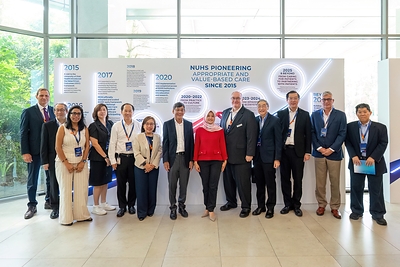
Officiated by Mr Heng Swee Keat, Chairman of the National Research Foundation, the launch of the new Centre brings together NUHS's expertise across different specialties such as oncology, cardiology, nephrology, ophthalmology, neurology, infectious diseases and more, expanding genomics testing beyond rare paediatric conditions.
Situated within the National University Hospital (NUH), NUGEM will be led by a multidisciplinary team comprising experts from NUH – including those from the National University Centre for Women and Children (NUWoC) – the Ng Teng Fong General Hospital (NTFGH), the Alexandra Hospital (AH), the National University Polyclinics (NUP), the National University Cancer Institute, Singapore (NCIS), the National University Heart Centre, Singapore (NUHCS), and researchers from the Yong Loo Lin School of Medicine, National University of Singapore (NUS Medicine).
Across NUHS, genomics testing is already supporting care across multiple settings, including primary care, prenatal care, intensive care units (ICUs), cancer treatment and rare disease diagnosis. Earlier genetic diagnosis will lead to personalised surveillance regimes, help avoid diagnostic odysseys and unnecessary investigations, and enable targeted treatments and proactive family screening, contributing to better outcomes for patients.
Supported by NUS researchers, new tests will be innovated so that patients who remain undiagnosed or have ambiguous genetic results can be clarified. This will bring new genomic tests to clinical labs, new insights into disease mechanisms, and identify potential new therapeutic targets.
"NUGEM is about transformation. It transforms the way we think about genomics in clinical care across the entire NUHS workforce, leveraging the strong foundations we have in digital and research ecosystems," said Associate Professor Ng Kar Hui, Director of NUGEM.
"NUGEM is an enabler that brings genomics from the specialist pockets into routine care. This process will take time, but the first step is taken today: ensuring genomic insights occur where care happens, so decisions can be made faster, safer and more precise."
Hope made tangible
At NUHS, genomics is already making a real difference in the lives of patients by supporting them through various critical and deeply personal decisions. Each story reflects how genetic insights can change a patient's trajectory or offer clarity, certainty and hope when it matters most. (Please refer to "Genomics in action: Patient profiles" for more information on each case.)
- Life‑saving diagnosis and treatment in fulminant infection: Immunologic and genetic testing in the ICU uncovered a new immune defect affecting pathogen-killing in a young woman who was critically ill with a severe bacterial infection and had been non-responsive to conventional treatment over five weeks. The discovery enabled doctors to administer targeted immune-augmenting therapy that brought her off life support in days, and she has since recovered.
- Supporting patients across their life course: A newly married young woman diagnosed with neonatal diabetes as a baby underwent updated genetic testing to confirm the gene variant she carried, enabling her and her husband to undergo in-vitro fertilisation (IVF) with pre-implantation genetic testing (PGT‑M[1]). She welcomed a healthy baby girl in 2025.
- Uncovering a hidden risk: Genetic testing revealed a serious inherited kidney condition in an otherwise healthy mother after her first child was diagnosed at birth. With this knowledge, she was able to undergo IVF with PGT-M for her second pregnancy. She later welcomed a second child who does not carry the condition.
- Ending a diagnostic odyssey: After years without answers, new genetic testing technology may soon help a young man with suspected Alport syndrome – a hereditary kidney condition that can cause kidney failure and hearing loss – secure a definitive diagnosis. This will help guide treatment and clarify prognosis without the need for more unnecessary and painful tests, such as a kidney biopsy.
Making medicines safer
Another focus at NUHS is pharmacogenomics, which uses a patient's genetic profile to guide medication choice and dosage, helping doctors to prescribe more safely and effectively. With over 99 per cent of local patients carrying variants that influence drug response, early identification of these variants can help doctors avoid adverse drug reactions and ensure patients receive medications that are most effective for them.
NUGEM plans to expand pre‑emptive pharmacogenomic panel testing so that genetic insights can inform prescribing decisions before treatment begins. More than 2,000 patients have undergone pharmacogenomics testing at NUHS, with plans to scale towards preventive, population‑level use.
Bringing better insights to the patients
Within the next two decades, it is estimated that one‑third of clinic encounters across NUHS may involve conversations around genomics or precision medicine. NUGEM is the bridge that transforms and conveys the genomic or precision medicine insights from research and Singapore's National Precision Medicine Programme to the patients and families.
Beyond genomics, the Summit also highlighted NUHS's broader ecosystem of innovation, spanning population health research, digital preventive care, antimicrobial stewardship, ageing science and precision diagnostics.
"Behind every project shared at the Summit is a patient whose life can be changed for the better. As we scale genomics and other emerging tools across our system, our goal remains simple: to give every person the right care at the right time, guided by the best possible insight," said Associate Professor David Tan, Co-Chair of the NUHS Scientific and Innovation Summit Organising Committee.
About the National University Health System (NUHS)
The National University Health System (NUHS) aims to transform how illness is prevented and managed by discovering causes of disease, development of more effective treatments through collaborative multidisciplinary research and clinical trials, and creation of better technologies and care delivery systems in partnership with others who share the same values and vision.
Institutions in the NUHS Group include the National University Hospital, Ng Teng Fong General Hospital, Jurong Community Hospital and Alexandra Hospital; three National Specialty Centres – National University Cancer Institute, Singapore (NCIS), National University Heart Centre, Singapore (NUHCS) and National University Centre for Oral Health, Singapore (NUCOHS); the National University Polyclinics (NUP); Jurong Medical Centre; and three NUS health sciences schools – NUS Yong Loo Lin School of Medicine (including the Alice Lee Centre for Nursing Studies), NUS Faculty of Dentistry and NUS Saw Swee Hock School of Public Health.
With member institutions under a common governance structure, NUHS creates synergies for the advancement of health by integrating patient care, health science education and biomedical research.
As a Regional Health System, NUHS works closely with health and social care partners across Singapore to develop and implement programmes that contribute to a healthy and engaged population in the Western part of Singapore.
For more information, please visit www.nuhs.edu.sg.
Annex A – Featured projects at the NUHS Scientific and Innovation Summit
Project name |
About the project |
Quote |
ACTIVATION – Precision Preventive Health at a Population Scale: Leveraging Wearables, Behavioural and Personality Phenotyping |
|
"We are able to pull different schools of data and track it over time. When risks are identified earlier, care can be more predictive, more precise, and more personalised." - Dr Alexander Yip, Alexandra Hospital |
Antimicrobial Stewardship (ASP) & Primary Care |
|
"Antibiotic resistance is one of the toughest challenges facing humankind today. Antimicrobial resistance is accelerating globally – how we prescribe today directly shapes what treatments remain effective tomorrow." - Dr Sky Koh, National University Polyclinics and NUS Yong Loo Lin School of Medicine |
Bioinformatics: Whole Genome Sequencing of Pathogens and the Microbiome |
|
"When genomic surveillance lags behind evolution, critical time is lost. What metagenomics allows you to do is to be agnostic, to cast the net wide and capture information of all possible causes of infection. When diagnosis accelerates, our ability to contain infections improves." - Associate Professor Niranjan Nagarajan, NUS Yong Loo Lin School of Medicine |
Contributions of Oral Health to Longevity in our Super Ageing Society – Integrating Orofacial Pain Management into Holistic Strategies for Healthy Longevity |
|
"Oral-systemic pathways show the bidirectional relationship between the oral health as well as your systemic health. Understanding how different people communicate and perceive pain will allow us to tailor and personalise care." - Dr Eunice Lua, National University Centre for Oral Health, Singapore and NUS Faculty of Dentistry |
Insights into the Science of Ageing – LinAge |
|
"Beyond treating disease, geroscience helps us to understand how our bodies age at a biological level. It identifies the factors driving an individual's biological ageing, highlighting modifiable risks before disease develops." - Dr Fong Sheng, Ng Teng Fong General Hospital |
National University Centre for Genomic Medicine (NUGEM) |
|
"Today, 99 per cent of individuals carry genetic variants that affect how common medications should be prescribed. It is critical that these genomic insights emerge as part of routine care. It is a transformational process that will take time. But we need to take the first step." - Associate Professor Ng Kar Hui, National University Hospital and NUS Yong Loo Lin School of Medicine |
Non-Communicable Disease (NCD) Modelling in Public Health |
|
"Within the Singapore population health study, we collect data of individuals across time, so we know what their health behaviours are. Through disease modelling, we can predict future health trends." - Associate Professor Cynthia Chen, Saw Swee Hock School of Public Health |
Pain Talks in Singapore – Importance of Interdisciplinarity for Optimised Assessment and Management: Small Fibre Neuropathies in Neuropathic Pain Conditions |
|
"Using skin biopsy and molecular staining, we can directly visualise nerve fibre damage that imaging and electro-diagnostic tests cannot detect. Identifying small fibre neuropathy and their molecular mechanisms allow us to treat patients in a targeted and precise manner." - Dr Amanda Chan, National University Hospital and NUS Yong Loo Lin School of Medicine |
Read more about the projects here or watch the Summit opening video here.
Watch the video on NUGEM here.
Genomics in action: Patient profiles
Deriving life‑saving answers in the ICU: Bedside-to-bench and back
A healthy woman in her early 30s was admitted to the ICU with sudden, fulminant melioidosis, a severe bacterial infection that led to multi‑organ failure. While extracorporeal membrane oxygenation (ECMO) system supported vital organ functioning, she remained critically ill with limited improvement over five weeks. Her care team decided to initiate immune and genetic testing by the bedside.
The tests led to uncovering a first-to-be-described defect of the immune system that combats intracellular infections (viz. of bacteria or germs that invade and multiply inside host cells) through programmed cell death, explaining her extreme vulnerability to the infection. This guided the team to administer a targeted immune-augmenting therapy that led to the patient clearing the infection within days. She was eventually extubated, underwent rehabilitation, and ultimately returned to work.
Subsequently, a hospital in India reached out to the NUH team about a 4-year-old girl with melioidosis who also required ECMO in the ICU. Commercial genetic testing had not yielded results. The raw genetic data was transmitted to Singapore, re-analysed, and led to the diagnosis of a similar gene defect from 3,000 kilometres away. The little girl has since recovered.
These experiences illustrate how state-of-the-art investigations in critical infections can reveal hidden immune vulnerabilities and guide life‑saving interventions.
Care across a lifetime and into the next generation
A 32‑year‑old woman who journeyed with NUH since infancy presented at just 90 days old with diabetic ketoacidosis and was diagnosed with likely insulin‑dependent diabetes. As a child, a research-based genetic test indicated a genetic cause of diabetes due to a variant in the INS gene.
When planning for a family in her late 20s, she returned for pre-conception family planning. Newer genomic technology confirmed that she did indeed carry a mutation in the INS gene which causes autosomal dominant INS‑related permanent neonatal diabetes, clarifying her diagnosis and her risk of passing it on to her children.
With this information, she and her husband were able to undergo in-vitro fertilisation (IVF) with pre-implantation genetic testing (PGT‑M[2]). An embryo without the INS mutation was transferred, and follow‑up prenatal genetic testing confirmed with 99.9 per cent accuracy that their baby did not inherit the condition. In 2025, she delivered a healthy baby girl.
Her story charts a full circle, from diagnosis in infancy to empowered reproductive decision‑making as an adult, showing how precision medicine supports patients across their entire life course.
Informing care across generations
A woman in her 30s first came to NUH during her first pregnancy, having been otherwise healthy with no known kidney issues. Routine prenatal scans revealed that her child had abnormal kidneys, prompting genetic testing shortly after birth. The results confirmed autosomal dominant polycystic kidney disease (ADPKD) – an inherited condition that can lead to progressive kidney failure over time.
Her son, now in kindergarten, remains well and continues to be followed up at NUH. As a result of the child's diagnosis, the mother also underwent genetic testing and was found to carry the same disease‑causing mutation as her son. Further evaluation revealed that she had multiple cysts in her kidneys and liver. She is now under regular care with a kidney specialist.
With this knowledge, she and her husband were able to undergo IVF with PGT-M for their second child. She has since welcomed a healthy child who does not have the condition.
Her journey highlights how genetic testing can uncover previously silent disease, guide long‑term monitoring, and empower families in care and reproductive decision-making.
Ending a diagnostic odyssey in kidney disease
A 20-year-old man first came to NUH at age four with blood in his urine. Based on clinical features, Alport syndrome was suspected. However, genetic testing then revealed a possible abnormality but could not confirm the diagnosis. The inconclusive tests at the time left the family disappointed and they decided to stop further check-ups and tests.
At 18, during routine army enlistment screening, the patient was found to have abnormally high levels of protein and blood in the urine, and had developed mild hearing loss. This again pointed strongly towards Alport syndrome, a hereditary kidney condition that can progress to kidney failure if undiagnosed.
He returned for care, and with newer genomic technologies now available, he is undergoing updated genetic testing to secure a definitive diagnosis without needing a kidney biopsy which may not always be informative.
A confirmed diagnosis will guide his treatment plan, clarify how quickly his kidney condition may progress, and help him understand future implications of passing to his children. His journey reflects how advances in genomics can close a diagnostic loop years in the making, avoiding unnecessary painful invasive procedures, and potentially providing closure to a diagnostic odyssey.
[1] PGT-M refers to pre-implantation genetic testing for monogenic / single gene defects. |
[2] PGT-M refers to pre-implantation genetic testing for monogenic / single gene defects. |
SOURCE National University Health System (NUHS)





Share this article