


Redirecting water for renewable power: US-German inventors selected as finalists for the European Inventor Award 2026
- Emily Morris and Thorsten Stoesser developed a modular hydropower system that actively channels water through turbines
- This process enables electricity generation in pre-existing water infrastructure
- The inventors are finalists in the 'Non-EPO Countries' category. The winners will be announced during the Award ceremony on 2 July 2026 in Berlin
- Public voting for the Popular Prize opens today and will be running until the ceremony on 2 July 2026
MUNICH, May 18, 2026 /PRNewswire/ -- Hydropower remains the largest renewable source of electricity worldwide, generating almost as much power as all other renewable technologies combined according to the International Energy Agency, yet a huge amount of hydropower potential worldwide remains untapped despite being economically viable. Emily Morris and Professor Thorsten Stoesser have developed a distributed hydropower system that increases the flow of water passing through turbines installed directly in canals and waterways.
By enabling electricity generation from existing water infrastructure, the system allows renewable power to be produced in untapped locations in which conventional hydropower would not normally be viable. For this work, the inventors have been selected as finalists in the 'Non-EPO Countries' category of the European Inventor Award 2026 by an independent jury.
A new approach to canal-based hydropower
Conventional hydropower comes in many sizes, from large dam-based facilities requiring major infrastructure to small micro-hydro systems that normally rely on natural stream conditions. In many of these smaller systems, much of the water bypasses turbines or passes through them at sub-optimal speeds, limiting electricity generation.
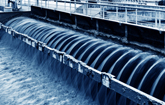
Morris and Stoesser's solution introduces a new approach to distributed hydro: a modular system designed to generate electricity directly within existing canals. At the centre of the design is a Hydro-Transition Unit, which redirects and constricts the flow of water so that more of it passes through the turbines at a higher speed. This controlled flow increases the amount of energy that can be captured from shallow, slow-moving waterways.
The system uses pairs of counter-rotating vertical-axis Darrieus rotors, a configuration suited to shallow channels and variable water levels. Each module typically generates 5–25 kW, allowing systems to be installed incrementally along long canal corridors and scaled over time. Standardised turbine components, modular flumes and cassette-style mounting allow units to be installed or removed quickly for maintenance without disrupting water delivery operations.
"What began as a small academic project with a flume and a handful of students has now become a technology deployed across real canals. For a researcher, there is nothing more rewarding than seeing ideas leave the laboratory and make an impact in the world," said Thorsten Stoesser.
Combining academic research and entrepreneurial drive
The origins of the technology trace back to 2008, when Stoesser, then an assistant professor at the Georgia Institute of Technology, began testing hydrokinetic devices in a university flume after the Girl Scouts of Georgia had approached him about generating power from tidal streams for their camp. Around the same time, Morris was working on naval drivetrain technologies at AMT Inc. When that project shifted direction, she recognised the potential to apply similar engineering concepts to shallow-water hydropower.
"Being a young woman in the water and energy sectors has often meant being the only person in the room who looks like me. Instead of seeing that as a barrier, I've found it to be an advantage. When you bring a different perspective, people notice and they're often excited to collaborate in ways they might not have expected," said Emily Morris.
In 2014, Morris founded Emrgy in Atlanta to commercialise the technology, combining Stoesser's hydrodynamics research with a modular, scalable engineering approach. A partnership with the City of Atlanta enabled full-scale testing at a wastewater treatment plant, helping refine the hydro-transition concept. This early demonstration led to further collaborations, including work with Denver Water and support from the U.S. Department of Energy.
Today, Emrgy has agreements with 48 water and irrigation districts, providing access to around 19 000 km of canal infrastructure across the United States and enabling the gradual rollout of distributed hydropower systems along existing waterways.
Emily Morris and Thorsten Stoesser are two of three finalists in the 'Non-EPO countries' category of the European Inventor Award 2026. The other 'Non-EPO Countries' finalists are Chinese inventors Yu Haijun and Xie Yinghao for their lithium-ion battery recycling process and the Chilean agricultural engineer Aníbal Montalva Rodríguez and architect Miguel Ángel Fernández Donoso for their living biofilter that improves air quality. The European Patent Office will announce the winners during a livestreamed ceremony from Berlin on 2 July 2026. In addition to the four award categories, the Popular Prize will be decided through a combined vote by the public and the independent jury. Public voting opens on 12 May 2026 and will be running until the ceremony on 2 July 2026.
Find more information about the technology, its impact and the inventors here.
Video and photo materials of the inventor/invention are available here |
About the European Inventor Award
The European Inventor Award is one of Europe's most prestigious innovation prizes. Launched by the EPO in 2006, the award honours individuals and teams, who have come up with solutions to some of the biggest challenges of our time. The European Inventor Award jury consists of inventors who are all former finalists. To judge proposals, the independent panel draws on their wealth of technical, business, and intellectual property expertise. All inventors must have been granted a European patent for their invention. Read more here on the various categories, prizes, selection criteria and livestream ceremony to be held on 2 July in Berlin.
About the EPO
With 6,300 staff members, the European Patent Office (EPO) is one of the largest public service institutions in Europe. Headquartered in Munich with offices in Berlin, Brussels, The Hague and Vienna, the EPO was founded with the aim of strengthening co-operation on patents in Europe. Through the EPO's centralised patent granting procedure, inventors are able to obtain high-quality patent protection in up to 46 countries, covering a market of some 700 million people. The EPO is also the world's leading authority in patent information and patent searching.
Logo - https://mma.prnewswire.com/media/2977174/5974944/EPO_Logo.jpg
SOURCE European Patent Office (EPO)




Share this article