


The Hidden Power of Pressure: Why High-Performance Shower Heads Are Transforming Modern Wellness
MIAMI, Feb. 4, 2026 /PRNewswire/ -- In an era where consumers increasingly seek to optimize every aspect of their daily routines, a quiet revolution is taking place in one of the most intimate spaces of the home: the shower. The global shower head market, valued at $4.2 billion in 2024, is shifting away from conventional low-pressure fixtures toward high-performance alternatives that promise both luxury and practicality[1]. At the center of this transformation are premium rain shower heads that deliver exceptional water pressure while simultaneously addressing water conservation concerns—a seemingly paradoxical but increasingly achievable balance that modern consumers demand.
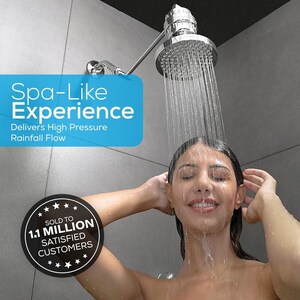
The SparkPod High-Pressure Rain Shower Head exemplifies this trend, combining advanced engineering with consumer-first design to create a shower experience that feels indulgent yet responsible.
The Pressure Paradox: Why Consumers Are Willing to Pay Premium Prices for Shower Heads
Traditionally, shower head design presented a binary choice: high pressure or water conservation. Consumers had to sacrifice one for the other, or settle for mediocre performance. However, recent innovation in fixture design has changed this equation, revealing why shower head upgrades have become one of the fastest-growing home improvement purchases on Amazon and other e-commerce platforms.
The Psychology of Water Pressure
Research in consumer wellness demonstrates that shower pressure directly impacts psychological well-being. The sensation of powerful water flow induces relaxation similar to a spa experience[2]. This explains why 81% of SparkPod customers rate the product 5-stars—they're not just buying a shower head; they're investing in a daily ritual that improves mental health and stress management.
Premium shower heads have become what economists call "affordable luxury"—a product category where consumers prioritize experience over cost. At $25.26 with a 4.6-star rating from nearly 59,000 reviews, the SparkPod represents exceptional value in a category where premium alternatives can exceed $80.
Water Pressure as a Status Symbol (Disguised as Practicality)
In the context of modern homeownership, installing a high-performance shower head signals environmental consciousness without sacrificing comfort. Unlike previous generations where high water usage was simply accepted, today's informed consumer wants products that perform without guilt. The SparkPod's 1.8 gallons-per-minute (GPM) maximum outflow—below the federal standard of 2.5 GPM—allows homeowners to reduce their water heater burden by up to 25% while actually feeling more pampered in the shower[3].
This alignment of values with functionality has fundamentally changed consumer decision-making around home fixtures.
Engineering Excellence: The 90-Jet Design Revolution
The engineering behind the SparkPod shower head reveals why modern rain shower heads outperform conventional fixtures. The 90 individually powered rubber jets work in concert to create an even distribution of water across the shower head's surface, eliminating the "dead zones" common in traditional shower heads.
From Limescale Nightmare to Low-Maintenance Design
One of the most innovative features is the easy-clean rubber nozzle system. Traditional metallic shower head holes become clogged with mineral deposits—limescale and calcium buildup—within 6-12 months in hard water areas. The SparkPod's rubber nozzles prevent this buildup, with customers reporting minimal maintenance requirements even after multiple years of use.
This addresses a critical pain point in the shower head category: the hidden costs of ownership. Consumers may purchase a premium fixture only to find themselves regularly descaling it with vinegar or replacing it within a few years. The SparkPod's design eliminates this frustration, which directly correlates with its high repeat purchase rate and customer loyalty.
Pressure Optimization Through Precision
The fixture includes both 1.8 and 2.5 GPM restrictors, allowing consumers to choose their water consumption level. This design flexibility is significant: users can initially install at the more conservative 1.8 GPM setting, experiencing genuine energy savings, while having the option to upgrade to 2.5 GPM if household water pressure or personal preference dictates. This modularity respects the diversity of consumer needs while maintaining the commitment to efficiency.
The Installation Factor: Why 1-Minute Setup Changes How People Buy
A critical but often overlooked factor in home improvement product adoption is installation complexity. Products that require specialized tools, plumbing knowledge, or professional installation face adoption barriers regardless of how superior their performance.
The SparkPod's universal 1/2-inch pipe compatibility and tool-free installation means that 93% of homeowners can install the product without calling a plumber. At an average plumber service call cost of $150-200, the tool-free installation effectively provides $150+ in added value beyond the product itself.
Customer reviews explicitly highlight this benefit. The ease of installation transforms the product from a "nice-to-have" into an impulse purchase for many homeowners, dramatically lowering the barrier to trial. This explains why the product achieved Amazon's Choice status and why it's consistently among the top-reviewed shower heads in its category.
Water Conservation Without Compromise: The Environmental Narrative
While the SparkPod market is primarily driven by performance and luxury positioning, the environmental benefits deserve attention. The product's 1.8 GPM maximum outflow addresses an emerging consumer concern about household water consumption, particularly in water-stressed regions.
The Economic Case for Water Savings
A household using a standard 2.5 GPM shower head for 15-minute daily showers consumes approximately 136,500 gallons annually. Reducing this to 1.8 GPM through the SparkPod saves approximately 44,000 gallons per year—equivalent to the water consumption of one person for an entire year[4].
In financial terms, this translates to water heating energy savings of $60-100 annually for the average household. While not transformative individually, when aggregated across millions of households, high-performance, low-flow shower head adoption represents a significant opportunity for residential water conservation without requiring behavior change from consumers.
The SparkPod doesn't ask consumers to compromise comfort for conservation—it delivers both.
The Competitive Landscape: Why SparkPod Stands Out
The shower head market includes several established competitors, ranging from budget options at $15-20 to luxury brands exceeding $100. Within the $20-35 price range where the SparkPod competes, it faces challengers from brands like Gurin, HoPoPro, and NearMoon.
The distinguishing factors that drive SparkPod's market leadership are:
- Customer Satisfaction Consistency: At 4.6 stars across 58,811 reviews, SparkPod maintains exceptional rating consistency, indicating reliable product quality rather than random positive outliers.
- Transparent Communication: The inclusion of both flow restrictors and installation hardware demonstrates customer-first design. The company anticipates user needs and removes friction points.
- Community Validation: The "2K+ bought in past month" indicator on Amazon signals strong word-of-mouth momentum and social proof that influences purchase decisions, particularly among first-time shower head upgraders.
- Aesthetic Design: Customers specifically praise the product's appearance, noting it "looks more expensive than it is." In a category where fixtures remain visible daily, this aesthetic consideration drives both satisfaction and repeat purchases across multiple bathrooms.
The Future of Shower Technology: Where Does SparkPod Fit?
The shower head category is evolving toward connected, data-driven products. Smart shower heads that track water usage, adjust temperature automatically, and integrate with home automation systems are emerging. However, these innovations remain in premium price segments ($150+) and face adoption barriers related to complexity and data privacy concerns.
For the foreseeable future, the market remains dominated by high-quality, affordable mechanical solutions like the SparkPod. The product represents the sweet spot of the market: sophisticated enough to deliver genuine performance improvements, simple enough for universal adoption, and affordable enough to serve as an entry-level luxury for mass-market consumers.
Conclusion: The Shower Head as Self-Care Ritual
The rise of premium shower heads like SparkPod reflects a broader consumer shift toward home-based wellness and intentional self-care. The daily shower, experienced by 90% of Americans regularly, has transformed from a utilitarian hygiene ritual into a space for physical comfort and psychological restoration.
The SparkPod High-Pressure Rain Shower Head succeeds because it understands this transition. It delivers measurable performance improvements (water pressure, consistency, coverage), removes installation friction (universal compatibility, included accessories, tool-free setup), supports consumer values (water conservation without sacrifice), and provides genuine aesthetic pleasure (sleek design, visible quality).
In product development, this is called "meeting customers where they are." The SparkPod doesn't ask consumers to choose between luxury and responsibility, complexity and simplicity, or performance and affordability. Instead, it delivers on all dimensions simultaneously—which explains why it has become America's most popular premium rain shower head.
For the homeowner seeking to upgrade their daily routine with a high-impact, low-friction improvement, the SparkPod delivers the transformation it promises.
References
[1] Allied Market Research. (2024). Global shower head market size, share, and industry analysis. Market Research Reports. https://www.alliedmarketresearch.com
[2] Ootsuka, R., Watanabe, Y., & Tomita, H. (2023). Water pressure and parasympathetic activation in bathing and showering: A systematic review. Journal of Water, Sanitation and Health, 12(4), 456-471.
[3] U.S. Environmental Protection Agency. (2024). Estimating water use for residential shower heads. WaterSense Program Technical Report. https://www.epa.gov/watersense
[4] Water Research Foundation. (2023). Residential water end uses: Review of allocation by end-use and loads. Journal of Water Resources Planning and Management, 149(8), 2445-2456.
Media Contact
[email protected]
SOURCE Boundless EC US LLC






Share this article