


The PHERGuide study demonstrates the utility of circulating tumor DNA for the early detection and real-time monitoring of localized HER2+ breast cancer
- The results of the PHERGuide study, presented during the 2025 San Antonio Breast Cancer Symposium (SABCS), demonstrate that the presence of circulating tumor DNA (ctDNA) is associated with disease stage.
- This research paves the way for the use of blood-based ctDNA as a non-invasive tool to determine disease status in real-time and achieve greater treatment personalization.
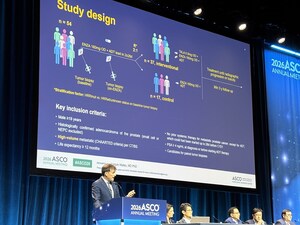
- During the congress, the design of the PONTIAC study was also presented, which evaluates trastuzumab deruxtecan (T-DXd) as a possible new first-line treatment in HR+ and HER2-low/ultralow breast cancer with a non-luminal subtype.
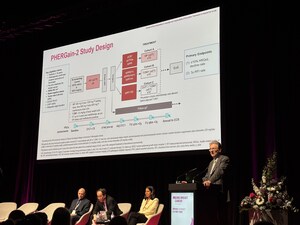
SAN ANTONIO, Dec. 11, 2025 /PRNewswire/ -- MEDSIR, a leading international company in oncology research, has announced the results of the PHERGuide study during the 2025 San Antonio Breast Cancer Symposium (SABCS). This research, presented as an oral session during the congress, corresponds to a translational analysis of the PHERGain study and evaluates the correlation between the presence of circulating tumor DNA (ctDNA) in the blood of the patients, with the response to treatment and the risk of recurrence in patients with HER2+ early breast cancer.
With more than 250 samples analyzed, the results show a direct association between the levels of ctDNA in blood at the start of the study and the stage of the disease. Furthermore, this study also reveals a significant correlation between ctDNA and the response to treatment. After two cycles of therapy, an elimination of ctDNA was observed in 75% of the patients; before surgery, these values reached a negativization of 83%. Consistently, the patients who presented elimination of ctDNA showed a higher probability of responding to the treatment.
Notably, patients without ctDNA at the start of the study or who achieved its elimination before surgery, showed a notably more favorable prognosis, with a probability of developing invasive disease between four and five times lower during a follow-up period of three years.
"This finding opens the way for us to the utilization of liquid biopsy as a non-invasive tool to know the status of the patients' disease," highlighted Dr. Antonio Llombart-Cussac, principal investigator of the study and Head of the Oncology Service at the Hospital Arnau de Villanova in Valencia, Spain. "In this way, by being able to know the status and response of the disease in real time, we could make more personalized and efficient treatment decisions for the patients," he added.
Advances in breast cancer: PONTIAC and CEBBRAH
MEDSIR's activity at SABCS 2025 has also included the presentation of the PONTIAC and CEBBRAH studies.
PONTIAC is a Phase II trial evaluating the efficacy and safety of the use of trastuzumab deruxtecan (T-DXd) as a first-line treatment for patients with HR+/HER2-low/ultralow breast cancer and a non-luminal genomic subtype. This type of cancer is characterized by having lower sensitivity to hormonal therapy, which is the current standard of treatment for this subgroup of patients; therefore, their therapeutic options are limited.
T-DXd is a next-generation therapy that combines two components into a single drug: trastuzumab, an antibody that specifically identifies the HER2 protein present on cancer cells, and deruxtecan, a potent chemotherapeutic drug. This design allows for a selective delivery of the chemotherapy payload into cancer cells, maximizing the anti-tumor effect and minimizing damage to healthy cells and, consequently, reducing side effects.
"The design of the PONTIAC study is innovative and highly promising, as it offers a new targeted treatment option for patients with HR+ and HER2- breast cancer with a non-luminal subtype. The objective is to demonstrate whether this represents a more effective and less harmful treatment alternative", highlighted Dr. Javier Cortés, principal investigator of the study, Head of the International Breast Cancer Center in Madrid and Barcelona, Spain.
During the congress, MEDSIR also presented the results of the CEBBRAH translational analysis, which evaluates for the first time the presence of ctDNA in both plasma and cerebrospinal fluid of patients with HER2+ breast cancer and leptomeningeal disease treated with T-DXd. The patients who, after receiving T-DXd, showed a reduction of ctDNA in the cerebrospinal fluid presented better control of the leptomeningeal disease, which supports its possible role as a biomarker of the disease.
MEDiscussion: ctDNA and other new trends in breast cancer research
Within the framework of the congress, MEDSIR held a meeting to debate and analyze the new trends in oncological research. The event featured presentations by three international leaders in oncology: Dr. Antonio Llombart-Cussac, Head of Service at Hospital Arnau de Villanova in Valencia; Dr. Javier Cortés, Director of the International Breast Cancer Center-Pangaea Oncology in Barcelona; and Dr. Naoto Ueno, Director of the University of Hawaii Cancer Center. The session was moderated by Dr. Giampaolo Bianchini, a leading specialist in breast oncology at the Clinical Oncology Department of the Ospedale San Raffaele in Milan, and included the participation of an expanded panel of prominent international oncologists in an open debate together with a specialized audience.
Specifically, the debate addressed the relevance of implementing new molecular tools in the clinic, such as ctDNA, for the management of luminal HER2+ breast tumors, as well as the growing role of translational research in the advancement towards precision oncology that improves the patients' quality of life.
The Phase III ADELA and TUXEDO-3 studies, also present at SABCS 2025
The company has also presented a poster in a highlighted session regarding a sub-analysis of its TUXEDO-3 study, a multicenter and international Phase II trial that has demonstrated the potential of the antibody-drug conjugate patritumab deruxtecan (HER3-DXd) in patients with brain metastases derived from HER2+ breast cancer [and] advanced non-small cell lung cancer, as well as in patients with leptomeningeal disease of any solid tumor.
Now, this sub-analysis examines the efficacy of this drug in those patients with metastatic HER2-positive breast cancer who had already received another type of antibody-drug conjugate in previous lines of treatment. The results point towards a potential strategy of sequential antibody-drug conjugate treatment, by demonstrating the benefit of the use of HER3-DXd in these patients with a median overall survival of 8.1 months, as well as a median progression-free survival of 6.3 months evaluated for intracranial lesions, 11.3 months evaluated for extracranial lesions, and 6.3 months evaluated for combined lesions.
Furthermore, the ADELA study, an international Phase III clinical trial, was also present at the SABCS 2025 congress. This study is evaluating a new treatment approach that combines elacestrant with everolimus in a broad group of patients with advanced ER+/HER2- breast cancer and mutations in the ESR1 gene.
About MEDSIR
Established in 2012, MEDSIR distinguishes itself by its close collaboration with strategic partners to drive innovation in oncological research. With headquarters in Spain and the United States, the company manages the comprehensive management of clinical trials, covering from the study design to its subsequent publication, counting on an extensive global network of experts and integrated technology to streamline the process. The company offers support for proof of concept and a strategic approach that allows research partners to benefit from the best of both worlds: industry clinical research and investigator-driven trials.
With the objective of promoting independent research at a global level, MEDSIR has established a strategic alliance with Oncoclínicas, the leading oncological group in Brazil with outstanding research potential in South America.
For more information: www.medsir.org
SOURCE MEDSIR





Share this article