


Will Close Call for Florida Compel Change Before Catastrophe Strikes?
Concrete Masonry Checkoff Aims to Educate on the Importance of Resilient Construction
TAMPA, Fla., Jan. 28, 2026 /PRNewswire/ -- The Atlantic hurricane season had been relatively subdued until the arrival of Hurricane Melissa, Florida breathed a collective sigh of relief as Melissa's 185 mph winds tracked away into the open Atlantic, having passed just a few hundred miles from Key West. For a state accustomed to hurricane threats, the massive storm's late-season approach was a stark and unsettling reminder of how unpredictable and rapidly changing today's weather patterns have become.
Are We Prepared for the Next Big Storm?
"It is essential to design buildings that can withstand extreme weather," says Adam Gayle, incoming 2026 president for American Institute of Architects (AIA) Florida. "Every catastrophic event should be a wake-up call, urging us to reenvision how we build with greater resilience and a lasting commitment to sustainability."
Stronger storms have levied a heavy burden in terms of economic fallout, emotional distress and environmental damage. While successful evacuations often save countless lives, many livelihoods are lost. The sweeping destruction of homes, businesses and critical infrastructure is a reminder that rebuilding must be purposeful. To break this costly cycle, proven materials paired with innovative, sustainable design are essential.
Deciphering Today's Building Code
As the nation's fastest-growing state, Florida has been at the forefront of sustainable building. The state's progressive approach to building standards, largely influenced by the aftermath of Hurricane Andrew, is reflected in its nationally recognized 2002 Building Code.
However, the state's readiness for extreme weather is not uniform. The standard for new construction drops considerably from the 180-mph wind resistance required in Miami-Dade and Broward counties to just 140 mph in neighboring northern areas. This disparity poses a significant risk as the intensity of contemporary storms often surpasses the less stringent wind limits.
New bills in the Florida legislature would require buildings or structures within five miles of the coastline to be constructed with wind-resistant materials designed and built to withstand wind speeds of at least 160 miles per hour. This would apply to new construction or buildings that would need to be rebuilt.
"Coastal buildings will take the biggest brunt of a storm. It doesn't matter how far north it is or seemingly protected it may be," says Matt Sitter, president of the Florida Concrete & Products Association. "Just because an area is inland does not mean it is safe. Every significant weather event reveals identical weaknesses: outdated infrastructure, varying safety standards and escalating costs for recovery. The strategy for the future must shift from merely repairing damage to proactively adopting smarter, more resilient construction practices right from the beginning."
How We Build (and Rebuild) Matters
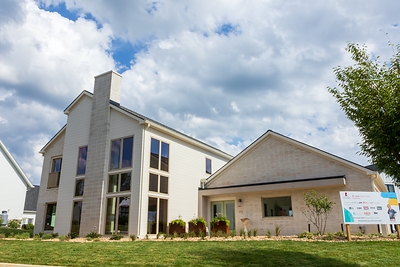
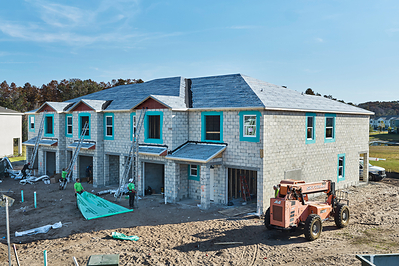
Experts agree it is prudent to ensure the longevity of our state's infrastructure through a few practical measures, regardless of geographical location. Key among these is selecting durable building materials for foundations, walls and roofs that are specifically designed to resist natural hazards in a given community.
For centuries, concrete, brick and stone have proven their value as enduring construction materials, offering exceptional resilience in vulnerable areas. These materials are naturally non-combustible, and with proper reinforcement, can withstand hurricane-force winds, storm surge and debris.
An added benefit is that properties constructed with dense, inert materials often qualify for reduced insurance premiums due to their recognized lower risk profile. Beyond improved safety, resilient construction offers significant financial advantages. The U.S. Chamber of Commerce Foundation estimates a substantial return on investment: for every dollar invested in resilient building practices, $13 are saved in future damages, cleanup expenses and overall economic losses.
Also key to building resiliently is in the design and building professionals used. Licensed architects, design-build professionals, and contractors have a deep knowledge about the environment, ideal materials to use based on performance and best practices in construction, and can guide building and homeowners to ensure they are building as resiliently as possible.
"Over the past three decades, Florida has demonstrated a capacity for learning and adaptation," says Gayle. "Stronger building codes have proven effective, saving lives and billions of dollars. It continues to position the state as a leader in disaster preparedness. However, as storm patterns evolve, our standards must also continue to advance."
Media Contact:
Tom DiBacco
(202) 420-0593
[email protected]
SOURCE Concrete Masonry Checkoff





Share this article