Work With Leila Reveals the ADHD Misread That Is Costing High Performers Their Competitive Edge
The Wrong Diagnosis Does Not Just Waste Time. For High Performers, It Costs Focus, Performance, and the Competitive Edge You Cannot Afford to Lose.
NEWPORT BEACH, Calif., May 14, 2026 /PRNewswire/ -- High performers are not asking whether something is wrong with them. That is not how they think. What they do, without even realizing it, is audit their own performance. When focus slips, when output falls below what they know they are capable of, when friction shows up where it should not, they ask one question: what is going on, and how do I fix it?

Right now, the loudest answer to that question is ADHD. Diagnoses have risen sharply over two decades. The symptom profile is all over social media. And for high performers, many of the traits genuinely resonate: intensity under pressure, disengagement from low-value work, resistance to routine, impatience with anything slow.
The problem is that resonance is not the same as accuracy. And in this case, getting the answer wrong does not just waste time. It costs them their edge.
The behavior can be identical. What differs is the mechanism beneath it, and the mechanism is what determines the fix.
What the Full Analysis Covers
Written from direct coaching experience with high performers across industries, this piece examines four questions the standard ADHD conversation typically misses:
- Are these tendencies actually neurological, or are they better explained by high-performer wiring and early environmental conditioning?
- Is the appropriate definition of an adverse environment being applied, to include the kinds of childhoods many high performers had, not necessarily poor or chaotic, but emotionally complex in ways that leave a lasting mark?
- Why do CBT-based protocols, the dominant solution in the marketplace, often produce surface-level improvement while leaving the root cause untouched?
- Why do emotionally avoidant high performers consistently choose the diagnostic path, and what does that choice cost them?
Highlights to Note
1. High performers and ADHD look identical from the outside. The cause is different.
ADHD involves genuine neurological constraints on attention. High-performer disengagement is a choice, driven by motivation architecture, fast processing speed, and a low tolerance for inefficiency. Completely different mechanism and solution.
2. An 'adverse' childhood does not require poverty or visible hardship.
Any environment where a child did not consistently feel safe, seen, or emotionally secure can produce the same nervous system adaptations that now show up as attention-related difficulty in adulthood. A parent working multiple jobs, a household where love felt conditional on achievement, conflict that was unpredictable but not constant: all of these qualify.
3. The brain can be retrained. But you must identify the right target.
When attention-related tendencies come from environmental conditioning rather than neurology, the path forward is a rewrite, not a workaround. When the brain understands that the urgency bias it developed was a rational response to a context that no longer exists, the compulsion becomes a choice. Behavioral protocols applied on top of an outdated internal rule produce temporary results at best.
Read the Full Analysis
The full article covers the science, the childhood environment research, why CBT alone often misses the mark, and what a more precise path to lasting change looks like.
If any of this resonates, the full piece is a must-read.
Click here to read the full article on LinkedIn.
About Leila Entezam
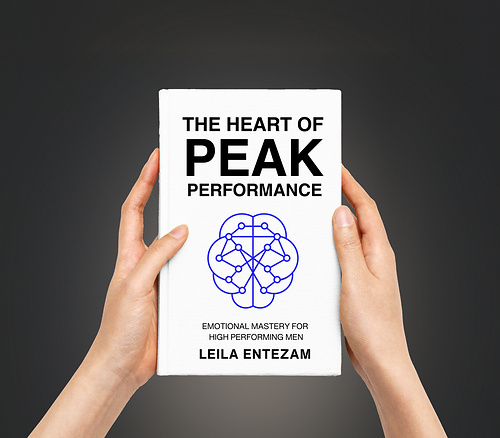
Leila Entezam is a neuro-emotional performance coach and author of the best-selling book, The Heart of Peak Performance: Emotional Mastery for High-Performing Men. Her practice sits at the intersection of neuroscience, psychology, and emotional intelligence, helping high performers close the gap between their IQ and their EQ, eliminate blind spots, and build the emotional capacity to lead at a higher level without losing their competitive edge.
Contact:
Leila Entezam
6192007902
[email protected]
SOURCE Work With Leila

Share this article