Key Takeaways From “How Do You Know if AI Is Telling the Right Story About Your Brand”
This June, we launched the AI Search Pulse webinar, broadcasting monthly fast-paced briefings delivering the latest AI search developments, strategic insights and practical guidance for communications professionals. In July’s episode, Sarah Roberts, Director of Operations at PR Newswire, was joined by Sarah McGrew, Solutions Consultant at Cision, to discuss how to measure success in this new environment shaped by AI.
You can access this and other AI Search Pulse episodes here. Meanwhile, here are some key takeaways from the latest in our AI Search Pulse series.
AI Is the Newest Destination in the Amplification Chain
When measuring the ways AI affects your audience’s interactions with your content, you must understand how AI answers impact Multichannel Amplification™ and the amplification chain.
Large language models (LLMs) aim to provide answers that best reflect a story told across multiple channels, from social to web content and more. Since your messaging now lives inside the answers provided by AI, consistency across channels is key.
The Old Scorecard Stops One Step Too Early
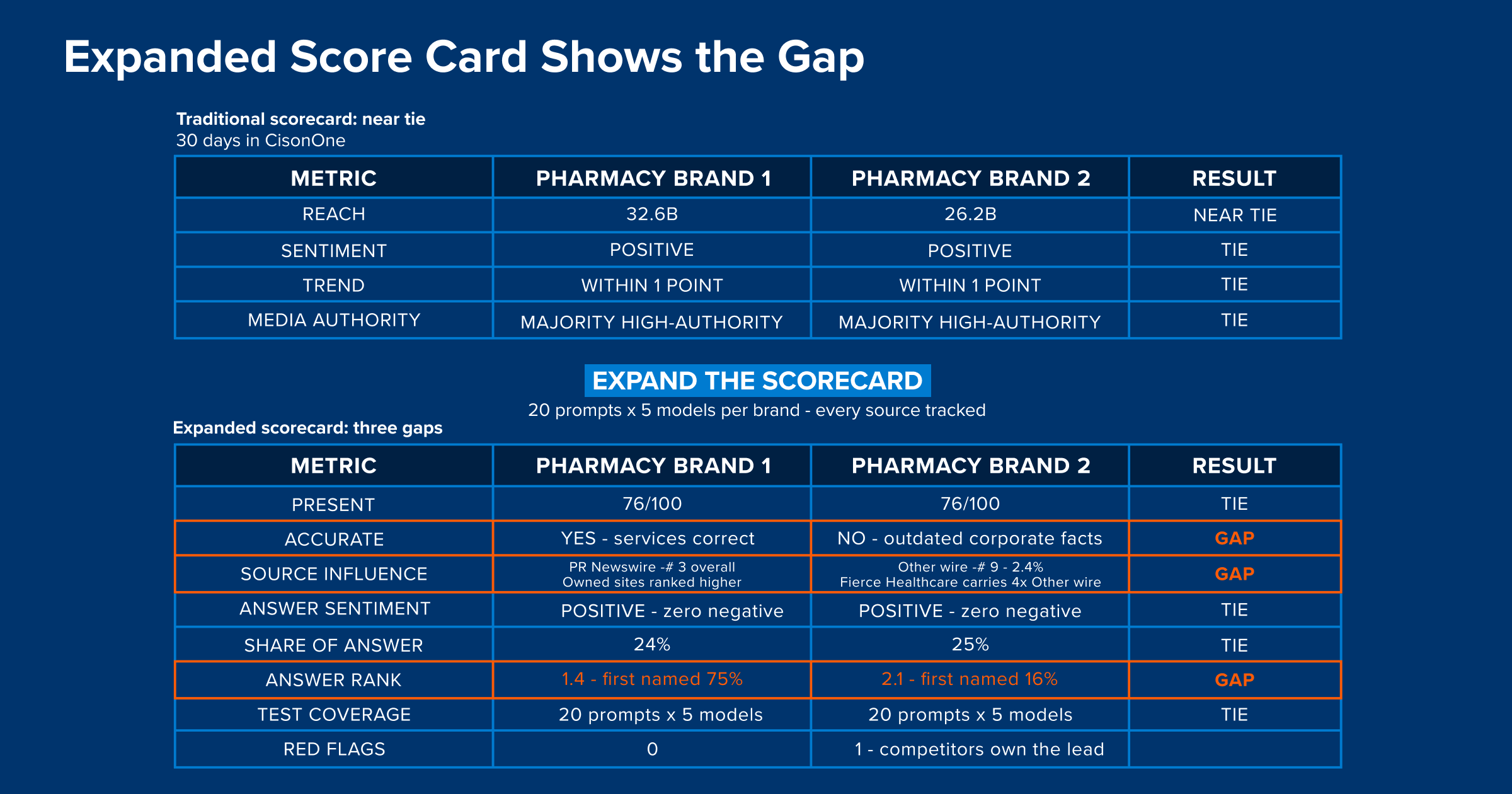
McGrew points out that the “old scorecard” (measuring reach, sentiment, trend and media authority) used to score traditional media no longer provides the full picture. The addition of AI means this scorecard has to evolve. This requires seeing what feeds AI answers and what those answers are before they reach clients, constituents and even competitors.
The old scorecard focused on measuring reach. Now, it’s important to keep measuring that reach while also measuring the answers provided by AI.
AI Answers Are Built From Evidence Across Channels
“I kind of like to look at AI as a detective that compares witnesses,” McGrew tells us. When it comes to AI answers and how it affects your brand positioning, it takes multiple credible sources, all with the same message, for that claim to be viewed as the story AI wants to tell.
Any press release should share the same message as the social post or article on that topic to ensure AI tells that story. That consistency is just one of the functions of our PR Newswire Amplify™ tool, which allows users to share the same message while tailoring for each channel. To request a demo of Amplify, click here.
Measure the Questions People Actually Ask
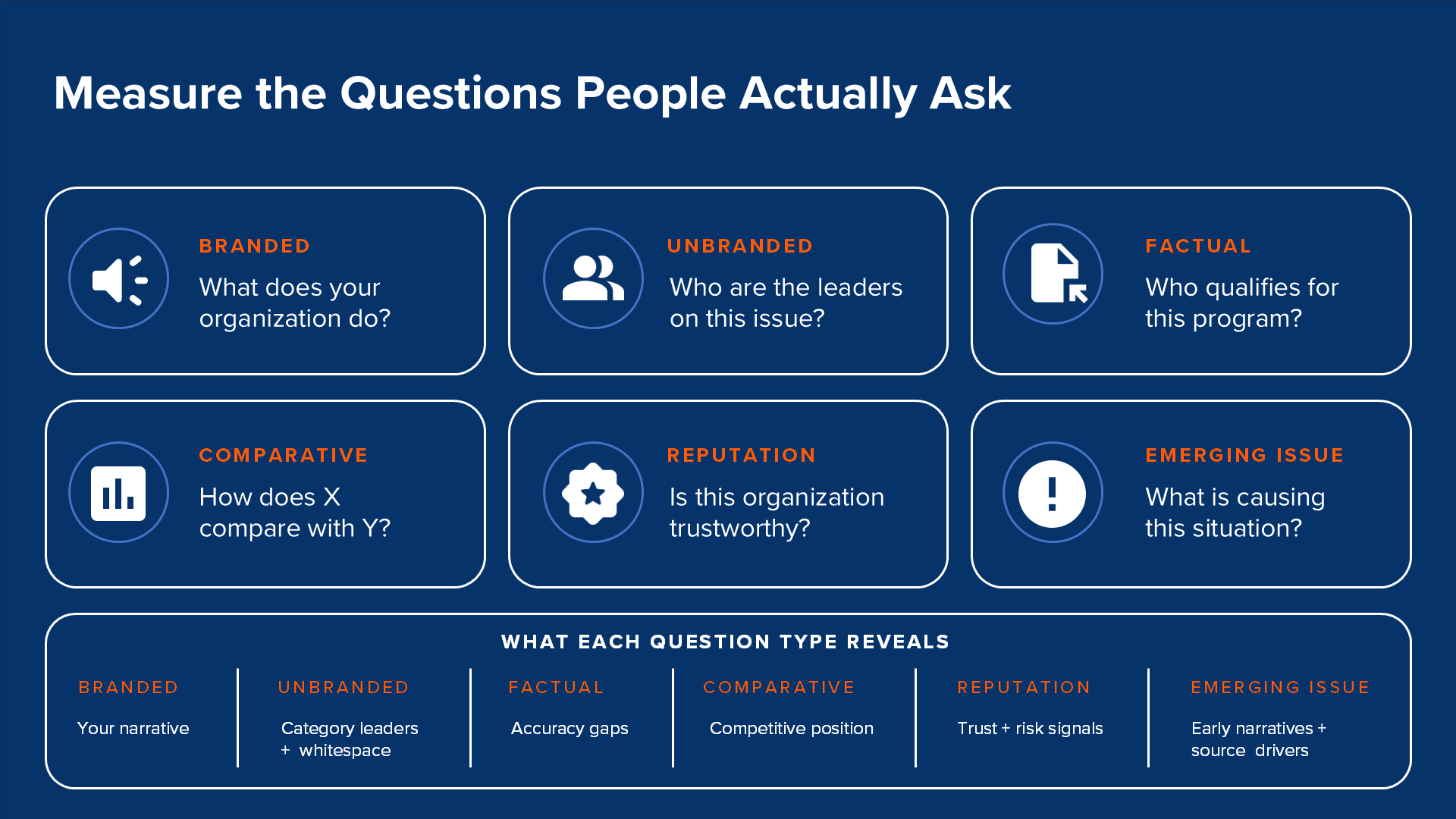
Now that we’ve established that all of your channels should have consistent messaging, how can you measure the story being told and its impact? First, you’ll want to consider several different types of questions in the following areas:
Branded: What does your organization do? This forces you to consider if your narrative shares your values.
Unbranded: Who are the leaders on this issue? This can reveal white space and show your competitive edge.
Factual: Who qualifies for this position? This question helps with accuracy gaps and specific content.
Comparative: Who does X compared with Y? This provides insight into how your competitors operate.
Reputation: Is your organization trustworthy? Knowing how you are viewed in the industry can lead to important questions on how to improve.
Emerging Issues: What is causing this situation? Discover what people search for on LLMs regarding emerging issues to get ahead of the headlines and control the narrative.
Your AI Answer Layer Scorecard Can Be Your Roadmap
Looking to upgrade how you measure your messaging? We’ve provided a new scorecard you can start using today! Running the questions from the above list on multiple LLMs, you can answer the following checklist questions:
1. Is Your Brand Present? (yes/no)
Does your brand show up in the answer layer? If not, you have to create content to answer the questions you pose to begin appearing in AI search.
2. Is Your Narrative Accurate? (yes/no)
If the narrative is inaccurate, the solution is to create content that answers the questions and ensures accuracy.
3. Source Influence: What Is Shaping the Answer? (owned media / earned media / other sources)
This ties into the accuracy of your data. Are you the source being cited for AI answers, or is a competitor?
4. Answer Sentiment: How Are You Characterized? (negative/positive/neutral)
Negative characterization can be addressed by creating new, fresher information that might supplant an older answer to help improve your reputation.
5. Share of Answers (%)
What percentage of mentions in an answer come from your organization? The higher the number, the more your message is getting out.
6. Answer Rank
The average position of your first mention. If your rank is lower than your competitors, it means they have done a better job advancing their story.
7. Consistency (%)
How consistent are your answers across different LLMs? Any inconsistency across platforms might mean your messaging needs to be consolidated more effectively.
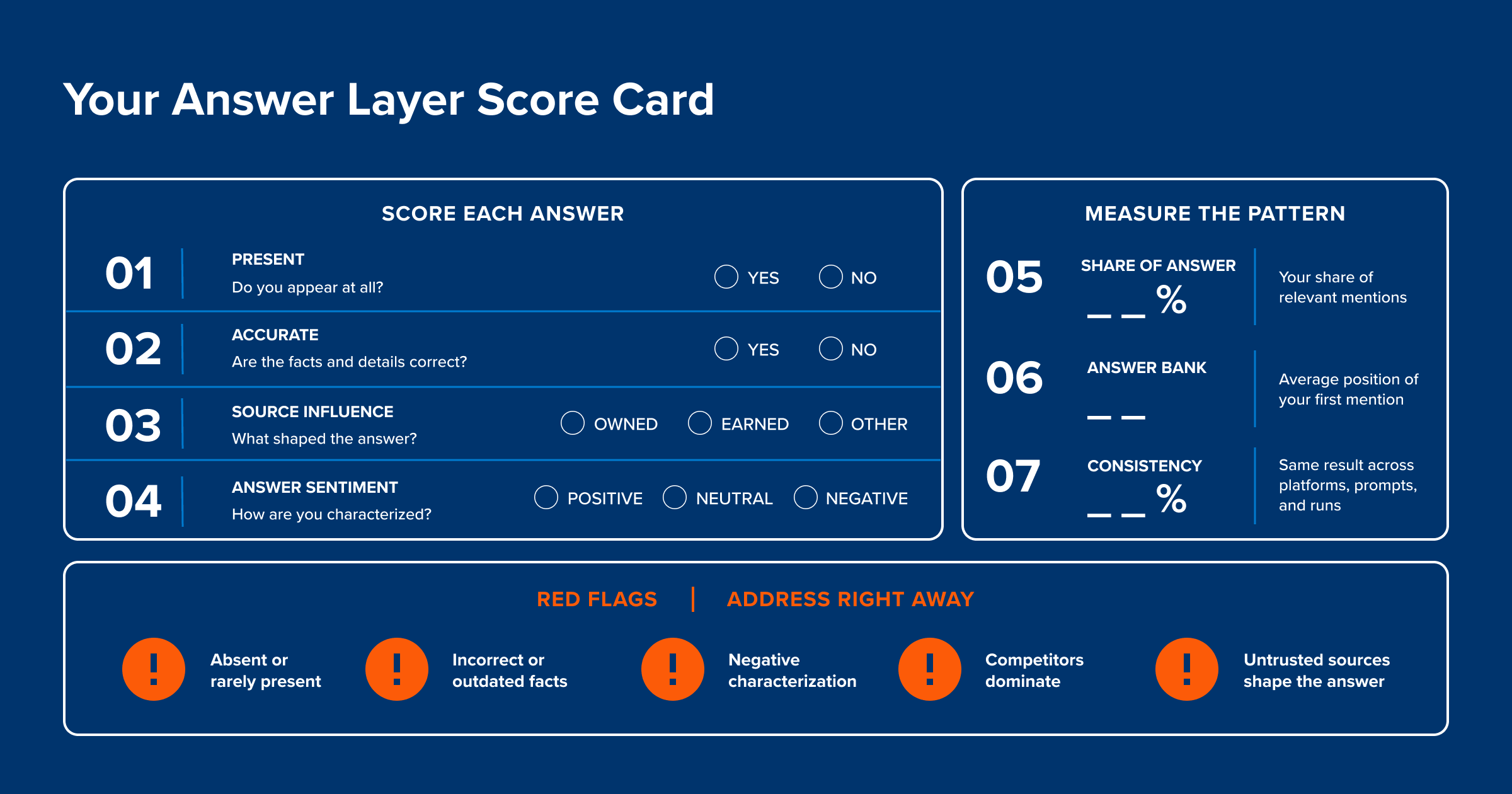
The data from this scorecard informs us how to proceed depending on what you find: