


Klamath River Renewal Project Receives Prestigious Award
DAVIS, Calif., May 6, 2026 /PRNewswire/ -- The Klamath River Renewal Project has received the Distinguished Project Award from the International Fish Passage Conference. The award was presented at the 15th annual conference, held this year in May at UC Davis, and is jointly shared by the Klamath River Renewal Corporation (KRRC), McMillen and RES.
Conference organizers explained that the Distinguish Project Award is intended for projects that use innovation and technical excellence to achieve ecological gain for fish passage, river connectivity and improved habitat for endangered and native species.
"We are honored and grateful for this recognition," said Mark Bransom, KRRC CEO. "While this is a story of an engineering and restoration feat on an epic scale, it is also the story of righting historic wrongs and allowing several tribes to reclaim a river they have relied on since time immemorial. I am certain this project would not have happened without the ongoing advocacy of tribal nations."
The Klamath River Renewal Project is the largest dam removal and river restoration effort in U.S. history and the most significant salmon restoration initiative to date. With the formal completion of dam removal activities in October 2024, the project removed four hydroelectric dams over a 16-month period and reopened more than 400 miles of historical salmon, steelhead, and lamprey habitat that had been blocked for more than a century. This massive project was spread across 60 kilometers of river, and resurfaced 2,200 acres of habitat and 22 miles of mainstem and tributary channels. Ecological recovery is underway, and active restoration and monitoring efforts continue.
"This project is, at its core, a fish passage barrier removal project on a massive scale," said Dan Chase, Director of Fisheries, Aquatics & Design for the RES Western Region. "Historically the third-largest salmon-producing river on the U.S. West Coast, the Klamath River's salmon runs have declined to less than 5% of their historic size. The combination of dam removal followed by a massive restoration effort will provide both fish passage and ecological uplift for endangered and native species on an unprecedented scale."
The International Fish Passage Conference was launched in 2011 and brings together engineers, biologists and others with interest in river restoration, particularly with respect to ecological connectivity and fish passage issues. The conference mission is to advance the science and practice of fish passage by providing a forum where researchers, managers, practitioners, and policy makers can share ideas, experiences, and advances.
"Dam removal took place in a tight timeframe driven by the need to perform in-water work in the most biologically dormant season, after the fall Chinook and coho spawning run was over, and before the return of the next spawning cohort to the lowest dam site in early October," said Mort McMillen, Program Manager for McMillen Jacobs. "This necessitated an aggressive construction schedule on the three major dams and the channel in the former dam sites rebuilt to volitionally passable conditions, before the first week of October. Real-time water quality information, particularly dissolved oxygen levels, was factored into decisions on the deconstruction schedule. It was an extraordinarily complex challenge to limit periods of severe water quality impairment while also ensuring that dam removal was not stretched over more than one year, which would have magnified the short-term negative impacts."
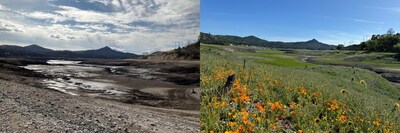
RES was tasked with revegetating 2,200 acres of the former reservoir footprints with native plant species and restoring 3.4 miles of key tributaries that emerged from the reservoir footprints, recreating healthy spawning, rearing, and migratory habitat for salmon.
"We were responsible for the collection and propagation of more than 20 billion native seeds, and growing tens of thousands of trees, shrubs, and plugs being used to revegetate the land as the reservoirs drained and the waters receded," said Dave Coffman, RES Director for Northern California and Southern Oregon. "We developed, or assisted in developing, 18 resource management plans required for federal and state permits, enabling the project to stay on schedule. It was an incredible amount of work packed into a limited schedule. The fish were coming back fast, but we were faster."
Contact: Dave Meurer
(530) 941-3155
[email protected]
SOURCE Resource Environmental Solutions, LLC




Share this article