


Multi-night real-world data from Withings devices, spanning nearly 30,000 participants across 20 countries, suggest that habitual snoring and night-to-night variability in sleep-disordered breathing may contribute to vascular risk independently of age, sex, and BMI
ADELAIDE, Australia and ISSY-LES-MOULINEAUX, France, March 31, 2026 /PRNewswire/ -- A large international real-world study published in npj Digital Medicine suggests that the cardiovascular implications of sleep-disordered breathing may be underestimated when assessed on a single night only. Among nearly 30,000 adults monitored over four years, both longer snoring duration and greater night-to-night variability in sleep apnea severity were associated with increased arterial stiffness. The findings also indicate that some of these vascular effects may be modifiable through treatment and lifestyle change.
The analysis used longitudinal measurement data collected in participants' home environments: while the Withings Sleep Analyzer recorded sleep apnea severity and snoring duration, the Withings Body Cardio measured aortic pulse wave velocity (PWV), an established marker of arterial stiffness.
Background: Pulse wave velocity as a marker of vascular aging
Aortic pulse wave velocity (PWV) is considered the gold standard for measuring arterial stiffness and is a recognized predictor of cardiovascular morbidity and mortality – independent of traditional risk factors such as blood pressure or BMI. Previous research investigating the relationship between obstructive sleep apnea (OSA) and PWV has yielded inconsistent results. One reason is that most studies relied on single-night measurements that fail to capture the natural night-to-night variability of sleep apnea.
Methodology: Long-term digital monitoring in the home environment
For their analysis, the research team from Flinders University in Adelaide evaluated data from 29,653 adults in 20 countries who used two digital health devices in their home environment for an average of four years.
The methodological advantage of the study lies in the long-term and real-world monitoring of physiological parameters outside the sleep laboratory. While traditional sleep medicine studies often rely on single measurements or a small number of lab nights, this approach enables the observation of night-to-night fluctuations in sleep apnea as well as longer-term changes in vascular parameters under real-life conditions.
Sleep-related breathing disturbances were measured using the Withings Sleep Analyzer, an under-mattress sensor equipped with an integrated microphone and pneumatic sensor. Using algorithmic analysis, the device estimates the nightly apnea-hypopnea index (AHI) and snoring duration. The median number of recorded nights was 252 sleep nights per participant per year. The system has previously been validated against polysomnography.
Vascular health was assessed using the Withings Body Cardio, a connected scale that measures aortic pulse wave velocity (PWV) in a standing position using impedance plethysmography and ballistocardiography as a marker of arterial stiffness. The median number of PWV measurements was 38 per participant per year. The measurement method has been validated against carotid-femoral applanation tonometry in independent datasets.
The combination of both devices enabled the analysis of millions of individual measurements collected over several years. This allowed researchers to investigate not only average sleep apnea burden but also the variability of AHI and the extent of snoring in relation to vascular changes. Statistical analysis was conducted using mixed linear models adjusted for age, sex, and BMI.
Key findings at a glance
- Association between sleep apnea severity and arterial stiffness: Compared with individuals without sleep apnea, pulse wave velocity was elevated by +0.08 m/s in mild obstructive sleep apnea, +0.14 m/s in moderate obstructive sleep apnea, and +0.16 m/s in severe obstructive sleep apnea, independent of age, sex, and BMI.
- Night-to-night variability as a potential independent vascular risk marker: Individuals with mild obstructive sleep apnea but high variability in the apnea-hypopnea index (90th percentile) exhibited pulse wave velocity levels comparable to those with severe obstructive sleep apnea.
- Snoring burden associated with increased arterial stiffness: High snoring burden was associated with significantly increased arterial stiffness across all obstructive sleep apnea severity categories. Individuals without obstructive sleep apnea but with pronounced snoring showed pulse wave velocity levels comparable to patients with severe obstructive sleep apnea and minimal snoring.
- More pronounced association in younger participants: The association between obstructive sleep apnea severity and arterial stiffness was more pronounced in younger participants than in older ones.
Expert commentary
"This study shows for the first time in a large real-world dataset that assessing a single night of sleep is not sufficient when evaluating vascular health risks," says Pr. Pierre Escourrou, cardiologist and sleep specialist. "Individuals with highly variable sleep apnea from night to night or frequent snoring carry an independent vascular risk – even if their average AHI appears relatively normal."
Clinical relevance and therapeutic implications
The findings highlight the need to move beyond single-night AHI measurements in hospital settings diagnostics. In particular, patients with mild OSA, high night-to-night variability, or pronounced snoring may have previously underestimated cardiovascular risk.
There is also encouraging evidence regarding treatment: continuous positive airway pressure (CPAP) therapy has been shown to reduce PWV[1] (meta-analysis: mean PWV reduction −0.44 m/s). This suggests that vascular damage associated with OSA may be at least partially reversible. Lifestyle interventions have also been shown to improve arterial stiffness.
The authors therefore advocate incorporating multi-night monitoring into diagnostic pathways and using PWV measurement via smart home devices as a monitoring tool for cardiovascular risk in patients with sleep-related breathing disorders.
Original publication
Pinilla L, Sansom K, Letzelter P et al., Multi night digital assessment of sleep disordered breathing is associated with accelerated vascular aging, npj Digital Medicine (2026), https://doi.org/10.1038/s41746-026-02469-w
Note on study design and limitations
The study is based on self-selected users of connected health devices; the cohort was predominantly male and likely represents individuals with above-average health awareness, which may limit generalizability. Sleep apnea and snoring metrics were collected using validated consumer devices in a home setting but were not independently confirmed with polysomnography within this study. Information on comorbidities, medication, lifestyle factors, and CPAP use was not available. Although annual averages were used to reduce short-term and seasonal fluctuations, potential influences such as temperature, changes in physical activity, or respiratory infections cannot be fully excluded. Nevertheless, the large dataset – including nearly 30,000 participants, measurements collected over several years, and data from 20 countries – supports the robustness of the observed associations.
Notes to editors
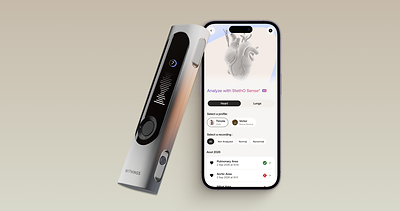
The Sleep Analyzer is a thin, contactless mat placed discreetly under the mattress that continuously measures breathing rate, heart rate, snoring, and body movements during sleep. The technology has been clinically validated against polysomnography (PSG). In the EU, the Sleep Analyzer is certified as a medical device for the detection of sleep apnoea.
Users receive a Sleep Score at the end of the night summarizing the quality of their sleep, and all data is sync'd instantly with the Withings app via Wi-Fi.
The Withings Sleep Analyzer is available for $199.95 (MSRP) and it is available at Withings.com and through selected retailers such as Amazon and Best Buy.
The Withings Body Cardio is a premium smart scale designed to go far beyond weight tracking, delivering a comprehensive snapshot of overall health with every weigh-in. Combining clinical-grade innovation with sleek, minimalist design, it transforms a daily routine into a powerful wellness ritual. Developed with medical experts, it measures standing heart rate and pulse wave velocity—key indicators used to estimate vascular age—offering users a deeper understanding of heart health from home. Using bioelectrical impedance technology, the scale delivers a detailed breakdown of body composition, including: body fat percentage, muscle mass, bone mass, and water percentage. All metrics are captured automatically with each use, and sync instantly to the Withings app via Wi-Fi, helping users track progress and make informed lifestyle decisions over time. The Withings Body Cardio is available for $179.95 (MSRP) and is currently on sale at withings.com and through select retailers.
1 Chalegre, S.T., Lins-Filho, O.L., Lustosa, T.C. et al. Impact of CPAP on arterial stiffness in patients with obstructive sleep apnea: a meta-analysis of randomized trials. Sleep Breath 25, 1195–1202 (2021). https://link.springer.com/article/10.1007/s11325-020-02226-7
Press Contact
Alex McKechnie
[email protected]
475.399.4056
Contact for scientific inquiries (corresponding author)
Dr. Lucía Pinilla
Adelaide Institute for Sleep Health
Flinders University, Australia
Email: [email protected]
SOURCE Withings





Share this article