Key Takeaways From "Visibility Layers, and How Small and Mid-Sized Brands Can Appear in Those Layers”
Welcome to our third monthly installment of the AI Search Pulse webinar, a recurring series where we provide impactful, engaging discussion on the latest AI search developments, strategic insights and practical guides from industry leaders in the communications space.
This month, Marisa Beaumont, Vice President at Fishman Public Relations, joined Glenn Frates, VP, Distribution at PR Newswire, to discuss practical strategies for small and mid-sized brands to increase their visibility in the AI “Answer Layer.”
You can access this and other AI Search Pulse episodes here. Meanwhile, here are some key takeaways from the latest in our AI Search Pulse series.
AI Visibility in the Answer Layer Is Possible, No Matter the Size of the Brand
AI visibility in the answer layer is a key goal for communications professionals. It empowers PR, marketing and investor teams to command their brand presence across the generative search landscape. This visibility is not only available to major brands and organizations– and with the right guidance, small and mid-sized brands can increase their footprint in the Large Language Model (LLM) landscape.
Beaumont describes her work with small- to mid-sized brands in the AI space, saying “the key part…is giving [brands] tangible recommendations on things they can put into motion…to help improve their visibility.” These recommendations center around:
- Recognizing the changing digital landscape and how it impacts your industry.
- Understanding and identifying sources of AI content and visibility.
- Building brand credibility.
These approaches work for brands of all sizes and can help provide a roadmap to success in AI visibility.
Start With Prompts, Not Keywords
Beaumont doesn’t mince words about AI search’s impact on communications. “Honestly, I feel like AI visibility has given more value to our work as PR professionals than ever.” That means understanding the importance of Search Engine Optimization (SEO) in your communications strategy, but recognizing that you have to go a step further.
Because LLMs are crawling numerous sources, updated tactics require a more integrated, holistic approach. As Frates points out, “I get asked all the time, ‘so should I just send more press releases?’ And I say no, even though I want to say yes. But it really [is about] taking the multichannel approach.”
That requires less focus on creating multiple, possibly lower-value, news pieces and more on repurposing one good brand story across every possible channel. This Multichannel Amplification™ approach, using tools such as PR Newswire Amplify™, can help brands get discovered by focusing on the many signals LLMs pull for their citations.
These additional signals also mean focusing on content that directly answers customers’ real questions, instead of focusing on keyword-first content.
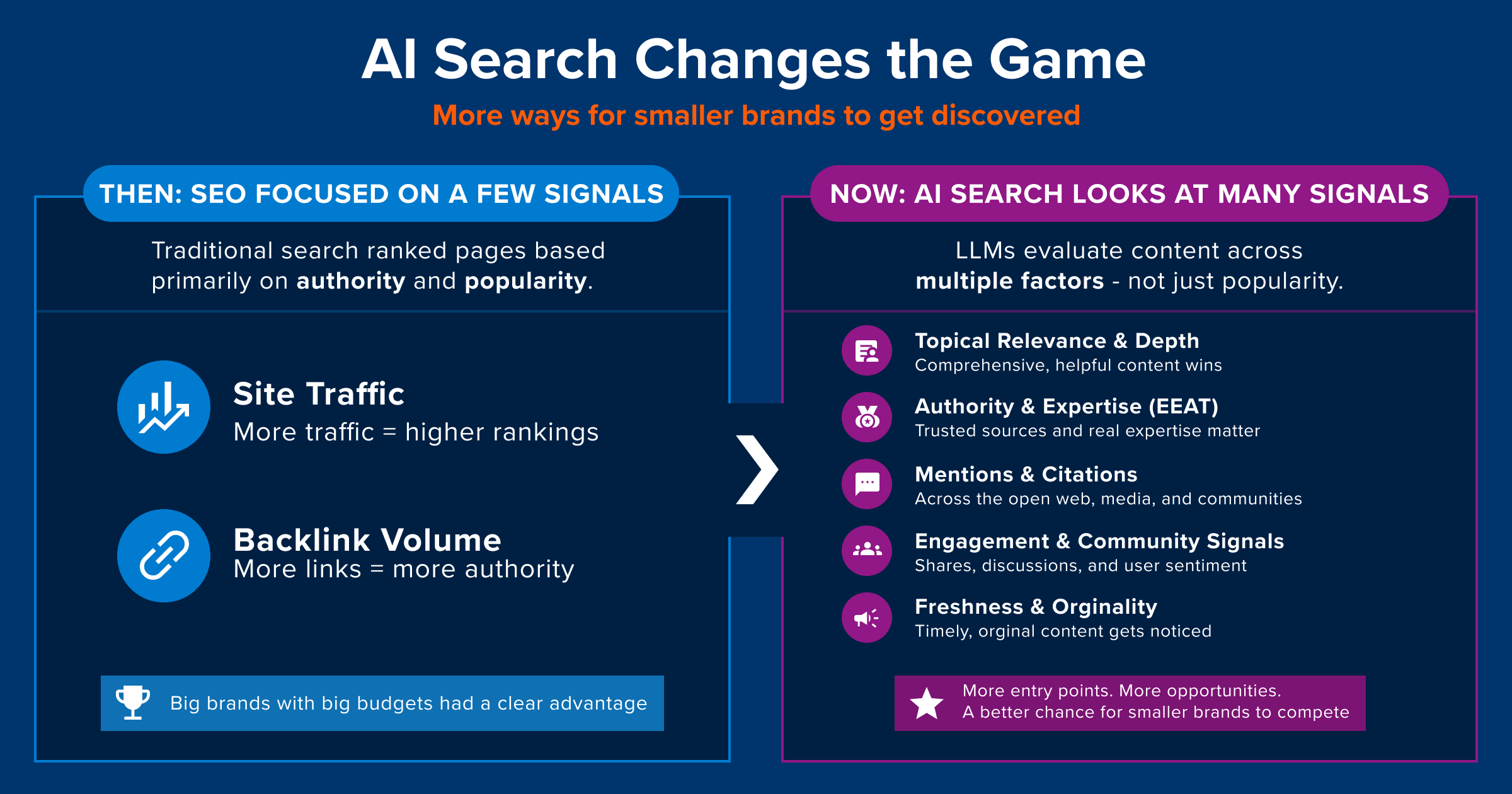
As you can see, there is a clear difference between how brand stories can be discovered through AI compared to older, SEO-focused strategies.
SEO professionals focus on authority and popularity to grow site traffic and earn more backlinks, or links directed to their content. This meant larger brands with massive marketing budgets had a distinct advantage over smaller competitors.
AI search has changed that. While authority and popularity still move the needle, popularity is no longer the key factor for visibility success. You have to focus on answering potential prompts, and your success relies on the multiple factors that LLMs analyze, including:
- Topical relevance and depth of content
- E-E-A-T (Experience, Expertise, Authority, Trustworthiness)
- Mentions and citations across the open web, media and communities.
- Engagement and community signals, such as shares, discussions and user sentiment.
- Fresh, original and timely content
You don’t need a large budget to address these signals, which can increase visibility for small and mid-sized brands much more than in an SEO-only world. All you need is a prompt-over-keyword content approach.
AI Doesn’t Have One Source List
Different AI experiences look to different places for answers. These sources include:
- Owned Media
- Your website
- FAQs
- Research
- Product and service content
- Earned Media
- News
- Trade media
- Reviews
- Awards
- Distributed Media
- Press releases
- Syndicated content
- Industry sites
- Community
- Forums
- Customer conversations
- Video and Social Content
- YouTube
- Other social content
All of these are essential, but AI agents are continuously updating which channels they find most valuable, which is why a Multichannel Amplification™ approach is key across all messaging. For example, Beaumont points out that, since the beginning of 2026, LLMs have been increasingly citing social platforms– in fact, YouTube is the number one source across all LLMs currently, which was not the case a year ago.
When your brand has a strong story to tell, you should share that story across as many channels as possible. That means repurposing it across press releases, owned content and LinkedIn as well as YouTube.
Beaumont suggests you invest the majority of your resources in the following two sources for AI:
- Owned media: Audit your website to ensure your articles and content are up to date.
- Social media: YouTube and LinkedIn should be your primary focus. LinkedIn posts from individuals (such as posts from thought leaders or a CEO’s personal account) tend to receive more attention from AI agents than corporate accounts, since they send a stronger E-E-A-T signal.
Note: Brands with smaller budgets might not have the resources to dedicate to a videographer or specialist to work full-time on a YouTube channel. That’s fine! Beaumont suggests some easy ways to leverage YouTube without a big budget, including earned media. If you have a podcast, you can repurpose that recording into its own YouTube channel and break it down into clips for YouTube content. Or you can use a smartphone to film a 30-minute interview with a lead stakeholder. These are just a few ways to leverage social, even with a smaller budget.
Optimize for AI - Start With Your Audience
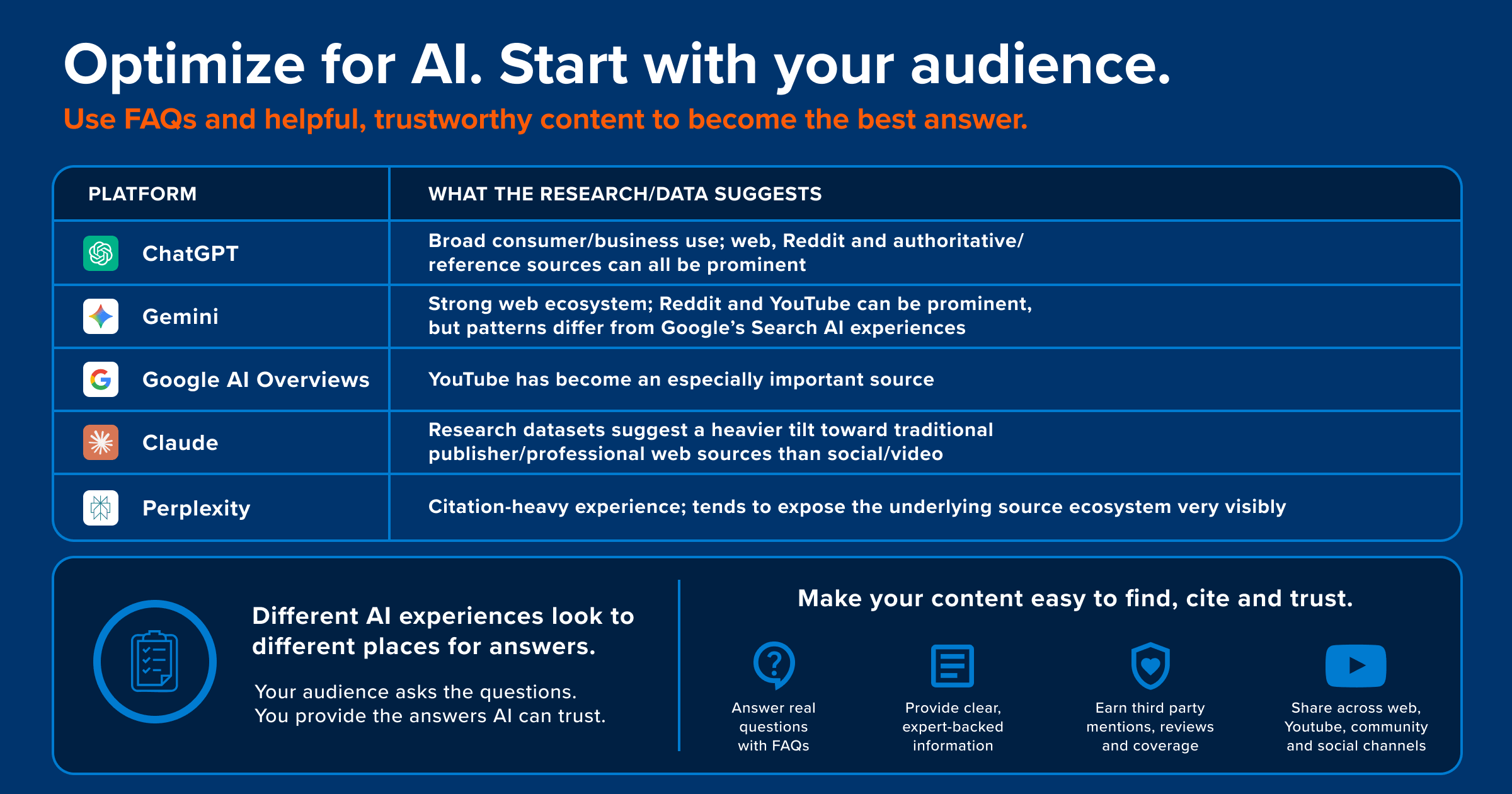
One question brought up during this month’s webinar was the differences between AI platforms. Each pulls in data differently and has different users. Knowing the platform to focus on requires knowing how each platform is used.
ChatGPT. Beaumont says, “The typical everyday user of LLMs is probably using ChatGPT.” These users are more likely to see sources from web content, Reddit and reference pages.
Gemini is more for “Google lovers” and has more prominent results from Reddit and YouTube. However, Gemini’s answer patterns differ from Google AI Overviews, which are also used by Google mega-users and lean heavily on YouTube.
Claude is a favorite for B2B users, since it focuses on traditional publishing and professional web sources more than the social feeds emphasized above.
Perplexity provides a more citation-heavy experience, which means it is more likely to show its sources, making it a valuable citation source. However, Beaumont says if you have to focus visibility on just one of these tools, you should focus on ChatGPT. Perplexity is more likely to drive traffic to your page, but with only an 8.6% market share of active AI users, it might not be worth the additional resources for smaller brands.
AI Brand Visibility in Action
Beaumont and Frates brought in a few examples of how to use press releases to build brand credibility through AI visibility.
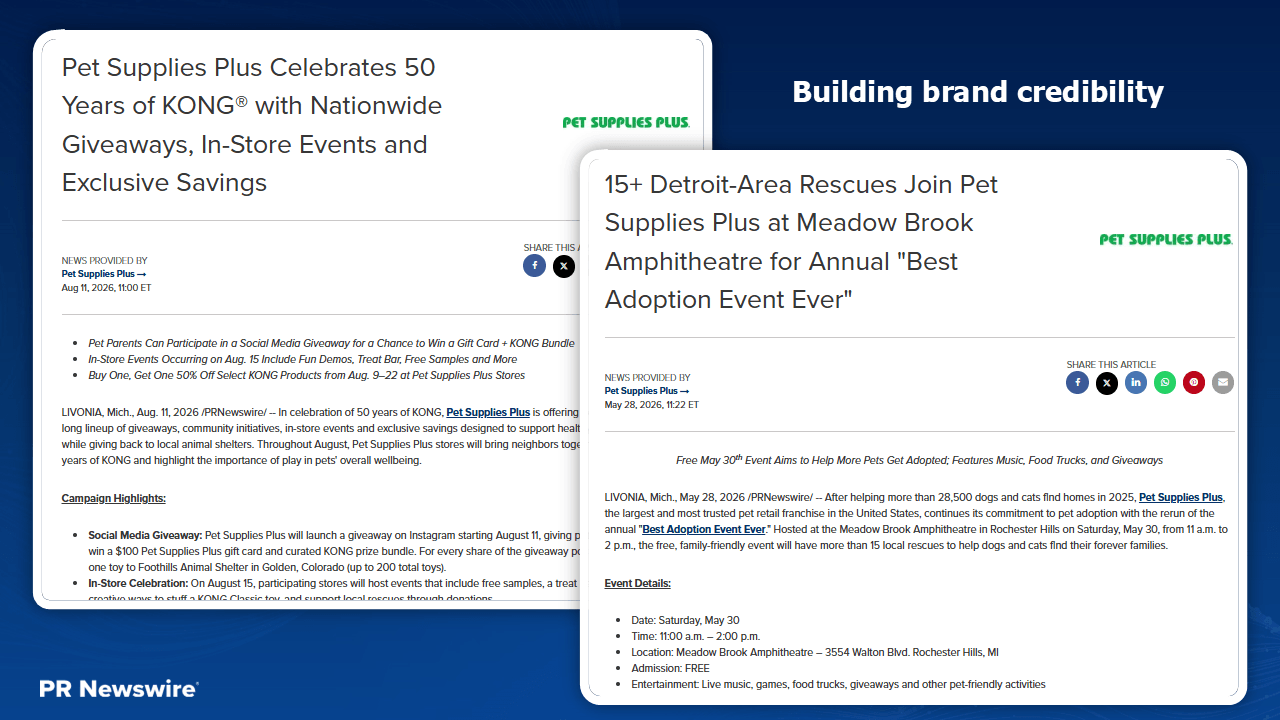
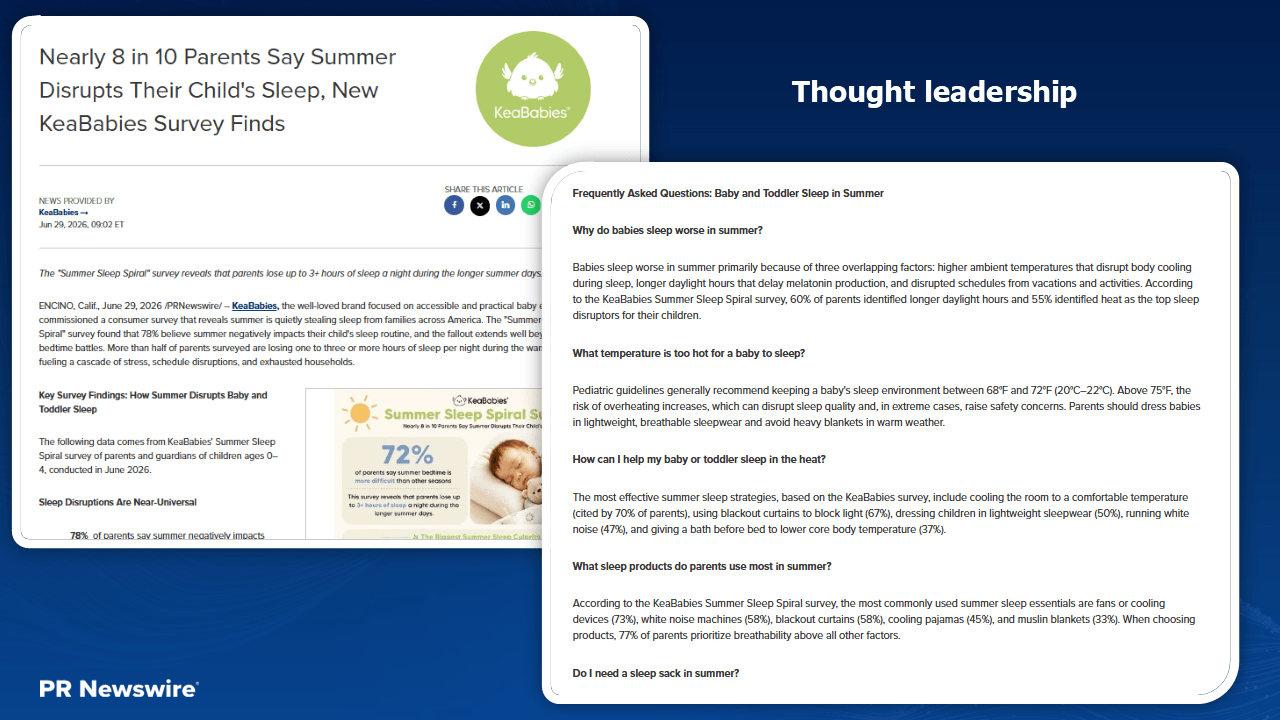
Both case studies show how strategies centered on prioritizing brand announcements, following up with earned media campaigns and taking a holistic approach leads to successful brand visibility. Good content is the small brand’s advantage if it crafts clear, useful expertise that can compete in the answer layer without the biggest SEO or advertising budget, especially if that content makes answers easier to extract, with AI-friendly approaches that include:
- “Above the fold” bullet points
- Repurposing key, credible data points
- Descriptive headings
- Infographics and infobites to repurpose across social channels
- High-level, unbranded FAQs
- A thought leadership approach.
Frates summed up his thoughts rather succinctly, saying, “Small brands can have a better place in the answer this year than I think they could have five years ago [with] more traditional search results.” This complements Beaumont’s final thoughts perfectly: “If you don’t already have an AI visibility strategy, get to work on one immediately.”
For those just getting started on this approach, get ready for a lot of exciting data. Beaumont suggests you’ll benefit by taking time to identify the sources LLMs are pulling from to understand your brand’s perception to the average AI user. That will let you determine how to target your strategies.
You might be surprised by who you find yourself competing against in a specific source layer. Still, with your new knowledge and confidence that you can rank on AI, no matter your size or resources, you can use that to boost your visibility and, most importantly, the narrative of your brand.
Some Final Questions to Consider
Can small businesses really compete in AI search?
Yes. Clear, credible answers can matter more than brand size or content volume.
What content works best for the AI answer layer?
Content that directly answers audience questions using FAQs, headings, bullets and trustworthy data.
Do businesses need to be everywhere?
No. Focus on the channels your audience uses, then repurpose strong insights across owned, earned, distributed, social and video content.