


Atlanta Facial Plastic Surgeon Dr. Benjamin Stong Highlights Advanced Deep Plane Facelift Technique Using SMAS Periosteal Suspension
Atlanta facial plastic surgeon Dr. Benjamin Stong highlights an advanced deep plane facelift technique that secures the SMAS layer to periosteum, a stable connective tissue covering the facial bones. This structural fixation approach may improve both the quality and longevity of facelift results for patients seeking natural facial rejuvenation.
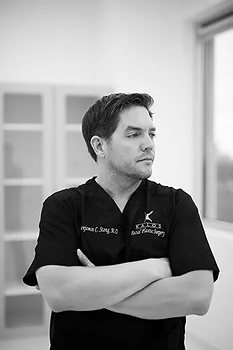
ATLANTA, March 18, 2026 /PRNewswire/ -- Facial plastic surgeon Dr. Benjamin Stong, founder of Kalos Facial Plastic Surgery and director of the Advanced Deep Plane Facelift Center of Excellence, is highlighting an advanced technique in facelift surgery designed to improve the structural support and longevity of facial rejuvenation results.
At his Buckhead, Atlanta facial plastic surgery practice, Dr. Stong performs an advanced deep plane facelift technique that secures the SMAS layer of the face to periosteum, a stable connective tissue layer covering the facial bones. This structural fixation method supports lifted facial tissues on a stable anatomical foundation rather than relying solely on softer facial tissue structures for suspension.
Dr. Stong's approach is singularly focused on restoring youthful facial contours through structural repositioning of deeper facial layers rather than tightening the skin alone.
Understanding the Role of the SMAS in Facial Aging
Facial aging occurs at multiple anatomical levels, not just within the skin. One of the most important structural layers involved in facial support is the SMAS, or superficial musculoaponeurotic system.
The SMAS is a fibromuscular layer that connects facial muscles to the overlying skin and plays a central role in maintaining the natural contours of the cheeks, jawline, and neck.
Over time, gravity and natural changes in tissue elasticity cause the SMAS layer to gradually descend. As this deeper support structure shifts downward, patients may begin to notice early jowling, heaviness along the jawline, and loss of midface support.
Traditional facelift techniques often reposition the SMAS by suturing it to surrounding SMAS, a SMAS to SMAS plication or imbrication. While this can provide improvement, the long-term stability of the lift depends largely on the strength of the tissue used for fixation.
Why Periosteal Fixation Improves Structural Support
Periosteum is a dense connective tissue layer that covers the bones of the facial skeleton. Unlike soft tissues of the face, periosteum does not droop or stretch with age.
Because of its structural stability, periosteum provides an ideal anchor point for supporting repositioned facial tissues.
During the KalosLift advanced deep plane facelift, Dr. Stong carefully elevates and repositions the SMAS layer while releasing the facial retaining ligaments that contribute to sagging.
The SMAS is then fixated to the periosteum of key skeletal landmarks, including:
- the zygoma, or cheekbone
- the mastoid bone located behind the ear
These skeletal fixation points help support the lifted facial tissues on a stable structural framework.
"The most ideal tissue to suspend the SMAS to is tissue that will not descend with age," says Dr. Stong. "Periosteum provides a stable anchor that helps maintain facial support and natural contours."
Structural Rejuvenation Rather Than Surface Tightening
The advanced deep plane facelift technique focuses on repositioning deeper facial structures rather than tightening the SMAS or skin alone.
By lifting the SMAS layer and restoring support to the midface and jawline, surgeons can recreate youthful facial contours while maintaining natural expression and facial movement.
Anchoring the SMAS to periosteum allows the repositioned tissues to rest on a stable skeletal foundation, which improves both the initial aesthetic outcome and the longevity of facelift results.
Understanding the Evolution of Modern Facelift Surgery
Deep plane facelift surgery has become one of the most discussed advancements in modern facial rejuvenation because it addresses the deeper anatomical causes of facial aging rather than tightening SMAS or skin alone.
By releasing facial retaining ligaments and repositioning the SMAS layer as a unified structure, surgeons can restore youthful contours of the cheeks, jawline, and neck while preserving natural facial expression.
Surgeons who specialize in deep plane techniques, such as Dr. Stong at the Advanced Deep Plane Facelift Center of Excellence in Atlanta, focus on structural support and anatomical precision to achieve natural-looking and long-lasting facial rejuvenation results such as periosteal fixation.
A Comprehensive Facial Rejuvenation Approach
At Kalos Facial Plastic Surgery in Atlanta, facial rejuvenation procedures are tailored to each patient's anatomy, aging pattern, and aesthetic goals.
Depending on the patient's needs, the advanced deep plane facelift is often combined with complementary procedures such as:
- neck lift surgery to refine jawline and neckline definition using a bucket handle or cantilever technique
- upper and lower blepharoplasty to rejuvenate the eyelids
- lip lifts to restore the central lip area
- brow lift surgery to give a natural arch to the brow
- laser resurfacing to improve skin tone and texture
By addressing structural support, restoring youthful volume ratios and skin quality together, Dr. Stong's KalosLift aims to create naturally balanced subtle, yet dramatic results rather than results that look surgically done.
Serving Patients Traveling to Atlanta
Kalos Facial Plastic Surgery regularly treats patients traveling to Atlanta from across the United States and internationally for advanced facial rejuvenation procedures.
The practice provides dedicated support for out-of-town patients, including consultation coordination, surgical planning assistance, and postoperative recovery guidance.
Atlanta's Hartsfield-Jackson International Airport, one of the busiest airports in the world, provides convenient access for patients traveling for consultation and surgery.
Advanced Surgical Environment
Procedures are performed in a fully accredited surgical environment designed to prioritize patient safety, privacy, and surgical precision.
Dr. Stong and his surgical team utilize advanced monitoring systems and modern surgical technology to support consistent surgical outcomes and high standards of care.
The staff is deeply experienced with the needs and care deep plane facelift clients need before and after surgery
About Dr. Benjamin Stong
Dr. Benjamin Stong is a facial plastic surgeon and founder of Kalos Facial Plastic Surgery in Atlanta, Georgia. He specializes in advanced facial rejuvenation procedures including advanced deep plane facelift surgery, neck lift surgery, eyelid surgery, and his Perialar lip lift technique.
Dr. Stong directs the Advanced Deep Plane Facelift Center of Excellence at Kalos Facial Plastic Surgery and is known for his structural approach to facial rejuvenation. His surgical philosophy focuses on restoring facial support, preserving natural expression, and achieving long-lasting results.
Kalos Facial Plastic Surgery serves patients throughout Atlanta, Buckhead, and the greater Georgia region, as well as individuals traveling nationally and internationally for advanced facial rejuvenation procedures.
SOURCE Kalos Facial Plastic Surgery, LLC






Share this article