Green Science Alliance Developed Nepetalactol based Natural Insect Repellent for Mosquito, Pest
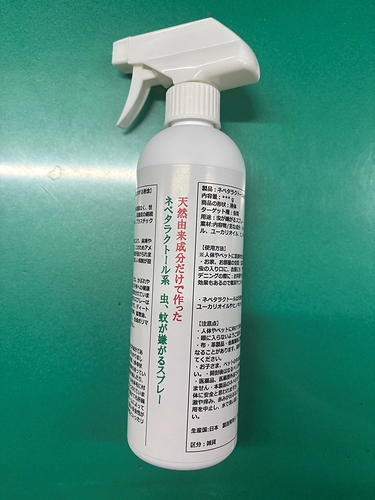
KAWANISHI-CITY, Japan, June 12, 2026 /PRNewswire/ -- Green Science Alliance (Fuji Pigment Co., Ltd. Group) is the green technology company which focuses in developing cutting-edge environmental energy technologies. This time, Dr. Yutaka Mori at the company has developed Nepetalactol based natural insect repellent for mosquito and some pests.
Humankind has been plagued by mosquitoes since ancient times. Mosquitoes are the deadliest creatures in the world, carrying infectious diseases (such as malaria, dengue fever, Nile fever, and Japanese encephalitis) and killing over 700,000 people annually. There is a suggestion that certain mosquito species may have adapted to prefer human blood during the course of human evolution. Therefore, A wide variety of insecticides and repellents have been developed and used for mosquito control over the years.
DEET has been the standard for mosquito repellents for many years due to its high effectiveness. Although this ingredient has been used for over 50 years and is the most widely used in the world, concerns have been raised regarding its toxicity and side effects in children, as well as its tendency to dissolve resins and plastics. In Japan, children under 12 years old should not use insect repellents containing 30% DEET. For those aged children group, one have to choose products with a concentration of 12% or less, and the use of DEET products is prohibited for infants under 6 months old.
On the other hand, Icaridin, a skin-friendly alternative to DEET, is becoming common. Approved in Japan in 2015, this is a relatively new repellent ingredient. It is considered to be less irritating to the skin and safer compared to DEET. Icaridin is safer for children, has low toxicity, and won't damage plastic or synthetic fibers or textiles.
While DEET and icaridin are synthetic chemicals, there are also plant-based and natural mosquito repellents available. Herbal components such as lemon eucalyptus, lemongrass, Japanese mint (hakka), peppermint, citronella, and lavender are examples of natural repellents. While they offer high safety, they often suffer from low efficacy and limited duration of repellent function.
In this regard, Green Science Alliance has developed Nepetalactol based repellent for mosquito. Nepetalactol is a natural compound extracted from plants, particularly silver vine and catnip. Although it is plant-derived, its efficacy is comparable to, and may even surpass, synthetic repellents like DEET. It can be produced by extraction and purification from silver vine using organic solvents, but this method makes mass production difficult and results in high costs. Thus, Green Science Alliance established a way to mass-produce this nepetalactol at a low cost using their unique synthesis process. Furthermore, not to mention that since nepetalactol is a naturally derived component, it is considered to be much gentler on the skin compared to chemically synthesized DEET or Icaridin.
Studies by Iwate University and Nagoya University in 2021 revealed that nepetalactol is the primary chemical compound found in silver vine and acts as the trigger for the feline response. They also revealed that this substance not only induces a euphoric, drunken-like state in cats but also acts as a mosquito repellent. That is why Green Science Alliance has decided to create Nepetalactol based repellent. It is believed that when cats chew and rub against silver vine leaves, they are coating their fur with nepetalactol, a behavior designed to protect them from mosquito bites.
The company will start selling commercially this Nepetaractol based repellent. They are also planning to further accelerate their R&D efforts to include repellents and insecticides for pests other than mosquitoes, as well as related functional products with their Nepetalactol products.
Contact:
Ryohei Mori
81-72-759-8501
[email protected]
SOURCE Green Science Alliance Co., Ltd.






Share this article