


NICB Warns Americans Contractor Fraud Continues to Rise Nationwide
Thirty-five states have recognized Contractor Fraud Awareness Week as disasters and repair costs continue to climb across the United States
OAK BROOK, Ill., May 18, 2026 /PRNewswire/ -- The National Insurance Crime Bureau (NICB), the leading, established non-profit dedicated to identifying insurance fraud, is recognizing the sixth annual Contractor Fraud Awareness Week from May 18-22 by warning home and business owners about the growing threat of contractor fraud following natural disasters and severe weather events across the United States.
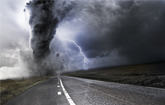
As communities continue recovering from costly tornadoes, wildfires, floods and other disasters, NICB is urging consumers to remain vigilant against fraudulent contractors who seek to exploit homeowners during their most vulnerable moments.
"Severe weather events often leave communities shaken and trying to rebuild their lives as quickly as possible," said David J. Glawe, President and CEO of NICB. "Unfortunately, criminals recognize those moments of vulnerability as opportunities for financial exploitation. As disaster damage continues to rise across the country, Americans must remain alert to the warning signs of contractor fraud."
After six years of Contractor Fraud Awareness Week, a total of 36 states now officially support the effort to educate hard-hit communities on the financial harm that unscrupulous storm-chasers commit in areas hit by natural disasters.
According to disaster-cost data from climate communications nonprofit Climate Central, the United States experienced 23 major billion-dollar disasters in 2025, resulting in approximately $115 billion in damages. At the same time, reported instances of contractor fraud increased 38% from 2023 to 2025. The cost of this fraud is felt by the insurance industry, policyholders and communities alike.
After a disaster, storm-chasing contractors solicit homeowners in damaged neighborhoods offering cleanup or repair services. While many contractors are honest and reputable; others are not. Dishonest contractors may try to pocket more profit by pressuring for upfront payments then never completing the job, using inferior materials, or performing work that does not hold up to code.
"Contractors play a key role in turning disaster damage into recovery for families, businesses, and communities," said Sean Kevelighan, CEO, Insurance Information Institute (Triple-I). "Working with qualified professionals and maintaining open communication with insurers can help homeowners and businesses recover more efficiently and strengthen communities for the future. Taking care in selecting who performs the work can help ensure repairs are completed properly and support stronger recovery outcomes."
Immediately following a major catastrophic event, NICB agents deploy to the scene to begin the process of assessing damage and connecting communities to resources they need to recover. Last year, NICB agents responded to most major catastrophic events nationwide, coordinating with local, state, and federal law enforcement on relief efforts.
Contractor fraud schemes are becoming increasingly sophisticated and organized. The most common scam center on manufactured roof damage, inflated water mitigation claims, abuse of assignment of benefits agreements, exploitation of elderly homeowners, and falsified documentation.
To support the industry in combating fraud, NICB is hosting a week of educational FraudSmart programming for NICB members' Special Investigative Units on topics ranging from hail damage and water mitigation to fraud driven by complex criminal networks.
Throughout Contractor Fraud Awareness Week, NICB is also launching a public education campaign offering resources to consumers in collaboration with NICB members, AARP, the Insurance Information Institute, and the Coalition Against Insurance Fraud.
Among the free consumer resources are tips, guides and checklists, published to NICB.org and NICB's social platforms. Download NICB's contractor checklist at https://www.nicb.org/media/2509/download/.
Review these tips to avoid fraud after a catastrophe:
Working With Insurance
- Call your insurance company first if you think you might have damage from a storm or other disaster.
- Make sure you review and understand all documents sent to your insurance carrier. Signing an Assignment of Benefits agreement transfers your insurance rights to the contractor. Know what that means for you.
- Never let a contractor interpret the language of your insurance policy or discourage you from contacting your insurance company.
- Be on the lookout for people calling and saying they are with a national carrier. Do not provide ANY personal information over the phone without them first confirming a claim number. If something sounds fishy, report it to your insurance company immediately.
- Note that insurance carriers will never ask you to pay your deductible up front or over the phone.
Hiring a Contractor
- Get more than one estimate.
- Request references and do the research.
- Ask to see the salesperson's driver's license and write down the license number and their vehicle's license plate number.
- Look out for out-of-state contractor licenses and vehicle registrations, as these may indicate possible fraudulent contractors.
- Never let a contractor pressure you into making a quick decision or hiring them.
- Remember, if you didn't request it, reject it!
Getting the Work Done
- Get everything in writing. Cost, work to be done, time schedules, guarantees, payment schedules, and other expectations should be detailed and itemized.
- Never sign a contract with blanks; terms you don't agree with can be added later.
- Never pay a contractor in full or sign a completion certificate until the work is finished.
About the National Insurance Crime Bureau: Headquartered in Oak Brook, Ill., the National Insurance Crime Bureau (NICB) is the nation's leading not-for-profit organization exclusively dedicated to combatting and preventing insurance crime through Intelligence, Analytics, and Operations; Education and Crime Prevention; and Strategy, Policy, and Advocacy. NICB is supported by more than 1,200 property and casualty insurance companies and self-insured organizations. To learn more, visit NICB.org.
SOURCE National Insurance Crime Bureau (NICB)




Share this article