


The Humane League Launches National Campaign Urging The Kroger Co. To Publish Roadmap To 100% Cage-Free Eggs
With nearly half of the US egg supply already cage-free, and Kroger's sourcing impacting an estimated 15 million hens and 4.3 billion eggs annually, the issue is not supply, it's the lack of a clear plan
CINCINNATI, May 19, 2026 /PRNewswire/ -- The Humane League, a global nonprofit focused on ending the abuse of animals raised for food, today announced the launch of a national campaign calling on The Kroger Co., the Cincinnati-based grocery giant that sells more caged eggs than any grocery chain in the country besides Walmart, to publish a clear, time-bound roadmap for reaching 100% cage-free egg sourcing. The campaign comes as Kroger faces growing scrutiny for revising its original 2016 pledge to source 100% cage-free eggs by 2025. The company now targets just 70% cage-free sourcing by 2030, without a public timeline for completing the transition to 100% cage-free eggs.
Headquartered in Cincinnati for over a century and the third-largest retailer in the US, Kroger has built its reputation on serving communities and earning customer trust. Yet the company has scaled back its original cage-free pledge even as major retailers advance on sourcing commitments.
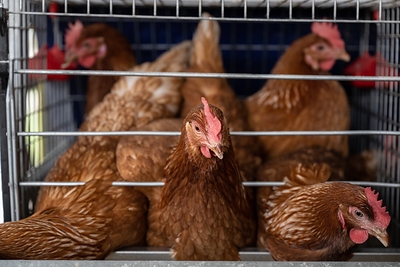
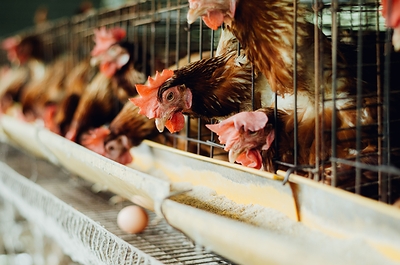
Kroger's "Fresh for Everyone" brand promise stands in contrast to its continued reliance on caged egg systems, which confine millions of hens in spaces so small they cannot spread their wings. At the same time, its customer base is increasingly driven by transparency and ethical sourcing.
"For a company with a national footprint like Kroger, this is about more than eggs; it's about trust, accountability, and leadership at scale," said Dan Shannon, CEO of The Humane League. "Kroger made a public promise, and millions of shoppers across the country deserve to know how it plans to keep it."
Retailers are not passive players in the egg industry. With 57% of eggs in the US sold through retail, companies like the Kroger Co.—whose banners include Kroger, its flagship one that shares its name, as well as others like Harris Teeter, Ralphs, King Soopers, and Fry's— directly shape what ends up in consumers' carts through pricing, placement, and promotion.
Leading retailers are already using that influence to accelerate the transition to cage-free. Ahold Delhaize has published detailed, year-by-year roadmaps to 100% cage-free sourcing, while Target—the fourth-largest grocery retailer—has released an updated commitment with a 2030 timeline, clear progress reporting by unit sales, and defined steps to guide customers toward cage-free options. As one of the nation's largest grocers, Kroger has the scale and market power to do the same, but has yet to publish a comparable, transparent plan.
Meanwhile, nearly half of the US egg laying flock is already cage-free, and producers continue investing in higher-welfare systems, undermining claims that supply constraints justify delays.
For more information, or to take action, please visit www.krogerdoesntcare.com.
MEDIA CONTACT
Katie Wagner
Interim Senior Director, Public Relations
513.260.2700
[email protected]
www.thehumaneleague.org
SOURCE The Humane League




Share this article